The day I was baptised is etched into my soul with a kind of permanence that words can barely capture. It isn’t just my favourite day from last field service; but it’s the most sacred, soul-stirring, and transformational day of my entire life. There are rare, moments that reach deep into the core of who you are and realign everything. You feel your heart shift, your spirit awaken, your identity begin to take shape in a new and profound way.
June 8th, 2024, was one of those moments.
I went into my baptism with an open heart. I hadn’t grown up in the Church. I didn’t know the rituals, the “right” things to say, or what it was supposed to feel like. I had never even witnessed a baptism before. And yet, despite all that I didn’t know, there was one thing I felt more clearly than anything else, this was right. This was exactly where I was meant to be. I carried a quiet certainty in my bones that day, a peace that settled over me. I wasn’t being swept along by emotion or pressure or anyone else’s expectations. I was saying yes to something eternal. Yes to God. Yes to grace. Yes to a love that had been patiently pursuing me my whole life, even when I didn’t know it.
That morning, myself and about twenty-five of my closest friends from the ship piled into vans and made our way to Tokeh Beach. The drive itself was filled with a quiet, buzzing anticipation, laughter, music, a few people lost in thought, all of us carrying something tender in our hearts. Tokeh had always been a kind of refuge for me. A sanctuary. Just an hour outside the noisy heartbeat of Freetown, it felt like another world, untouched and peaceful. The soft, white sand hugged the shoreline like a gentle promise. Towering palms danced in the breeze, and lush green mountains watched over us like guardians. The ocean, vast and alive, seemed to breathe in rhythm with my soul. Over the past year, I’d spent so many weekends there, laughing until my stomach hurt, swimming in the warm waters, watching beautiful sunsets and sharing long conversations that nourished something deep in me. Tokeh had already cradled so many of my memories, but that day was different.
Because on that day, it became sacred ground. There was something almost otherworldly in the air, a stillness beneath the breeze, a hush beneath the joy. It was as if heaven had leaned in a little closer. The beach that had always been my place of rest was about to become the place of my rebirth. I wasn’t just returning to a familiar coastline, I was walking toward holy ground, surrounded by people who had loved me, shaped me, and pointed me to the One who had called me by name. And as I stood on that sand, heart pounding and soul wide open, I knew I would never see this place the same again.
When we arrived, that familiar hum of joy filled the air, bright laughter, warm hugs, the comforting buzz of community that made this place feel like home. Everyone began settling in, spreading out towels and finding shade beneath the palms, the ocean’s rhythm steady in the background. But even amidst the celebration, I could feel the moment approaching, the moment I would share my testimony. I remember my heart thundered in my chest, each beat loud and heavy with anticipation. Public speaking has never come easily to me. Just the thought of standing up and having all eyes on me usually sent my hands trembling and my voice retreating. But this… this was different. This wasn’t a presentation. This wasn’t about performance. This was my truth. I wasn’t just speaking, I was opening up my soul. I was laying bare the long, winding road that had brought me to this exact moment.
I spoke through trembling lips about the years of silence and sorrow I had carried like a second skin. A trauma I had buried that left me feeling broken and hollow. The ache of a complicated relationship with my father, how his absence had shaped me, and how his presence, when it came, had often confused or wounded more than it healed. I spoke of the wandering, of years spent searching for love in all the wrong places, of feeling lost, unworthy, like a ghost moving through her own life. I had believed, for far too long, that I could never be truly loved. That if anyone saw the real me, they would turn away. I confessed the mistakes I had made. The pain I had caused. The choices born from desperation, from loneliness, from deep wounds I hadn’t known how to name. And as the words left my mouth, shaky and raw, I felt a trembling in my spirit, but not of fear. It was release.
There were moments when my voice cracked, when I had to stop and breathe through the tears pressing against the back of my eyes. But even in those silences, there was a Presence. A quiet, steady warmth wrapped around me, like a hand resting gently on my shoulder, grounding me. I knew, I knew, God was right there. Not distant, not judging. Just with me. Steadying me. Holding me. And as I kept speaking, the weight I had carried for so many years began to lift. Not all at once, but layer by layer, like peeling back the heavy curtains of shame that had covered my heart. With each word spoken in honesty, light began to pour in. By the end, I wasn’t just standing on a beach in Sierra Leone. I was standing in freedom. For the first time in my life, I felt truly seen. Truly known. And, perhaps most astonishing of all, truly loved.
I felt free. Not in a fleeting, surface-level way, but in the depths of my soul. The kind of freedom that only comes when you’ve met grace face-to-face, and let it hold you.
When I finished speaking, there was a silence. Not silence born of awkwardness, but the kind of reverent quiet that settles in when something sacred has just taken place. And then, slowly, gently, everyone began to gather around me. I sat on the warm sand, its heat grounding me, reminding me that I was fully here, fully present, fully alive. And then twenty-five sets of hands reached out, surrounding me in the most tender embrace. Some rested lightly on my shoulders, others on my back, my arms, my hands, each one like an anchor, a reminder that I wasn’t alone, that I was being held by community, by love, by the very body of Christ.
They began to pray. One by one, voices rose in harmony, soft, powerful, full of love and fierce compassion. They prayed over me words I didn’t even know my heart had been aching to hear. Words of restoration, of strength, of joy. Of new beginnings. They spoke life over my past, hope into my present, and blessing over my future. Each sentence wove its way into the fabric of my spirit like thread repairing a tattered garment. I could feel the tears falling freely down my cheeks, but this time, they weren’t heavy. They didn’t sting like they had in the past. These tears were different, they were pure. Cleansing. Holy.
It wasn’t sadness that overwhelmed me, but love. A love so vast and deep and undeniable that it broke something open inside me. I had never in my life felt so seen, so deeply known. Every broken part of me that I had tried to hide or fix or carry alone was now surrounded by grace, by hands, by prayers, by people who reflected the heart of a God who had never stopped loving me. In that circle, I felt something shift in my soul. I felt cherished. Not because I had finally “gotten it all together,” but because I had allowed myself to be fully real, fully vulnerable, and still, I was embraced. My heart felt like it might burst from the sheer beauty of it all. This was belonging. This was healing. This was the love of God made tangible, wrapped around me like a blanket of light. And I knew, in that sacred moment, that I would carry those prayers, the hands, the voices, the presence, with me forever.
And then it was time. The moment my heart had been beating toward for months. With the sun high above us and the ocean stretched out like an endless promise, we began walking toward the water. Shannon was on one side of me, Lindsay on the other, two women who had become more than just friends; they had become sisters, mentors, mirrors of God’s love in my life. With each step, the warm sand gave way to the cool kiss of the ocean. The waves curled gently around our ankles, playful and welcoming, as if creation itself was rejoicing with us. We waded in slowly, the water rising around our waists, the salty breeze wrapping around us like a whisper of grace.
I remember pausing for a moment and looking back toward the shore. There they were, my people. My ship family. The faces of those who had held me in my darkest moments, who had spoken truth when I couldn’t find it on my own, who had shown me again and again what the love of Christ looks like in the flesh. Some of them had cried with me. Some had prayed over me when I couldn’t find the words. Some had simply been there, faithfully, quietly, lovingly. Their smiles, their presence, their unwavering support, it was all a living, breathing testimony to God’s goodness. They didn’t just walk alongside me; they helped carry me. I don’t think they’ll ever truly know how deeply they impacted me. How their kindness, their grace, and their faith lit a path back to the Father I had wandered so long to find.
I turned back to face Lindsay, and in that moment, time seemed to slow. Her eyes met mine, shining, steady, full of love. She placed a hand gently on my back, and with a voice both tender and strong, she spoke the words that will forever be carved into the deepest part of me: “I baptize you in the name of the Father, and of the Son, and of the Holy Spirit.” And just like that, the world stood still. Heaven opened. And I surrendered to the waters that would carry me into new life. Submerged in the ocean that had witnessed so many fragments of my journey, the tears I had shed in solitude, the prayers whispered into waves, the laughter shared with friends, the silent conversations between my soul and God. That sea had seen it all. And now, it held me in a holy pause. For a heartbeat, everything else disappeared. Time stopped. Sound faded. All that existed was the stillness of water and the overwhelming nearness of God.
I could feel Him. Not in an abstract or distant way, but as real and close as breath. His presence rushed over me, not like a roaring wave, but like a deep, undeniable current moving through every part of me. It wasn’t loud. It didn’t need to be. It was sure. Constant. Loving. Pure. In that sacred second beneath the surface, I felt the weight of my old self fall away, the shame, the fear, the lies I had believed for too long. They were washed off me like dirt in the tide. When I rose from the water, it was like gasping into new life. My arms shot into the air without thinking, as if my body couldn’t contain the joy erupting inside me. I cried out, not with words, but with a sound of raw, pure celebration. Tears poured from my eyes and blended with the saltwater already on my cheeks. Around me, the sound of clapping, cheering, and laughter broke like sunlight on the waves. It was peace. It was joy. It was love, full, unfiltered, unconditional. Love like I had never known before. Not love I had to earn or perform for, but love that had found me, claimed me, and called me His.
My friends rushed toward me, splashing through the surf, arms open, hearts wide. They wrapped me in wet, salty hugs, their laughter mixing with tears, their joy mirroring mine. We cried, we laughed, we clung to each other as if the holiness of the moment could somehow be held in our embrace. I was completely overwhelmed, but not by fear, not by uncertainty. I was overwhelmed by goodness. By grace. By the sheer wonder of being known, loved, and made new. It was the most holy kind of flood. A flood of freedom. A flood of belonging. A flood of home.
The rest of the day unfolded like a dream, one soaked in golden light, laughter, and the kind of joy that bubbles up when heaven feels especially close. It was a celebration in every sense of the word. We played beach frisbee, barefoot and free, our shouts echoing across the sand as the sun warmed our skin and the breeze tangled in our hair. We dove into the warm waters, splashing, floating, and letting the waves carry us like children unburdened by the weight of the world. We laughed until our stomachs hurt, and sometimes we paused, eyes brimming with the ache of knowing the end of this chapter was near.
That day we reminisced about the ten incredible months we had spent together, months marked by service, sacrifice, growth, and more grace than we could count. We had cried together, prayed together, worked side by side through impossible challenges. And somehow, through it all, we had become more than just a crew. We had become a community of faith, of love, of purpose.
That day was more than a celebration of my baptism, it was a celebration of the miraculous, undeserved, extravagant love of God. A love that had found us from every corner of the world and knit our lives together in this time, in this place. I felt it in the way the waves kissed the shore. I saw it in every smile around the circle. I heard it in the laughter and the silence alike. And I carried it with me, deep in my bones. That day was a gift I will carry for the rest of my life.
Life on the ship is full of big, beautiful moments. We celebrate the miraculous transformations. Children taking their first steps after life-changing surgery. A mother seeing her daughter smile again after a cleft lip repair. A man once cast out by his community because of a giant tumour, now walking back home with dignity and hope. There are dance parties in the hallways, people singing and clapping and worshipping together in spontaneous bursts of praise. Hope is restored daily in the most tangible ways. It’s impossible not to be moved when you’re witnessing life-altering change right before your eyes. These moments are extraordinary, and the celebrations that follow are filled with laughter, music, and tears of joy.
But that is not the reality of my work at Connaught Hospital. When I first transitioned off the ship, it was a jarring adjustment. Gone were the high-energy celebrations, the miracle recoveries that made headlines on the Mercy Ships’s instagram. Instead, I found myself face to face with a different kind of work, a quieter, slower, and often messier kind of transformation. Here, change doesn’t arrive in a single surgery or in a burst of applause. It comes in fragments. In conversations repeated over months. In small shifts in attitude. In a nurse choosing to show up even after an impossible shift. In a vital sign finally being recorded.
At first, it was hard to adjust. I felt disoriented, like I’d lost the rhythm that had carried me so effortlessly on the ship. There were days I questioned whether I was making any difference at all. Whether the quiet kind of change was still worth celebrating. I missed the immediacy of impact, the visible fruit, the emotional highs that came with witnessing physical healing and restored dignity in such a tangible way.
But slowly, graciously, God began teaching me that this work is no less sacred. That transformation doesn’t always announce itself with trumpets. Sometimes, it whispers. Sometimes, it crawls. Sometimes, it looks like nothing at all until one day you look back and realize everything has changed. And in that realization, I’ve come to understand: this slower, humbler work isn’t a step down. It’s a deeper invitation.
You have to understand I’m a glass-half-full kind of girl. I see the good in people instinctively. I walk into rooms full of strangers and find something to love in every single one. I’m often full of what some might call an excessive amount of joy, a bubbling, ever-present joy that probably annoys people now and then. But I can’t help it. I am an optimist to my core. I wear my rose-coloured glasses proudly. And though working at Connaught has tested that joy in ways I hadn’t anticipated, I’ve refused to take those glasses off. I’ve just learned to look through a different lens.
At Connaught, the victories look different. They’re quieter, less dramatic, often invisible to the untrained eye. There are no crowds cheering, no cameras capturing the transformation, no instant gratification. The miracles here are slower. More fragile. And yet, somehow, more profound.
God is teaching me to see differently. To lean in closer. To find beauty not in the spectacle, but in the sacredness of the ordinary. I’ve started learning to celebrate the small things, the kinds of things that might seem insignificant to someone else, but to me, they feel like bright flickers of light cutting through the shadows.
Like a nurse remembering to take post-op vitals without being prompted. Like a chart properly documented. Like a patient smiling at me with trust in their eyes. Like someone asking a question they were once too afraid to voice. These moments might not make it into newsletters or social media posts. But they are miracles nonetheless. Some days here are incredibly hard, emotionally, physically, spiritually. There are mornings when the weight of it all feels like too much, when the brokenness feels louder than the hope. There are moments where I feel like I’m pouring myself out with little to show for it, one step forward, ten steps back, again and again.
But then… there are days like today. Days that break through the weariness and whisper, Keep going. Days that remind me why I’m here. Days that make me fall to my knees in gratitude for a God who sees what the world overlooks. Because I’m learning, really learning, that the small things are not small at all. They are the foundation of lasting change. The quiet echoes of God’s faithfulness in motion.
And I wouldn’t trade that for anything.
So today I began my shift like I always do, with smiles and greetings. “How da bodi?” I’d ask, receiving the familiar response, “Da body fine.” “How da family?” “Da family fine.” “Tell God Tenki.” There are hugs and high fives, and of course, a chorus of “I gladi to see you” and “Me self gladi to see you.” Sierra Leonean culture is incredibly relational. You don’t just dive into work; you arrive first as a friend, a presence, a warm hello. Those greetings are more than just tradition, they’re threads that bind the community together.
Once the greetings were shared, I began my usual morning routine, checking patient charts. I scan for vitals, medication records, doctors’ notes, the essential building blocks of care. What you have to understand is that nursing here is very very different to what most people are used to and there are many challenges. Sometimes it’s a lack of staff. Sometimes it’s broken vital signs equipment. Sometimes it’s knowledge gaps. And sometimes, it’s because patients simply can’t afford their medications that day.
But today, something different happened. As I reviewed the chart of a patient who had undergone surgery the day before, I saw something that made my heart swell, every single post-op vital sign had been done and documented. To many nurses, that might seem basic, even expected. But here, in a country still healing from the wounds of civil war and an Ebola epidemic, where the healthcare system is stretched beyond its limits, it was a big deal. We’ve been mentoring the local nurses on the importance of post-op care all year, walking alongside them, reinforcing, encouraging. And to see this practice happening, without me or Katie being there, without reminders or prompting, was a celebration. It meant something was taking root.
It was a sacred reminder: change is happening. It may be slow. It may not be flashy. It may not come with confetti and dancing and storybook endings. But it is real. And it is powerful. And it matters. These small changes, a nurse teaching a student, the accurate charting, or the nurse who chooses to go above and beyond, these are my miracles now. They are the quiet, steady proof that God is working here, in the hidden places, in the hard places. I don’t need the loud celebrations anymore, because my heart knows how to celebrate in the silence.
I thank God every day for the chance to be here, for the lessons He’s teaching me, and for the joy I’ve found in celebrating the small things.
This past week, I had the gift of traveling to Guinea with my friend Audrey. We visited a hospital nestled in a small village near Mamou, about five hours from Conakry. The community there is called Bowalwann, which, fittingly, means rocky, a name that couldn’t have been more appropriate. The landscape was breathtaking, rugged and raw, dotted with towering cliffs and dramatic rock faces.
Guinea, in many ways, reminded me of Sierra Leone. There were the familiar rolling green hills, the same humid air, and the lush, mountainous terrain. But the differences were striking, too. The people in Guinea apart from the fact they spoke french carried a quiet presence, more reserved than those I’ve met in Salone, but still so warm and welcoming. That unmistakable thread of African hospitality was still woven through every interaction, the kind of hospitality that makes you feel at home, even among strangers.
Our connection to the hospital was through Audrey’s church, and although I was genuinely excited about the trip, I went into it thinking it would feel more like work than rest. After all, hospitals are my everyday reality. I expected long days, clinical observations, perhaps moments of reflection, but mostly a professional lens. I couldn’t have been more wrong.
This past week turned out to be exactly what I didn’t know I needed.
The hospital visit itself was insightful, it’s always valuable to see how other countries structure their healthcare systems, how teams operate under pressure, and what strategies they use to work with limited resources. I came with a curious heart, open to learning, and I found that they were facing so many of the same challenges we see in Freetown: resource scarcity, gaps in training, and deeply ingrained cultural dynamics around nursing and healthcare. There was something comforting in that shared struggle. It reminded me that we’re not alone in this work, others are fighting the same good fight, each in their own corner of the world.
But what really marked the week wasn’t the hospital, it was the quiet. The village was completely remote. Nothing around for miles. No honking horns, no street vendors, no chaos. Just stillness. The kind of stillness that at first feels strange, even uncomfortable, but then wraps itself around you like a blanket. That quiet was such a contrast to the buzz of Freetown, and it allowed space, for rest, for thought, and for God.
Our time unfolded into this beautiful rhythm of slowness. Morning devotionals, long walks through the hills, spotting small villages tucked into the trees like secrets waiting to be discovered. Strangers welcoming us into their lives with offers of smiles and oranges. We’d sit for hours reading our Bibles, journaling, and diving into books that stirred something deep in both of us. Conversations about faith flowed freely, raw, honest, and vulnerable. We opened up about our struggles, our doubts, our desires, and God met us there. Again and again.
It felt like every time we brought something before Him, whether it was a question or a cry, He answered. Through a passage of Scripture, a line in a book, or something in a devotional that seemed to speak directly to what we were wrestling with. We’d run to each other with excitement: “Look what I just read!” “This is exactly what I needed to hear.” It became a rhythm of receiving and sharing, like a heartbeat, us and God, in perfect sync.
At one point, we laughed and asked each other, “Why can’t it always be like this? Why don’t we hear from God this clearly every day?” But deep down, we knew the answer. We had stopped. We had unhurried. We had made space to actually listen. In the quiet, with no distractions, we had slowed down long enough to hear the still, small voice that had been speaking all along.
Lately, I’ve been part of a small group called Practicing the Way, based on John Mark Comer’s new book of the same name. The book explores what it truly means to follow Jesus, not just to believe in Him, but to become His apprentice. To reorient our lives around His presence and His practices. It’s about moving beyond performance-based faith and into an intentional way of life that prioritizes being with Jesus, becoming like Him, and doing what He did.
Before this trip, and even before starting the course, I think I had a more surface-level understanding of discipleship. I believed in Jesus deeply, but I hadn’t fully grasped what it meant to live with Him at the centre of everything. But this past week changed something in me. It felt like a door opened wider, my heart opened wider, and my relationship with Jesus deepened again.
And what I’m learning is this: it’s a slow burn.
Following Jesus isn’t about the instant fix. It’s not the emotional high of a single moment or the dramatic before-and-after transformation we sometimes expect. It’s the quiet, faithful decision to keep showing up, to keep seeking, listening, surrendering. It’s about the long journey of becoming more like Him, step by step, moment by moment. There’s beauty in that slow becoming, but it also requires patience. It requires trust.
We live in a world that rushes everything, progress has to be measurable, results have to be immediate, growth has to be visible. We’re taught to hustle, to optimize, to fix what’s broken as fast as possible. But Jesus doesn’t work like that. He’s not hurried, and He’s not interested in surface-level change. He’s after the heart. And hearts take time to heal. Time to grow. Time to soften.
So I’m learning to let go of the pressure, the pressure to have it all figured out, to be the “perfect Christian,” to know all the answers. I’m learning to lean into the mystery of it all. To sit with the questions instead of rushing past them. To trust that even when I can’t see what God is doing, He is still doing something. Still forming me. Still faithful.
There is a sacredness to the slow work of God, how He gently peels back layers, reveals wounds not to shame but to heal, invites us into deeper trust, deeper surrender.
In the quiet hills of Guinea, I remembered what it means to abide. Not to perform or strive or prove, but simply to remain. To stay close. To dwell with Him. And I don’t want to forget that. I don’t want to rush past the whispers of God in search of louder answers. I want to be the kind of person who lingers. Who listens. Who lets the slow burn of transformation warm me from the inside out.Because that’s where real change happens, in the slowness. In the staying. In the abiding.
The week after that Easter, I flew home for some PTO, carrying with me something far greater than just my luggage, I carried my newfound faith, a transformation so profound that I knew I couldn’t keep it to myself. Before I was baptized, I wanted to share this part of me with my mum. Not because I expected her to understand or even accept it, but because my faith was now woven into the very fabric of who I was. Keeping it from her would have felt like hiding a part of myself. And I didn’t want to hide anymore.
Still, I was nervous. My mum had always been supportive, but faith had never been a part of our relationship. She used to joke that it would be funny if I ever came back from the ship believing in God. And now, here I was, coming home to tell her that I did. That I loved Jesus. That everything in my life had shifted because of it. Would she laugh? Would she brush it off as just another phase? Would she see how deeply this had changed me?
I knew that nothing she said could shake what I had found, my love for Jesus was unwavering, but there was something vulnerable about saying it out loud to someone who had known me my whole life. I wasn’t the same person who had left. I had been found, redeemed, made new. And this was my first step in sharing that truth with the people I loved most. As the plane touched down, my heart pounded with anticipation. No matter how the conversation went, I knew one thing for certain: I wasn’t just coming home, I was stepping into my faith, fully and fearlessly, for the first time.
It’s amazing how much I had changed in barely a year. At first, the change felt internal, subtle, like a quiet shift in the foundation of my soul. But I don’t think I fully grasped just how profound it was until I went home. There, in the familiarity of my childhood surroundings, among the people who had known me my whole life, I saw it reflected back at me.
After just a couple of days, my mum noticed something different. She watched me the way only a mother can, with an intuition that saw beyond my words. I hadn’t even told her about my faith yet, but she could see it. She told me I seemed different, lighter, like for the first time in my life, I was truly content. Not just happy in the fleeting way I had been before, but something deeper. She saw the joy in me, a kind of joy that didn’t waver, that didn’t come and go with circumstances. But most of all, she saw the healing. She saw that I was healing from my past traumas, from the restless searching that had defined so much of my life.
When she said those words, my heart clenched. I had prayed for this moment, to have the courage to tell her, to share what had changed me. And yet, hearing her acknowledge it before I even spoke made my eyes well up with tears. It was as if God was already softening the path ahead, showing me that my faith was not just a hidden, private thing, it was visible. Tangible. I finally shared my faith with her, despite the fears that had gripped me for weeks. I had worried she wouldn’t understand, that she would dismiss it or see it as something foreign to who I was. But as I spoke, I saw something unexpected in her eyes, not confusion, not scepticism, but warmth. And then, she cried.
Not because she was sad, but because she was happy for me. She saw that I had found my purpose. She asked questions. Real, thoughtful questions, not just to be polite, but because she was curious. She wanted to understand what had changed me so completely. Since then, we have had some incredible conversations, conversations I never thought we would have.
The rest of my time at home was filled with catching up with friends and family, and while it was fulfilling, it was also strange. Familiar places, familiar faces, yet something felt different. Or maybe it was me. I had stepped back into a world that once felt like home, but now, it felt slightly out of focus, as if I were looking at it through a pane of glass. Close enough to touch, yet separate somehow.
I realised that I didn’t quite belong in Australia anymore. Maybe I had never really belonged. Life had moved on in my absence, just as I had moved on in my own way. My friends were getting married, buying houses, having children. Their lives were mapped out in milestones that made sense, steps that society expected. I was doing the complete opposite, volunteering on a Hospital Ship in Africa, serving in ways I had never imagined, walking a path that, to many, seemed unconventional. But I had found something greater than any dream I had once held for myself. I had found purpose. A purpose that had changed everything.
I’d be lying if I said my friendships hadn’t changed. Distance does that, it shifts things in quiet, unspoken ways. My friends back home will always be my best friends, especially Britt, she is my sister, my family, my anchor in so many ways. But after being overseas for five years, the space between us was undeniable. Not because we had stopped loving each other, but because life had simply taken us down different roads.
There were moments of disconnect, moments where I felt like a visitor in a life I had once been so immersed in. It wasn’t anyone’s fault, it was just the reality of growing up, of choosing different paths, of stepping into callings that sometimes led us in opposite directions. There were times when the conversations felt different, moments of silence where I wondered if my family and friends saw me as I was now or only as the person I used to be.
And yet, love remained. Even in the awkward moments of not fully understanding one another’s lives, even in the quiet realization that we were no longer the same people we had once been, the love between us never faded. It simply took on a new form, one that stretched across oceans, across time zones, across the different rhythms of our lives. And that was enough. Because true friendship, true love, isn’t about always walking the same road. It’s about always finding your way back to each other, no matter how far you’ve travelled.
Being home gave me the chance to say goodbye, to my old life, my old self, to the person I barely recognized anymore. As I walked familiar streets and sat in familiar places, I saw echoes of who I used to be. The restless girl who was always searching, always longing for something more. The girl who had carried an ache she couldn’t name, who had tried to fill the void with unhealthy relationships and habits, with movement, with anything that might quiet the gnawing feeling inside her.
But now, that ache was beginning to fade. That restless feeling, the urge to run, to escape, to search, it had been replaced with something entirely new. Something steady. Something certain. It was in those quiet moments, in the in-between spaces of my trip home, that I realized Australia, for now, wasn’t my home anymore. It would always be a part of me, but I no longer belonged there in the same way I once had. My heart had been called elsewhere. I was meant to be where I was, on a hospital ship in Sierra Leone, serving, growing, surrendering daily to God’s plan for me.
For the first time in my life, I wasn’t searching. I wasn’t running. I wasn’t chasing after something just out of reach. Instead, I felt a deep, steady hum of knowing. A peace that surpassed all understanding. I would come to know that feeling as Shalom, not just peace, but wholeness. The kind of peace that settles into your soul and stays. The kind of peace that tells you: You are exactly where you are meant to be.
When I finally returned to the ship, I knew. Knew with every fibre of my being that it was time. The field service was coming to an end, and the old me was being laid to rest. Now, it was time to step fully into the life God had given me. To declare, in front of the world, the love that had transformed me.
I had found my home. Not in a country. Not in a place.
Throughout my first ten months in Sierra Leone, my faith became more than just something I was learning about, it became something I was living. I had stepped onto the ship as someone still unsure, still holding onto pieces of my old identity, still battling the lies that had shaped me for so long. But as the months passed, something inside me began to shift. For the first time in my life, I could feel the weight of my past beginning to lift.
It had been there for as long as I could remember, an invisible burden pressing down on my chest, woven into my thoughts, influencing my choices, convincing me that I was unworthy of love, of grace, of belonging. I had carried it for so long that I had stopped noticing its weight, until I felt it start to lighten. I wasn’t just hearing the truth of God’s love anymore, I was beginning to know it. Not just in my mind, but in my soul.
That I was loved. That I had always been loved. That even in my worst moments, my most broken decisions, my most painful regrets, His love had never wavered. And as that truth settled into the deepest parts of me, I found myself stepping into a new kind of honesty. For the first time, I began to open up about my past, not just to God, but to my friends. We would sit together, in the quiet hum of the ship and I would speak words I rarely spoke aloud. I would tell them about the choices I had made, the things I had done, the pain I had carried. I would let them see the parts of me I had spent so long trying to hide. And the most incredible thing? They listened. They didn’t flinch. They didn’t turn away. They didn’t look at me differently. Instead, they met my brokenness with grace, reminding me, over and over, that I was forgiven. But even more importantly, I was finally being honest with myself. That kind of honesty was terrifying.
It was painful. It felt like exposing wounds that had long been buried, wounds I had pretended didn’t exist. But as much as it hurt, it was also freeing. Because healing doesn’t happen in the dark. And the more I brought those wounds into the light, the more I allowed God to step into those broken places, the less power they had over me. And something else began to happen, something I never expected. The joy I had started to feel? The gratitude? They weren’t just things I was trying to force. They weren’t just a mask I was wearing to convince myself that I was okay. They were real. They were radiating from me in a way I couldn’t explain.
I wasn’t just acting joyful, I was joyful. I wasn’t just saying I was grateful, I felt it in my bones. I wasn’t just trying to believe in Jesus, I knew Him now.
Somewhere along the way, faith had stopped being something I was reaching for, and it had become a part of who I was. I was no longer just a woman searching for God. I was His daughter. And for the first time in my life, I truly believed it.
I will never forget Easter on the ship that year (2024), it was my first time celebrating Easter as someone who truly believed in Jesus, and the weight of that was overwhelming. Before, Easter had been just another holiday, marked by chocolate eggs, family gatherings, and a vague awareness of its religious significance. But this time, it was different. This time, I understood. The entire ship came together to worship Him, to reflect on what He had done for us, not just as a distant historical event, but as a deeply personal act of love and redemption. God had sacrificed His Son so that we may be forgiven, always, for all sin. I had heard those words before, but I had never truly felt them. That Easter, for the first time, I felt it.
The ship’s international lounge had been transformed into the Garden of Gethsemane for the weekend, and as I stepped inside, it was as if I had been transported to another world. The air was thick with reverence. Everywhere I looked, there were plants, vines, and soft, flickering lights casting golden hues across the space. Cozy pillows and beanbags created small sanctuaries for prayer and reflection. It was peaceful. It was holy. And at the front of the room stood a giant cross, silent, towering, unshakable. A reminder of His suffering, His love, His victory.
I remember my hands trembling as I touched the floor, my fingers pressing into the cool surface as if grounding myself in something real, something holy. I lay down, my body sinking into the space, surrendering. Above me, the dim light flickered softly, casting a glow that felt almost otherworldly. It was as if I were being held in the quiet presence of something far greater than myself. The weight of it all, His sacrifice, His mercy, His love, pressed into my chest, making it hard to breathe. My heart, which had spent years guarded, restless, searching, cracked open in a way I had never known before.
I cried that night. Not just soft tears, not just quiet weeping, but tears that shook my entire being. I cried because, for the first time, I truly understood the depth of His sacrifice, not as a story I had heard, not as words spoken in a sermon, but as a love so vast, so undeserved, and yet so freely given. I cried because I finally understood how much God loved me, not in spite of my flaws, my brokenness, my past, but because He had known me all along. Every thought I had ever had. Every mistake I had ever made. Every wound I had carried in silence. And still, He had loved me. Not from a distance, but intimately, deeply, unconditionally. The love I had spent my entire life searching for, the love I had tried to earn, the love I had longed for in people, in places, in fleeting moments, had been right there, waiting for me all along. It had never wavered, never withdrawn, never ceased to pursue me. And now, finally, I saw it. I felt it. I knew it.
Something inside me shifted in that moment, an unshakable knowing, a certainty I had never felt before. My life would never be the same. Because now, I would always know Him. I would always belong to Him. Forever and always. And as I lay there, tears streaming, heart laid bare, I knew with absolute certainty that He had always known me too. And that was enough. That was everything.
As my faith deepened, as I continued to walk this path of discovery and surrender, a new question began to rise in my heart, one I couldn’t ignore.
Baptism.
It wasn’t just a word anymore. It wasn’t just something I had heard about or something I had read about in Scripture. It became a pull, a stirring deep within me, a longing I couldn’t quite explain but felt with every part of my soul. I started asking my friends about it, hesitantly at first.
What does baptism really mean? How do you know when you’re ready? What would it look like for me?
I listened as they shared their stories, their experiences, their own moments of stepping into the water. Each story was different, some had been baptized as children, others as adults, some had felt an instant transformation, others had experienced a quiet, steady confirmation of their faith. But at the heart of it, they all said the same thing: Baptism is an outward declaration of an inward transformation.A symbol of dying to the old self and rising again in Christ. A surrender. A choice. A public step of faith.And the more I learned, the more I prayed, the more I sat with the idea, the more certain I became.I wanted this.
Not because I felt pressured. Not because it was the next “logical step” in my faith journey. Not because it would make me more of a Christian.I wanted it because I loved Jesus.I wanted the world to know that I loved Him.I wanted to give everything to follow Him, not just in words, not just in private prayers, but in action, in commitment, in a moment that would mark my life forever.And yet, as much as my heart longed for it, there was still a quiet whisper of hesitation inside me.
Am I really worthy of this? What if I’m not “good enough” yet? What if I don’t fully understand everything about faith?
The enemy tried to plant seeds of doubt, to convince me that I wasn’t ready, that I needed to be more, more knowledgeable, more holy, more put together. But deep down, I knew the truth.I would never be ready in the way I thought I needed to be. I would never have all the answers. I would never reach a place where I felt like I had “earned” this. And that was the point.
Baptism wasn’t about arriving at some place of perfection, it was about stepping forward as I was, in faith, in surrender, trusting that God would continue the work He had already begun in me. So I let go of my fear. I let go of the doubts. And I made the decision. I would be baptized. I would stand before my friends, before my community, before God Himself, and declare that my life belonged to Jesus. I didn’t know what that moment would feel like. I didn’t know what it would change in me. All I knew was this: I was His. And I wanted the world to know.
Something that truly helped me in my new faith was doing the Alpha Course. At the time (and probably still now), I was still navigating the overwhelming reality of what it meant to believe, to surrender, to call myself a Christian. I had stepped into this new world, this new identity, with trembling hands and an unsteady heart, feeling both exhilarated and utterly unqualified. I believed in God, I knew that much, but there was still so much I didn’t understand. So many questions tangled inside me, too many to ask all at once.
What does it really mean to follow Jesus? How do I pray? How do I know if I’m doing this right? What if I still have doubts? What if I never feel like I know enough?
I was surrounded by people who had been walking this path for years, people who seemed so confident in their faith, so unwavering in their trust. And then there was me, brand new to all of this, feeling like I was playing catch-up in a race I didn’t even know I had entered. Then someone told me about Alpha. If you’re reading this as a new Christian, as someone who isn’t a Christian but is starting to ask questions, or even as someone who has been a Christian for many years, I highly recommend Alpha. It’s an 11-week course designed to create a space for open and honest conversations about faith, life, and God. Not a lecture. Not a Bible study where you’re expected to have all the answers. But a space. A space where doubts are welcomed. Where questions aren’t just tolerated, they’re encouraged. And for me, as a baby Christian, a phrase I had fully embraced, because that’s exactly what I was, Alpha was exactly what I needed.
I remember walking into my first session, heart pounding, that familiar nervousness creeping in. Would I say something wrong? Would my questions sound ridiculous? Would everyone else know things I didn’t? But from the very first meeting, I realized something: I wasn’t alone. I wasn’t the only one wrestling with doubts, the only one who didn’t have it all figured out. I wasn’t the only one who had questions that felt too big to answer. Sitting in that Cabin, listening to others share their thoughts and struggles, I felt something shift inside me. For the first time, I truly understood that faith isn’t about knowing everything. It’s about being willing, willing to seek, to listen, to ask, to trust.
Week by week, Alpha became a safe haven for me. A place where I could bring my uncertainties, lay them bare, and not feel ashamed. Where I could wrestle with the hardest questions about God, suffering, purpose, and salvation without feeling like I was failing at faith. I learned that Christianity isn’t about blind acceptance, it’s about exploration, about stepping into a relationship with God and growing in it, even when you don’t have all the answers. I learned that faith isn’t about perfection, it’s about persistence. And most of all, I learned that God wasn’t waiting for me to become some well-informed, theologically polished believer before He accepted me. He had already accepted me. He had already loved me. Questions and all.
So if you are someone who is just beginning this journey, if you feel overwhelmed by all there is to learn, if you are carrying questions you’re afraid to ask, Alpha is for you. Because faith isn’t about having all the answers. It’s about being brave enough to ask the questions. Alpha provided the foundation I so desperately needed. Before, my faith had felt like stepping onto shifting sand, uncertain, unsteady, like I could lose my footing at any moment. But Alpha changed that. Each week, the sessions tackled the questions that had been swirling in my mind:
Is there more to life than this?Who is Jesus?Why did He die?How can I have faith?How do I pray?How do I read the Bible?Who is the Holy Spirit? Why do bad things happen? Why do we suffer?
These weren’t just intellectual questions; they were the very core of everything I was wrestling with. And with each session, I felt something shifting inside me. It was like puzzle pieces slowly falling into place, like a light being turned on in a once-dark room. I wasn’t just learning facts, I was understanding. I wasn’t just absorbing information, I was building belief. Each discussion, each video, each conversation with my group deepened my understanding and strengthened my faith. There was something powerful about knowing that I wasn’t the only one asking these questions, that faith wasn’t about having all the answers but about being willing to seek them. Alpha gave me a place to start.A solid ground to stand on when everything still felt so unfamiliar and uncertain. It was the bridge between the person I had been, the sceptic, the wanderer, the one who had spent years keeping God at a distance without even knowing it, and the person I was becoming. And for that, I will always be grateful.
One of the greatest gifts during this course was having one of my beautiful best friends, Shannon, walk through it with me. There was something about her presence that made everything feel a little less overwhelming. She had been a Christian her whole life,she knew the language of faith, the rhythm of prayer, the stories of the Bible like second nature. And while that could have easily made me feel even more out of place, it didn’t. Instead, she became an anchor, a steady and unwavering presence in a season where everything felt new, unknown, and at times, intimidating. With Shannon by my side, I felt safer, braver, more willing to engage. There were moments during group discussions when my insecurities would rise up, when I would second-guess whether my questions were too basic, too naïve, too revealing of how little I actually knew. But then I would glance at her, and there she was, smiling, encouraging, gently nudging me to speak, reminding me in that quiet, unspoken way that I belonged here. I was incredibly grateful for her support. Because while faith is deeply personal, it is also meant to be shared. God never intended for us to walk this path alone. And Shannon, with her kindness, her patience, and her willingness to sit with me through every doubt and every discovery, was a reminder of that truth.
Beyond the knowledge, beyond the lessons that filled my notebook and the questions that kept me up at night, Alpha gifted me something even greater, friendships and connections that became the heartbeat of my faith journey. The course was led by a couple who lived onboard the ship, Lindsay and Stefan. I still remember the first time I met them, how their presence immediately put me at ease, how their warmth and kindness radiated something I couldn’t quite put into words at the time. Looking back now, I realize it was God’s love shining through them. It wasn’t just in their words, but in the way they lived, the way they welcomed people with open hearts, the way they created a space where questions weren’t just tolerated but celebrated.
They quickly became significant figures in my life, mentors, friends, examples of what it truly meant to follow Jesus. But Lindsay, in particular, became someone irreplaceable. She wasn’t just a leader; she became a friend, a mentor, a steady presence in a season of constant change. She was someone I looked up to, not because she had all the answers, but because she carried a quiet confidence in her faith, a faith that wasn’t rigid or performative but deeply personal, deeply rooted.She had a way of speaking truth with such gentleness that it didn’t feel like correction, it felt like an invitation. An invitation to think, to wrestle, to lean in closer to God rather than pull away in doubt.
Whenever my questions felt too big, too heavy, too overwhelming to process on my own, I knew I could turn to her. And I did, again and again. There were moments when I felt lost, when the old fears crept back in, whispering that maybe I still didn’t belong, that maybe I would never be “Christian enough” to truly claim this faith as my own.And every time, Lindsay was there. With a quiet reassurance, a gentle nudge toward truth, a reminder that faith was never about knowing all the answers, it was about trusting the One who does.Her wisdom and encouragement have been a lifeline in my faith, a steady guide through the moments when I wasn’t sure I could take the next step.And in the most profound, most symbolic way possible, she quite literally walked beside me through one of the most important moments of my journey, because Lindsay was the one who baptized me. But that’s a story for another time
One of the most profound lessons I’ve learned, one that has reshaped the very core of my faith, is the importance of community and the power of finding your people. In a world that so often glorifies independence, self-sufficiency, and the idea that we should navigate life on our own, faith calls us into something entirely different. Something countercultural. Something holy.
Because God never designed us to walk this journey alone. He created us for connection, for fellowship, for shared burdens, for rejoicing in one another’s victories and carrying one another’s pain. He designed us to need one another, not as a sign of weakness, but as a reflection of His very nature. The Father, Son, and Holy Spirit, eternally in relationship, and we, made in His image, are meant to live the same way.
There was a time when I thought faith was purely individual. That my relationship with God was just that, mine, personal, private, something I had to figure out on my own. I believed that my struggles were for me to deal with, my questions for me to wrestle through, my faith for me to build in solitude.
But I was wrong. Because time and time again, God has met me through people. Through the kindness of friends who sat with me in my questions instead of rushing to give answers. Through the wisdom of mentors who spoke truth when I doubted my place in His story. Through the embrace of a community that reminded me I was never meant to do this alone.
1 Corinthians 12:25-27 speaks to this so beautifully:
“So that there should be no division in the body, but that its parts should have equal concern for each other. If one part suffers, every part suffers with it; if one part is honoured, every part rejoices with it. Now you are the body of Christ, and each one of you is a part of it.”
The body of Christ, not a metaphor to be taken lightly, but a divine truth woven into the very essence of what it means to be a follower of Jesus.
The way God designed our physical bodies, with every part interconnected, dependent on one another, working in unity, mirrors how we are meant to function as the church. Each of us uniquely created, uniquely called, uniquely essential to the whole.
And the beauty of it? When one of us struggles, we all feel it. When one of us flourishes, we all celebrate it.
There is no competition in the Kingdom, no striving to outdo one another. Instead, we are called to lift each other up, to share in one another’s burdens, to walk through seasons of suffering and rejoicing hand in hand.
I have seen this truth come to life in the most unexpected, most sacred ways. In the late-night conversations where my doubts were met with grace instead of judgment. In the hands that have reached out to steady me when I felt like I was losing my footing. In the voices that have spoken encouragement over me when I struggled to believe it for myself.
This is what it means to be the body of Christ. This is what it means to belong. And in finding my people, I have found more than just friendship, I have found the tangible love of God, woven into community, just as He intended it to be.
Community on the ship is like nothing I have ever experienced. It is more than just shared meals and friendly conversations. More than just working and living side by side. It is something deeper, something sacred. Here, conversations about God don’t feel forced or reserved for Sunday mornings; they unfold naturally, effortlessly, as if woven into the very air we breathe. Faith is not compartmentalized, it is lived, saturating every moment, every interaction. One minute, we’re washing dishes or folding laundry, and the next, we’re talking about what God is revealing to us, about struggles we’re facing, about prayers we’re too afraid to pray aloud. There is no pretence, no pressure to appear perfect. Just realness. Just hearts laid bare, seeking, questioning, growing, together.
Prayer is not a ritual here, it is a way of life. It happens in the hallways, in the dining room, in the quiet spaces of the ship where two or three gather. It happens before meals, before meetings, before someone steps into a difficult situation. It is whispered over coffee, spoken in unison in the warmth of candlelit worship, or simply lifted in silence as we walk through our days.
I have had deeper, more meaningful conversations with friends here than I ever thought possible. We talk about things that matter, not just the surface-level details of our lives, but the things that sit heavy in our hearts. The things that shape us, define us. We ask the hard questions, wrestle with doubts, celebrate victories, and hold each other up when faith feels fragile. This is a special place. A place that has taught me the true meaning of community, not just in theory, but in experience. But I know that this season will not last forever. One day, I will leave the ship. One day, I will step off this floating home and into the unknown. And that thought terrifies me.
I have never had a Christian community outside of this place. Never belonged to a church beyond these walls, beyond these friendships that have held me through my first years of faith. This is all I have ever known.What if I never find this again? What if I struggle to fit in? What if I walk into a church and feel like an outsider all over again? The thought sometimes lingers in the back of my mind, a whisper of uncertainty that tugs at the edges of my faith. Because here, I belong. Here, I am known. Here, I am surrounded by people who speak the same language of belief that I am just beginning to understand. And yet… even in my fear, I find comfort.
Because I know that when I leave this place, I will not leave God.He will not stay behind when I step onto solid ground. He will not disappear when the familiarity of this community fades. He will go before me, preparing a new place, a new home, a new people to walk this journey with me.The same God who brought me here will lead me forward.And when the time comes to leave, to begin again, I will hold onto the truth that I have learned here, that community is not about a place, but about a people. And God will always provide His people.
Psalm 139:7-10 reminds me of this truth:
“Where can I go from your Spirit? Where can I flee from your presence? If I go up to the heavens, you are there; if I make my bed in the depths, you are there. If I rise on the wings of the dawn, if I settle on the far side of the sea, even there your hand will guide me, your right hand will hold me fast.”
These words settle deep in my soul, wrapping around me like a whispered promise, you are never alone. There have been moments in my life when I have felt irredeemable, when I have questioned whether God could love someone like me. Moments when my doubts were louder than my faith, when my fear of the unknown threatened to pull me under. But this passage reminds me that there is no place I can go where He is not already there. Not in the highest mountaintop moments of joy and certainty. Not in the lowest valleys of doubt and confusion. Not in the middle of the ocean, floating between one chapter and the next.
There is no place too distant, no decision too difficult, no transition too uncertain where God will not be present.That truth should bring instant comfort, but I won’t lie, sometimes I still wrestle with it.Because knowing God is with me doesn’t mean I don’t feel afraid. It doesn’t mean I don’t struggle with change. It doesn’t mean I don’t wonder if I will truly find a place to belong once I step off this ship.I think about the day I will leave, the moment I will step onto land and say goodbye to this season of my life. I think about walking into an unfamiliar church, surrounded by people I don’t know, feeling like an outsider again. I think about what it will mean to rebuild, to start over, to find a new community that understands me the way these people do.
And yet, even there, His hand will guide me. Even there, His right hand will hold me fast. God’s presence is not limited by geography, circumstances, or even my own doubts.He goes before me, preparing the way.He walks beside me, comforting me, strengthening me, reminding me that I am never as lost as I feel.And when the fear creeps in, when the uncertainties loom too large, when I wonder if I will ever feel at home again, He will hold me steady, anchoring me in His love.
This has always been true.It was true before I knew Him. It was true when I first set foot on this ship, unsure of what I would find. And it will be true when I take my next step, wherever that may be.Because there is nowhere I can go that He is not already there.
Alpha was more than just a course. It was more than just a weekly gathering, more than just a program designed to answer questions about faith. It was a launching point, the place where my fragmented understanding of God began to take shape, where belief transformed from something I admired in others to something I could claim as my own.It was a foundation, solid ground beneath my feet after years of searching, wandering, and wondering if faith was something I could ever truly grasp. It was where I learned that faith wasn’t about perfect knowledge but about trusting the One who knows all things. It was where I began to build something real, something lasting, something I could carry with me long after the course ended.
It was a safe place, a place where I could ask the hard questions without fear of judgment, where I could admit when I didn’t understand, where I could be a beginner in a room full of believers and still feel like I belonged.And it was a turning point, because somewhere in the middle of it all, somewhere between the conversations that stretched long into the night and the prayers whispered over my doubts, something shifted inside me.
I stopped just believing in the idea of God and started believing in Him. I stopped thinking of faith as something that belonged to other people and began to understand that it was for me, too. And now, as I continue this journey, wherever it may lead, whether on this ship or beyond, whether in the comfort of community or in the uncertainty of new beginnings, there is one truth I hold onto with unwavering certainty:
God is with me. Always.
Not just in the moments when faith feels easy, when worship songs bring tears to my eyes and prayers flow effortlessly from my lips.Not just in the warmth of community, where I am surrounded by people who lift me up and remind me that I am not alone.But also in the moments of fear, when doubt creeps in and whispers that I am not enough. In the moments of transition, when I step into the unknown and wonder if I will ever feel this kind of belonging again. In the moments of silence, when I don’t feel His presence as strongly as before, and I have to trust that He is still there.
Mercy Ships may have been the beginning, but God’s presence is the constant, the thread that will weave through every chapter of my life, the anchor that will hold me steady when the waters rise, the voice that will call me forward when I am afraid to take the next step.And so I walk forward, not with all the answers, not with certainty about what comes next, but with faith.
Because I know, now more than ever, that I do not walk alone.
I will never forget the moment I got my first Bible, the excitement, the joy, the overwhelming sense that I was holding something sacred and life-changing in my hands. It felt heavy, not just in weight but in significance, as if the very pages contained something I had been searching for my entire life.
It was late at night in the dining room, long after most people had gone to bed. The air was still thick with the echoes of laughter, of conversations that had stretched for hours, unravelling thoughts and questions about God, about faith, about this strange and beautiful new path I was on. My heart was still buzzing from it all, from the kind of deep, soul-searching talks that leave you feeling both lighter and more awake than ever before. And then, in the midst of it, Shannon bought me a Bible. Not just any Bible, my first real Bible.
“My Big Girl Bible,” I had joked, a phrase we laughed about. It had started as a running joke because, up until that point, I had been reading The Jesus Storybook Bible, a children’s Bible. It was all I had known, and in some ways, it felt like the right place to start. No upbringing in the church, no background in Scripture, how else was I supposed to begin if not with something that broke it down in its simplest form? I would listen to children’s Bible stories on Spotify as well, sitting cross-legged on my bed or curled up in a quiet corner, notebook in hand, scribbling down a million and one questions as they flooded my mind. I wanted to understand everything. The stories, the meaning, the history, the why behind it all. I was hungry for knowledge in a way I had never been before, as if each verse, each parable, each passage held a key to something I had been searching for my whole life.
I remember when my Bible finally arrived in the mail running my fingers over the cover, feeling the weight of it, knowing it was more than just a book, it was a doorway. A new beginning. A tangible piece of the faith I was stepping into. Holding it, I felt like a child taking their first unsteady steps into something vast and unknown. But instead of feeling lost, I felt found.
I soaked up every story, every lesson, every word. It was like discovering a whole new world, one that had always existed, yet somehow felt as though it had been waiting for me all along. I couldn’t get enough. I had so much to learn. And I wanted to learn. I would sit in the dining room late at night, curled up in a lounge chair or tucked into bed, bombarding my friends with question after question. I wasn’t afraid to ask, wasn’t embarrassed by what I didn’t know, I was desperate to understand. And the beauty of it all? They didn’t always have the answers.
At first, that surprised me. Weren’t they supposed to know? Weren’t they the ones who had grown up in the faith, who had spent years reading the Bible, who should be able to explain everything with certainty? But instead of frustration, I found comfort in their honesty. They didn’t pretend to have it all figured out. They pondered, they debated, they admitted when they were unsure. And somehow, that made it all feel more real. Maybe we weren’t supposed to have all the answers. Maybe faith wasn’t about certainty, it was about trust. Maybe some things were meant to remain mysteries, known only to God. And maybe, just maybe, that was okay.
But it wasn’t always easy. In fact, some days, it felt nearly impossible. One of the hardest challenges I faced in the beginning was the sheer weight of how much I didn’t know. It was as if I had stepped into a world where everyone else spoke the language fluently, while I struggled just to understand the basics. I was surrounded by people who had been Christians their entire lives, people who could cite scripture effortlessly, who spoke in a rhythm of faith that felt foreign to me. They referenced Bible stories with ease, weaving verses into conversations as naturally as breathing. I, on the other hand, barely knew where Genesis ended and Exodus began. It was intimidating. Overwhelming.
I had never felt that gap more than I did at my first Bible study. I remember walking in, my heart pounding, my hands gripping the edges of my Bible as if it were an anchor. I sat down among them, my stomach twisting in knots, praying, begging, that no one would ask me a question. What if they expected me to contribute? What if they realized I had no idea what I was doing? I felt like an imposter, like at any moment someone would turn to me and ask, What do you think, Ayla? and I would have nothing to say.
The enemy saw my fear and seized it. The lies crept in, subtle at first, then deafening: You will never know enough.You don’t belong here.You are too far behind to ever catch up. They will see right through you. I wanted to disappear. I wanted to shrink into my chair and fade into the background, to find a way out before anyone could realize just how lost I felt. But I stayed. I swallowed my fear, fought back the doubts, and stayed. Because somewhere, buried beneath the fear, was the smallest flicker of hope, hope that maybe I did belong, even if I didn’t know all the answers. Hope that faith wasn’t about knowledge or expertise, but about the willingness to seek, to learn, to trust. I just didn’t know it yet.
Ironically, my first Bible study ended up being about the devil himself. It felt almost too fitting, given the battle raging inside of me, the lies whispering that I didn’t belong, the fear that I would never know enough, the overwhelming sense that I was in over my head. I sat there, barely breathing, listening as the group discussed spiritual warfare, the ways the enemy works to deceive, to discourage, to keep people from drawing closer to God. Well, that explains a lot, I thought to myself.
Looking back, I wouldn’t necessarily recommend diving into a discussion about the forces of darkness on day one. I mean, of all the topics in the Bible, we could have started with something comforting, grace, love, forgiveness. But no, I walked straight into a conversation about the reality of the enemy, about the ways he twists truth, sows doubt, and keeps people trapped in fear. And yet, somehow, I didn’t let it deter me. Something in me refused to give up, to let doubt take hold. I pushed through, even as the lies clawed at me, even as the fear tried to drown me out. Because deep down, beyond the intimidation, beyond the feeling of being unqualified and unworthy, I was beginning to know something. This journey wasn’t about having all the answers. It wasn’t about being able to quote scripture effortlessly or understanding every theological debate. It wasn’t about earning a place at the table or proving that I belonged. It was about knowing Him. And that was enough.
There have been many times over the past two years when I have felt like I would never know enough. Never be a good enough Christian. Never know enough Scripture to speak with confidence. Never pray the right way, with the right words, in the right rhythm that seemed to come so effortlessly to others. The doubt still creeps in sometimes, whispering that I am lacking, that I will never measure up. That I am still too new to this, too inexperienced, too far behind to ever catch up. I have sat with my Bible open in front of me, staring at the words, wondering how I would ever understand them fully. I have listened to others pray with such ease, while my own prayers felt clumsy, broken, incomplete.
But in the midst of it all, I have learned something invaluable. God does not love me for my knowledge. He does not measure my worth by how much Scripture I have memorized or how eloquently I can pray. He does not require perfection. He does not love me more when I understand and love me less when I struggle. I have learned that no one will ever know enough. It doesn’t matter if you’ve been a Christian for one day, two years, or your entire life, there will always be questions. There will always be moments of uncertainty, moments where faith feels like standing in the dark and choosing to trust anyway. We are all still learning. Every single one of us. And maybe we will never have all the answers. Maybe we were never meant to. Maybe faith was never about certainty, but about surrender.
And that’s okay. Because God knows. And in the end, that is enough.
Some people find that frustrating, the idea of surrendering control, of trusting without knowing every detail. They want certainty, a roadmap, a guarantee that every step they take will lead exactly where they intend to go. The thought of not knowing makes them uneasy, like walking a path shrouded in fog, unable to see more than a few steps ahead. They crave answers, structure, and assurances before they are willing to trust. And I understood that, because for so long, I had been the same way. But for me, surrender wasn’t frustration, it was freedom. For the first time in my life, I could finally breathe. I could finally let go. The weight I had been carrying, the pressure to figure it all out, to make sense of my past, to control my future, began to lift. I realized I didn’t need to know everything. I didn’t have to have all the answers.
Because God had a plan for me. A plan bigger, greater, and more beautiful than anything I could ever construct on my own. A plan I didn’t need to see in full to trust. And as long as I kept pursuing Him, seeking His wisdom, walking in faith, and surrendering my fears, then I would be okay. Maybe I wouldn’t always understand the why or the how. Maybe the road ahead wouldn’t always be clear. Maybe life would still bring unexpected storms. But I didn’t have to have it all figured out. Because He did
Proverbs 3:5-6 always comes to mind.
“Trust in the Lord with all your heart and lean not on your own understanding; in all your ways submit to Him, and He will make your paths straight.”
These words have become more than just a verse to me, they are a gentle yet firm reminder to surrender my heart at the Lord’s feet. To truly trust Him, not just in the easy moments, but in the ones where fear grips me, where uncertainty clouds my mind, where I feel like I need to take control. It’s a call to release, To let go of my worries, my anxieties, my need to have all the answers. To rest in His sovereignty, knowing that even when I can’t see the full picture, He is still at work. To lean into the strong, unwavering arms of a God who never wavers, never fails, never loses sight of me. Because how many times have I tried to rely on my own understanding, only to find myself lost, anxious, or exhausted? How many times have I thought I knew best, only to realize now that God’s plan was far greater than anything I could have orchestrated?
This verse is a reminder to me that faith isn’t about holding on, it’s about letting go. It tells me to stop gripping so tightly to my own wisdom, to stop striving in my own strength, and instead, allow Him to take the helm. To trust that when I submit to Him, not just in some ways, not just on some days, but always and in always, He will lead me exactly where I need to be. Even if I don’t understand it at the time.
And in that, I find peace. Not the kind of peace the world gives, fleeting and fragile, dependent on circumstances. But a deeper peace. A peace that comes from knowing that I am held, that I am led, that I am loved.
Coming back to the ship felt like returning home, though finding the right words to capture that feeling seems almost impossible. It wasn’t just familiarity, it was something deeper, something that reached into the core of who I was. A comfort I had never known before, as if I had finally stepped into a space that had been waiting for me. It wasn’t the walls of the ship or the people aboard that created this feeling, though they played their part. It was something unshakable, an inner certainty, a sense of belonging that I had spent my whole life searching for without even realizing it.
Every step I had taken, every detour, every heartbreak, every moment that had left me feeling lost, somehow, impossibly, they had all led me here. To this moment. To this place. It should have felt foreign, like stepping into someone else’s life, but instead, it was as if I had been walking toward this all along, even when I thought I was running away.
And yet, even as that peace settled over me, as sure as the rising tide, I still resisted. A part of me clung to the old narratives, the old fears, the belief that I wasn’t worthy of this kind of belonging. That I was still the same restless soul, too damaged, too undeserving. I had spent years longing for a place to anchor, and now that I had found it, a quiet voice inside whispered: What if this isn’t real? What if it doesn’t last?
The ship welcomed me without question. The people, the purpose, the pull of something greater than myself, it was all there, waiting for me to embrace it. The Christian community onboard once again wrapped around me like a warm embrace, their faith not just spoken but lived, woven into their laughter, their kindness, their unwavering belief in something greater. It was undeniable, an undercurrent running through every conversation, every shared meal, every moment of service. I had managed to keep God at arm’s length while I was traveling, convincing myself that I could carve out my own path, that I could admire faith from a distance without ever fully surrendering to it. I had told myself I was free, unbound by expectation, and yet I had spent so much of that time feeling unanchored, as if I were constantly searching for something I couldn’t name. But here, back on the ship, there was no escaping Him. His presence wove itself into the prayers whispered in the quiet of the morning, in the voices raised in worship. He was in the hands that reached out to serve, in the stillness of reflection when the world seemed to pause. I felt Him pressing into the spaces I had kept closed off, gently unravelling the walls I had built.
I was once again only supposed to stay for three months, a brief return before I set off again, but something deep within me stirred. It was more than a passing thought, more than the simple comfort of routine or familiarity. It was a whisper, soft but insistent, that maybe this wasn’t temporary. Maybe I wasn’t just here to revisit old memories or reconnect with familiar faces. Maybe I was being drawn back for something bigger than myself, something I had spent my whole life unknowingly resisting. I had spent so long running, searching, longing. But what if the journey had always been leading me here? What if, after all the detours, all the moments of doubt, I was finally standing in the place where I was meant to surrender? Maybe, just maybe, God had brought me back so I could stop looking for Him and finally, truly, know Him.
Still, I resisted. Even as I felt the pull of something greater than myself, even as I caught glimpses of the peace I had been unknowingly searching for, I held back. My heart had been locked away for so long, reinforced by walls of fear and shame, each brick laid by past mistakes, disappointments, and wounds that never fully healed. To open it now,to let faith seep in, to allow myself to believe, felt dangerous. It was easier to keep it guarded, to convince myself that I could stand at the edge of faith without ever fully stepping in. Because it wasn’t just about believing. It was about surrender. And surrender meant change. It meant facing every truth I had buried, every painful memory I had pushed aside. It meant admitting that the way I had lived my life, chasing things that never fulfilled me, clinging to relationships that broke me, trying to outrun my own emptiness, was sinful. And more than that, it meant facing the pain of my past, the wounds I had carried like invisible scars, the voices that had whispered lies for so long that they had begun to sound like truth.
The deepest of them all: You don’t deserve to be loved.
That belief had wrapped itself around my soul like ivy, twisting, tightening, suffocating any hope that I could ever be forgiven. It wasn’t just a passing thought, it had shaped my choices, my relationships, the way I saw myself. I had spent years running from love, rejecting it before it could reject me, convinced that I was beyond redemption. How could I suddenly believe that God, this all-knowing, all-seeing Creator, would want someone like me? And yet, despite every excuse I made, despite every wall I tried to rebuild, I could feel something shifting. A quiet, relentless knocking at the door of my heart, asking me to let go. Asking me to believe that love, real, unconditional love, was not something I had to earn. It was something that had been waiting for me all along. But was I brave enough to open the door?
And then about a month into being back on the ship, I attended a Sunday service. I don’t remember who was preaching, whether it was a man or a woman, whether their voice was soft or commanding. But I remember the words. Not in the way you remember sentences or speeches, but in the way you remember moments that change you. The message hit me like waves crashing against the shore, relentless and undeniable, breaking through the walls I had spent years fortifying. They spoke about being part of God’s family, about being loved, about being forgiven. Simple words. Familiar words. Words I had heard before but never truly let in. I had always kept them at a safe distance, nodding along while secretly believing they weren’t meant for me. But this time, something shifted.
Something inside me cracked open.
It wasn’t a sudden, dramatic moment, not like lightning from the sky or an earth-shattering realization. It was quieter than that, deeper. It was as if the truth had finally slipped past my defences, settling into the places I had tried so hard to keep hidden. For the first time, I actually listened. I didn’t just hear the words, I felt them. A warmth spread through my body, not like a fleeting emotion, but like something steady, something real. It was as if a voice beyond my own, gentle, patient, unyielding, was speaking straight into my soul. You are loved. You belong. You are forgiven. I had spent so much of my life convincing myself otherwise, believing that love had to be earned, that belonging was conditional, that forgiveness was for people less broken than me. But in that moment, those lies lost their grip. I didn’t know what came next. I didn’t know how to let go of the past, how to unlearn the shame I had carried for so long. But I knew this: for the first time in my life, I believed that maybe, just maybe, God’s love was meant for me too.
That night during worship, Goodness of God played, and as the lyrics filled the room, they filled something inside me too, something hollow, something I hadn’t even realized was empty until that very moment. The first few notes washed over me, and before I could stop it, the dam inside me broke. I started crying, no, sobbing. Big, ugly, uncontrollable sobs that racked my entire body. Tears poured from a place so deep within me that I hadn’t even known it existed, a place that had been locked away for years. I wasn’t just crying over a song. I was weeping over every lie I had ever believed about myself, every wound I had ignored, every moment I had spent running from the truth.
Because in that moment, I knew.
Knew that I had been wrong, so terribly wrong, about everything I had ever believed about myself and the world. Every whispered voice that told me I wasn’t enough, that I was unworthy, that I was beyond redemption none of it was true. I knew that God was real, that He had always been real, and that He had been pursuing me all along, even when I had refused to see it. Even when I had turned away, when I had chosen my own way, when I had convinced myself, I didn’t need Him, He had never let me go. And He loved me. Despite everything.
It was terrifying.
Terrifying to realize that the life I had been living was not the life I was meant for. That every excuse I had made, ever decision I had made that hurt me, every reason I had given myself to resist, had been nothing more than fear. Fear of change. Fear of surrender. Fear that I wasn’t enough. But in the same breath, it was freeing. Because I knew I couldn’t pretend anymore. I couldn’t keep up the facade that I was fine, that I was happy, that I had everything under control. The truth was right in front of me, and for the first time, I wasn’t running from it.
And somehow, even with all the fear, even with all the uncertainty about what would come next, I felt comforted. Because I knew, I knew, I wouldn’t be facing it alone.
God was there.
He had always been there.
A week later, after countless sleepless nights spent staring at the ceiling, after internal battles that felt like they would tear me apart, I reached a breaking point. My mind was a battlefield, arguments waging inside me, logic and fear clawing at my newfound faith, trying to pull me back into the safety of doubt. I tried to talk myself out of believing, convincing myself that this was just a passing phase, that I was caught up in the emotions of the moment, that I could walk away and pretend none of it had ever happened.
But the truth was relentless. It wouldn’t let me go. And the terror of it, the sheer weight of what it meant to truly surrender, to face my past without running, to let go of the identity I had clung to for so long, almost dragged me back into old patterns. The familiar numbness beckoned. The temptation to bury it all, to push it down, to drown it out with distractions, was strong. But something inside me had shifted. I couldn’t un-know what I now knew. And so, in the quiet of my room, with no one watching, no script to follow, no idea if I was even doing it “right,” I did something I had never done before.
I prayed.
It wasn’t eloquent. It wasn’t poetic. It wasn’t the kind of prayer I had heard others say with such certainty. It was raw. Messy. Desperate. The words stumbled out of me in broken whispers, heavy with exhaustion and longing. I didn’t know what to say, only that I needed to say something. And in that moment, in that messy, unpolished, vulnerable surrender, I found something I had never known before.
Clarity.
Not the kind that answers every question or erases every doubt, but the kind that settles deep in your bones, quiet and steady. The kind that tells you, This is real. This is right. You are exactly where you are meant to be.
A few days later, I walked into my manager’s office, my heart pounding so loudly I could hear it in my ears. A part of me still couldn’t believe what I was about to do, but I knew, I knew, this was the next step. There was no more running, no more resisting. I sat down, took a deep breath, and met her eyes. My hands trembled slightly in my lap, but my resolve was firm. I told her everything. How God had been revealing Himself to me in ways I could no longer deny. How every wall I had built to keep Him at a distance had come crumbling down. How I felt drawn to stay, not just to continue volunteering, not just to be part of a mission bigger than myself, but to truly know Him. To give my life to something greater.
I had spent so much of my time on the ship thinking it was just another chapter, another experience to add to my story. But this wasn’t about gaining experience anymore. It wasn’t about adventure, or travel, or even service. This was about transformation. About surrender. About stepping into something that had been waiting for me all along.
As I spoke, my voice trembled, emotion rising to the surface. But I didn’t hold back. I let the words spill out, raw and unfiltered, like a confession and a declaration all at once. And then, as I finished, I saw the tears well up in her eyes. She didn’t say anything at first. She just looked at me, and in that silence, something passed between us, understanding, encouragement, maybe even a kind of shared awe at what was unfolding. And then, just like that, we were both crying. Sitting there together, in the middle of an office that had once felt so separate from matters of the heart and soul, we let the weight of the moment sink in. Because this wasn’t just a decision about staying. That day, I committed to two years on the ship. But more than that, I committed to God. To this new life. To faith.
Leaving the ship was harder than I ever imagined. It wasn’t just about saying goodbye to the work, although that alone felt significant, to walk away from patients whose courage had inspired me, from a team whose dedication and faith had shaped me. It wasn’t just about the people either, though those goodbyes were gut-wrenching, knowing I might never again share such sacred moments with some of the friends who had become like family. It was about leaving behind something intangible but deeply profound: a sense of belonging, a sense of purpose and connection that I had never experienced so fully before. On the ship, I had found more than a mission, I had found a home for my soul.
Yet, despite the ache in my chest as I stepped away, my sadness was tempered by a bubbling excitement and anticipation for the months of travel ahead of me. I had planned this time as a space to explore, to reflect, to rediscover who I was outside the comforting walls of The Global Mercy. I needed to see if the lessons I had learned, the growth I had felt, could hold steady out in the wider world. The ship had begun to chang me in ways I was only beginning to understand, and now it was time to see what that change might look like when I stepped beyond its boundaries.
For the first week of my travels, I wasn’t alone. A friend I had met on the ship, Louisa, joined me for the beginning of my journey. Louisa was everything I needed in that transition from the intense, structured world of service to the wide-open road. She was a beautiful, vibrant woman whose joy seemed to radiate from her very being. There was something infectious about the way she approached life, with an unapologetic zest that made even the smallest moments feel like a celebration.
Together, we navigated the bittersweetness of leaving Senegal, sharing stories of the countless beautiful connections we had made on the ship. We spoke of the patients who had touched our hearts, the friends who had become family, and the quiet moments of grace that had made the challenges worthwhile. Louisa understood my sadness in a way few others could. She had felt it too, the weight of leaving behind a place that had transformed us both. But with her by my side, the sadness felt less overwhelming, balanced by the shared hope that we were carrying the lessons and love of that season with us into whatever came next.
As we ventured into our week of travel, I found myself leaning into the comfort of her presence. Lou reminded me that it was okay to feel the heaviness of goodbye, but also to embrace the excitement of what lay ahead. She helped me see that while my time on the ship had been deeply meaningful, it wasn’t the end of my story, it was the beginning of a new chapter, one that I would write with every step of my journey.
Morocco was my first stop, a land of vibrant colour, rich culture, and breathtaking contrasts. From the moment I stepped into the bustling spice markets of Marrakech, I was swept up in its rhythm, a symphony of life that seemed to pulse through every narrow alleyway and crowded square. The air was thick with the fragrant aroma of cinnamon, cumin, and saffron, mingling with the sweetness of freshly pressed orange juice from nearby carts. Vendors called out to passersby in a cacophony of French, Arabic, and Berber, haggling over prices with an energy that felt equal parts chaotic and mesmerizing. The stalls overflowed with treasures, vividly dyed textiles, intricately painted pottery, and rows of shimmering brass lanterns that seemed to hold the glow of a hundred sunsets.
I spent my days immersing myself in this vibrant world, tasting steaming tagines infused with spices that lingered on our tongues and sipping sweet Moroccan tea on rooftop terraces. The tea, with its perfect balance of mint and sugar, became a daily ritual, as did watching the golden sun sink below the horizon, casting Marrakech in a warm, magical glow. Each sunset seemed to whisper that we were exactly where we needed to be, as if the universe itself had conspired to bring us here in this moment.
The journey took me to the dreamlike blue streets of Chefchaouen, a place that felt plucked from the pages of a fairy tale. Every winding alleyway seemed to hold a secret waiting to be discovered, walls painted in varying shades of blue, their brilliance shifting with the light. Children played in the streets, their laughter echoing off the cobalt walls, while locals sat on doorsteps, sipping tea and weaving stories with their hands. There was a stillness there, a quiet beauty that wrapped itself around me and made the rest of the world feel far away.
The Atlas Mountains rose majestically in the distance, their jagged peaks dusted with snow, a striking contrast against the otherwise arid landscapes. Hiking through them felt like stepping into another world, where ancient villages clung to the mountainsides, their architecture as timeless as the peaks themselves. At Ait Ben Haddou, I stood in awe of the centuries-old kasbah, its sand-coloured walls blending seamlessly into the desert landscape. It was a place steeped in history, its stones bearing silent witness to the countless lives that had passed through its gates.
In Taghazout, I faced something I hadn’t dared to confront in many years. Surfing had once been my refuge, a way to connect but it had become a reminder of a painful memory from my past. Yet here, on Morocco’s tranquil coast, I found the courage to paddle out again. I was awful, of course. I fumbled through the whitewash, my balance shaky, my timing off. But none of that mattered. What mattered was that I was there, letting the ocean cradle me, trusting the waves to hold me as I let go of the fear that had kept me away for so long. With each paddle, each attempt to catch a wave, I felt something inside me soften. The ocean’s quiet rhythm, the way it ebbs and flows without force or hesitation, began to mirror something within me, pulling me back to myself.
Surfing, once a source of pain, became a source of healing. Today, in Sierra Leone, I surf weekly. The ocean has become my place of communion, a sacred space where I feel God’s presence in a way I never imagined. Each time I paddle out, I feel Him in the gentle sway of the water, in the way the waves seem to carry my burdens away, leaving only peace in their wake. Surfing quiets my mind, silences the noise of worry and doubt, and fills me with a sense of calm I now recognize as His gift to me. It’s not just about riding waves anymore, it’s about riding life’s currents, trusting that, no matter how rough the waters may seem, I am never truly alone.
But the true pinnacle of my time in Morocco was the Sahara Desert. As I ventured into the vast expanse of golden dunes, the world as I knew it seemed to fall away, replaced by an endless horizon of sand and sky. I rode a camel through the undulating dunes, the silence broken only by the rhythmic padding of hooves and the whisper of wind carrying grains of sand into the air. When night fell, the desert transformed into something otherworldly. Lying on the cool sand, wrapped in a blanket to guard against the chill, I gazed up at a sky so alive with stars it felt almost overwhelming. Billions of them stretched across the heavens, their light spilling into the vast emptiness around me.
In that moment, I felt small in the most beautiful way—as though the universe was cradling me in its infinite embrace, reminding me that I was a tiny yet cherished part of something so much bigger. The vastness of the desert and the sky made my worries seem insignificant, my questions about the future less urgent. It was a moment of profound stillness, of connection to something I couldn’t fully articulate but could feel deep in my soul. Morocco had already captivated me with its beauty and contrasts, but in the Sahara, I felt humbled and grounded.
From Morocco, I journeyed to Egypt, a land of ancient wonders and timeless beauty that seemed to hum with the echoes of its rich history. The moment I stood before the pyramids of Giza, their towering forms rising from the golden sands, I felt a sense of awe that defied words. They were more than stone structures; they were monuments to human ambition, ingenuity, and mystery, their grandeur humbling me in ways I couldn’t fully articulate. I found myself marvelling at how something so ancient could still stand so proud, commanding the desert skyline as they had for thousands of years.
As I walked through temples far older than I could fathom, I ran my fingers over the intricate carvings etched into their walls, stories of gods and pharaohs, of victories and offerings, each mark a testament to a civilization that once ruled the world. The sheer scale of the columns and statues left me breathless, as if their creators had imbued them with a permanence that defied time. It was impossible not to feel small in their presence, like a fleeting moment in the vast continuum of history they had witnessed.
Cruising down the Nile, I felt the weight of that history surrounding me. The river, ancient and eternal, seemed to carry the memories of Egypt’s past in its currents. Each bend revealed something new, villages where life remained unchanged for centuries, palm trees swaying gently in the breeze, and ruins that whispered of long-forgotten dynasties. The Nile wasn’t just a river; it was a lifeline, a thread that connected the modern world to the ancient one, binding them together in a way that felt almost sacred.
The sun blazed fiercely as I explored, its heat relentless and unyielding. But the magic of Egypt overshadowed the discomfort, captivating me so completely that I barely noticed the sweat dripping down my back. The treasures of this land were like nothing I had ever experienced, an intoxicating blend of grandeur and mystery that left me in awe at every turn. Standing in the Valley of the Kings, gazing upon the tombs of rulers who had been laid to rest millennia ago, I couldn’t help but reflect on the impermanence of life and the lasting legacy of those who dared to leave their mark on the world.
Egypt wasn’t just a destination; it reminded me of how vast the world truly is, how small we are in comparison, and yet how deeply we are connected to those who came before us. The land felt alive with stories, waiting to be heard and remembered, and as I departed, I carried a piece of its timeless beauty with me, a quiet sense of wonder that stayed long after I left its shores.
Next came Jordan, a land where history and nature seemed to weave together in perfect harmony. The highlight of my journey was standing in awe before the ancient city of Petra. The approach alone felt like stepping into another world. Walking through the Siq, the narrow sandstone canyon that served as the gateway to Petra, I was surrounded by towering walls of rock that seemed to glow in shades of pink, orange, and gold as the sunlight shifted. The canyon, carved by time over billions of years, was both humbling and enchanting, a reminder of nature’s quiet, persistent artistry.
As I reached the end of the Siq, the breathtaking sight of the Treasury revealed itself, as if the earth had parted just to showcase its splendour. Its intricate facade, carved directly into the rose-hued rock, left me speechless. I stood there, transfixed, marvelling at the craftsmanship and vision it must have taken to create something so magnificent in such an unforgiving environment. It wasn’t just its beauty that struck me, but the sense of wonder it evoked, a feeling that reshaped something inside me, as though connecting me to the countless lives that had passed through this place centuries before.
Petra felt alive, its grandeur steeped in stories of the Nabataeans who built it, of traders and travellers who once walked these same paths. Wandering deeper into the city, I explored tombs, temples, and an ancient amphitheatre, each corner revealing more of the ingenuity and spirit of the people who had created this marvel in the heart of the desert.
A night under the stars in Wadi Rum was unlike anything I had ever experienced. The desert stretched endlessly in every direction, its vastness illuminated by the soft glow of moonlight and the brilliance of countless stars scattered across the sky. The stillness was profound, almost sacred, broken only by the occasional whisper of the wind brushing against the sand. Lying there, wrapped in a blanket, I felt small in the most humbling way, as though the universe was gently reminding me of its enormity, and my place within it.
The next morning, I rose at 4 a.m., the chill of the desert air sharp against my skin, my breath visible in the faint light of dawn. Climbing into a hot air balloon, I felt a mixture of excitement and wonder as we lifted off the ground, the desert below slowly unfurling like a canvas. As the sun began to rise, its golden rays painted the landscape in shades of amber, pink, and deep orange, casting long shadows across the jagged rock formations and endless dunes.
From above, Wadi Rum looked like another world, alien and untouched, its beauty almost surreal. The jagged mountains and smooth dunes seemed to stretch infinitely, a sea of sand and stone carved by time. In that moment, suspended in the stillness of the air, tears welled up in my eyes. It wasn’t sadness, and it wasn’t joy it was something deeper, something I couldn’t quite put into words. It was awe. Pure, unfiltered awe at the beauty of this world, at the intricacy of creation, at the way everything seemed to fit together in a way that felt both fragile and eternal.
I remember thinking, Maybe God really is real. It wasn’t just a fleeting thought it was a whisper in my heart, soft but insistent. How could something so magnificent, so perfectly orchestrated, exist without a Creator? The desert, the stars, the sunrise, they weren’t just beautiful; they felt intentional, as if they were designed to remind me of something greater than myself.
That morning in Wadi Rum was more than just an experience, it was a moment of connection, of clarity. The beauty of the world wasn’t just something to marvel at; it was something that pointed to a deeper truth, a quiet assurance that perhaps I wasn’t as alone as I had always believed.
But Jordan’s magic didn’t stop. I floated in the salty, buoyant waters of the Dead Sea, marvelling at the surreal sensation of weightlessness, the warm sun on my face as I let go of the world’s heaviness, if only for a moment. The landscape there was stark and otherworldly, a place that felt like it belonged to another planet.
And then there was the Red Sea, its vibrant coral reefs teeming with life and colour. Beneath the surface, it was a world of its own, schools of fish darting through coral gardens, each movement a dance of nature’s brilliance. Snorkelling there felt like being part of a living painting, one crafted by the careful hands of creation itself.
Jordan was a place that left its mark on my heart, not just because of its beauty, but because of the sense of connection it inspired. To walk through canyons carved by time, to stand before structures that had weathered centuries, to immerse myself in landscapes both stark and vibrant, it reminded me of how small we are in the grand scheme of things and yet how deeply we are woven into the fabric of history and nature. Jordan wasn’t just a destination; it was a reminder of the beauty that exists in both endurance and transformation.
Traveling this time felt different, like I was experiencing the world with new eyes. My time on Mercy Ships had shifted something deep within me, stirring emotions and perspectives I didn’t fully understand at the time. It wasn’t just about the awe-inspiring landmarks anymore, the grandeur of the pyramids in Egypt, the carved magnificence of Petra, or the vast stillness of the Sahara Desert. Of course, those wonders captivated me, leaving me breathless and humbled, but they weren’t the only things that stayed with me.
What struck me more than ever were the smaller, quieter moments. I found myself marvelling at children laughing and playing in the streets, their joy so pure and unburdened. The warmth of strangers’ smiles lingered with me, their kindness speaking louder than words in languages I didn’t understand. I noticed the beauty in the simplest acts, the way people greeted one another with genuine care, a hand on a shoulder or a nod of respect, as though every interaction was an opportunity to share love.
At the time, I couldn’t quite articulate what had changed in me. I only knew that I was seeing the world differently, more deeply, as if a veil had been lifted from my eyes. Now, looking back, I understand it was Jesus. Gently, lovingly, He was helping me see the world as He sees it, through eyes of love, grace, and wonder. He was showing me beauty not just in the extraordinary but in the everyday, inviting me to notice His presence in the small, overlooked corners of life.
Though I thought about Him often during my travels, I still wasn’t ready to fully let Him in. There was a part of me that clung to the familiar walls I had built around my heart, afraid of what surrendering would mean. To let Him in would require vulnerability, a willingness to face my brokenness and release the illusion of control I had held so tightly. I wasn’t ready for that, not yet.
And so, He lingered at the edges of my mind, always present but never forceful. It was as though He was patiently waiting, whispering softly in the background of my experiences, allowing me the space and time I needed to process what I was beginning to feel. Even as I marvelled at the world’s beauty, I kept Him at arm’s length, unsure of how to reconcile the longing in my heart with the fears that still held me back.
From Jordan, I flew back to Africa, my heart racing with anticipation as I landed in Cape Town, ready to embark on a camping trip that would carry me through South Africa, Namibia, Botswana, and Zimbabwe. Those months were nothing short of extraordinary, a kaleidoscope of breathtaking landscapes, vibrant cultures, and moments that etched themselves into my memory forever.
In South Africa, I tasted wine along the Garden Route, the rolling vineyards stretching endlessly under the golden light of late afternoon. Each glass was a symphony of flavours, the perfect complement to the dramatic coastal views that unfolded around every bend of the route. The sound of waves crashing against rugged cliffs felt like nature’s applause, reminding me of the beauty of the world I was lucky enough to explore.
Namibia offered a stark yet stunning contrast, a land where the earth seemed to meet the sky in its purest form. At Fish River Canyon, I stood at the edge of the world, or at least, that’s how it felt. The canyon stretched out before me, its vast, craggy depths painted in shades of ochre and rust, the silence so profound it felt almost sacred. It was a place that demanded stillness, a reminder of how small we are in the face of nature’s grandeur.
Wandering through Deadvlei, I found myself in a surreal, almost otherworldly landscape. The ancient, gnarled trees stood frozen in time, their blackened skeletons stark against the cracked white clay pan and the vibrant red dunes that towered around them. It was hauntingly beautiful, a reminder of the earth’s resilience and its ability to create beauty even in desolation.
In Namibia, I also climbed the highest sand dunes, their fiery red peaks glowing in the soft light of early morning. The hike up was hard in the hot sun, the sand slipping beneath my feet with every step, but as I reached the summit, the effort melted away. Standing atop those towering dunes, the world felt infinite. The desert stretched endlessly, its contours shifting in golden hues as the sun began its ascent. The wind whispered across the sand, carrying a stillness that felt alive, as though the desert itself held secrets it would only share with those who listened.
In Botswana, I had the privilege of gliding through the serene waters of the Okavango Delta in a mokoro, a traditional wooden canoe. The delta was alive with the quiet hum of nature, the water lapping gently against the sides of the boat as reeds swayed softly in the breeze. Wild hippos surfaced nearby, their massive forms breaking the stillness, sending ripples across the mirrored water. Each time they emerged, I held my breath, captivated by their power and grace, knowing full well how dangerous they could be. Yet, the moment felt intimate, like a window into the untamed beauty of life in the delta.
At night, we camped under a sky so vast and filled with stars that it felt like the heavens had been stretched out just for us. The Milky Way spilled across the darkness in a glittering arc, more vivid than I had ever seen before, making me feel both insignificant and deeply connected to the world around me. In the distance, the silhouettes of giraffes moved gracefully along the edges of our campsite, their elongated necks blending into the night, a quiet reminder that we were visitors in their world. The sounds of the African wilderness surrounded us, the distant roar of a lion, the call of a hyena, the rustling of unseen creatures in the brush, each noise a testament to the raw, unfiltered life that thrived here.
In Chobe National Park, I witnessed scenes that felt like they had been pulled straight from a nature documentary. I watched as elephants, majestic and wise, waded into the water, their playful sprays creating rainbows in the sunlight. Nearby, lions stalked through the savannah with a quiet intensity, their sleek forms moving effortlessly through the golden grass. It was the kind of beauty that made you feel alive, a reminder of the delicate balance of life in the wild, a place where survival and grace intertwined in every moment.
Finally, in Zimbabwe, I stood once again before the mighty Victoria Falls, the thunderous roar of the water was deafening, its power shaking the very ground beneath my feet. Sheets of mist rose high into the air, drenching everything in their path and creating shimmering rainbows that seemed to dance in the sunlight. The sheer force of the falls was both humbling and awe-inspiring, as if nature itself were showing its full strength and majesty. Standing there, gazing at the endless cascade of water plunging into the gorge below, I felt an overwhelming sense of gratitude. It was a fitting end to this chapter of my African adventure, a reminder of the world’s raw beauty, its power, and its ability to leave us speechless.
After Africa, I flew to Portugal, eager to embrace a new chapter of exploration. This time, it was special, my mum joined me for seven unforgettable weeks, a chance for us to not only discover the beauty of Europe but to reconnect in a way we hadn’t in years. Together, we wandered the cobblestone streets of Porto, where the colourful facades of buildings lined the Douro River like a postcard brought to life. We indulged in rich, velvety glasses of port wine paired with traditional dishes like bacalhau à brás and custard-filled pastéis de nata that seemed to melt in our mouths. Lisbon was equally enchanting, its steep streets alive with the sound of trams rattling by and the aroma of grilled sardines wafting through the air.
From the cities, we ventured into the countryside, driving through the winding roads of the Douro Valley. The rolling hills, terraced with lush vineyards, seemed to go on forever, each turn revealing another breathtaking view. The river snaked through the valley below, its surface shimmering in the sunlight. We stopped at family-run wineries, sipping wines that carried the stories of generations, and shared laughter over long, leisurely meals, the kind that made time feel irrelevant.
Further south, the Algarve greeted us with its dramatic cliffs and golden beaches. Hiking along its rugged coastline was like stepping into a dream, the turquoise ocean stretching endlessly before us, waves crashing against the rocks below. The natural arches and sea caves carved into the cliffs added an almost mystical quality to the landscape, and the salt air filled our lungs as we stood at the edge of the world, marvelling at the raw beauty of it all.
From Portugal, we continued our journey to the south of France, staying in a friend’s charming cottage nestled in a tiny village straight out of a storybook. Life slowed down in the best way there, giving us time for quiet reflection and simple joys. Mornings were spent reading by the window, the sunlight streaming in and the distant sound of church bells marking the hours. We cooked meals together in the cozy kitchen, experimenting with fresh, local ingredients from the village market.
One day, we kayaked down the Dordogne River, the gentle current carrying us past ancient castles perched on hillsides and villages that seemed untouched by time. The tranquillity of the water, combined with the beauty of the surrounding countryside, felt like a balm to the soul. We explored quaint, picturesque towns like Rocamadour, clinging dramatically to a cliffside, and Saint-Cirq-Lapopie, with its narrow streets and flower-filled balconies that felt like stepping back in time.
Our journey continued to the heart of Europe, weaving through cities that were as unique as they were breathtaking. In Budapest, we strolled along the banks of the Danube, marvelling at the grandeur of the Parliament building lit up at night, its reflection dancing on the water like a painting come to life. We soaked in the historic thermal baths, the steam rising around us as we relaxed in pools that had been enjoyed for centuries. The blend of old-world charm and vibrant energy made Budapest a place that felt alive with stories.
Vienna followed, a city steeped in elegance and classical beauty. We wandered through its grand boulevards and marvelled at the opulence of the Hofburg Palace and Schönbrunn Palace, imagining the lives of emperors and empresses who had once called them home. In the evenings, the city’s rich musical heritage came alive as we sat in a small, intimate venue, letting the melodies of Mozart and Strauss wash over us. Over steaming cups of coffee and decadent slices of Sachertortein one of Vienna’s historic cafés, we savored the city’s timeless sophistication.
Next was Prague, a fairytale city of spires and cobblestone streets. Crossing the iconic Charles Bridge, with the statues bathed in golden light and the mist rising from the Vltava River, felt like stepping into a dream. We explored Prague Castle, its towering Gothic architecture imposing yet breathtaking, and wandered through the Old Town Square, watching the Astronomical Clock strike the hour as a crowd gathered in awe. The charm of Prague lay not only in its stunning sights but in its quiet corners, a hidden café, a tucked-away garden, where the city’s magic seemed to linger.
Berlin brought a stark contrast, its history raw and unflinching yet laced with resilience and creativity. We walked along the remnants of the Berlin Wall, tracing the graffiti-covered panels that told stories of division, hope, and unity. The Brandenburg Gate stood tall, a symbol of a city that had been through so much yet remained steadfast. In the evenings, we explored Berlin’s eclectic neighbourhoods, dining in quirky restaurants and absorbing the city’s undeniable energy, a mix of history and modernity colliding in the best way.
Brussels was a delightful interlude, filled with the indulgence of Belgian chocolate, waffles, and some of the best mussels and fries we’d ever tasted. The Grand Place left us speechless with its gilded facades, glowing under the soft light of dusk. We strolled past charming shops selling lace and comic books, discovering a whimsical side to the city that felt playful and inviting.
Finally, our journey led us to Paris, a city that needs no introduction but still managed to exceed every expectation. Together, we wandered along the Seine, pausing to admire the artists selling their paintings and the timeless beauty of Notre Dame. The Eiffel Tower stood tall above the city, its lights twinkling like stars against the night sky as we watched from the Champ de Mars. We indulged in flaky croissants and rich coffee at quaint cafés, the hum of Parisian life filling the air. It was a city that seemed to romance every visitor, and for us, it was a perfect place to conclude our adventure.
And then, it was time to say our goodbyes. Standing in an airport hotel, the weight of parting after such an incredible journey together felt bittersweet. There was sadness in letting go of the time we had shared, but also a deep gratitude for the memories we had created, moments of laughter, awe, and quiet reflection that would stay with me forever.
As I hugged my mum one last time, I felt ready to return to the ship and the purpose I had found there. Traveling had been healing, transformative, and freeing, but now it was time to step back into the life that had called me to serve. And though I was saying goodbye to her and the incredible journey we’d shared, I carried the warmth of those weeks with me, a reminder of the love, connection, and wonder that had filled every step of our adventure.
Those four months of travel were nothing short of transformative. By the time my journey came to an end, I had achieved a goal I had held onto for years: visiting 30 countries before I turned 30. In fact, I had surpassed it, reaching 40 countries, a milestone that felt both surreal and deeply meaningful. My love for exploration, for the thrill of stepping into the unknown and discovering the world’s endless beauty, was now firmly embedded in my heart, woven into the very fabric of who I was.
The adventures were extraordinary, each one a reminder of how vast and beautiful the world truly is. From the golden dunes of the Sahara to the blue streets of Chefchaouen, from the bustling cities of Europe to the serene cliffs of the Algarve, I fell in love with the world over and over again. But as incredible as the experiences were, I couldn’t shake the thoughts that followed me wherever I went. I couldn’t stop thinking about Mercy Ships, or more specifically, about God.
He was always there, lingering at the edges of my thoughts, like a gentle whisper I couldn’t ignore. Every time I entered a beautiful old church in Europe, which became an almost daily ritual,I felt it: a quiet stirring, a subtle nudge that brought me back to the questions I had started asking on the ship. I would sit in the pews, gazing up at towering stained-glass windows that bathed the stone walls in hues of red, blue, and gold, and think about what I had witnessed during my time with Mercy Ships. I thought about the unwavering faith of the people I had worked alongside, the undeniable transformations I had seen, not just physical but spiritual and the love that seemed to flow so freely through them.
The grandeur of those churches often mirrored the awe I felt for something greater, something I couldn’t quite name. I wondered, Could it truly be real? Could it be that God exists, that Jesus died for us, that everything I was witnessing was true? The idea filled me with a mixture of longing and unease. On one hand, it felt like a missing piece, a truth waiting to be embraced. On the other, it felt terrifying, as though opening myself to belief would mean exposing every part of me I had worked so hard to hide.
Because I knew what accepting God would mean. It wouldn’t just be about believing in something bigger, it would be about confronting the deepest parts of myself, the wounds and traumas I had buried so deeply they had become part of my foundation. To accept God would mean acknowledging my brokenness, dredging up the moments of pain I had spent years running from. It would mean facing the things from my past that I had kept buried deep, the layers of shame and regret that had shaped so much of my life.
And so, I kept Him at a distance. Even as I felt Him quietly pursuing me, His presence growing stronger with every passing moment, I wasn’t ready to let Him in. It was easier to hold on to my doubts, to keep Him at the edges of my life rather than at its centre. But deep down, I knew He wasn’t going anywhere. He was waiting, patiently, lovingly, for the moment I would be ready to open my heart, to stop running, and to finally let myself be found.
I will never forget the moment I first saw The Global Mercy in all its glory for the first time. The sight of it took my breath away, the sheer size of it, the pristine white exterior gleaming against the backdrop of the endless sea, and the unmistakable air of purpose that surrounded it. It was more than just a ship; it was a beacon of hope, a floating sanctuary that carried the dreams and prayers of so many, patients seeking healing, families longing for miracles, and volunteers answering a call greater than themselves.
As I stood there, gazing up at its towering presence, a lump formed in my throat. I felt something stir deep within me, an unfamiliar yet comforting sensation, a pull, a whisper, a quiet knowing that settled into the very core of my being. It was the same warmth I had felt months ago when I first read about Mercy Ships, sitting alone in my apartment, scrolling through their website with cautious excitement. Back then, it had felt like curiosity, a spark of possibility. But now, standing in its shadow, it felt like something more.
It felt like coming home.
I didn’t recognise it in that moment, but looking back now, I know it was God. He was there, whispering into my heart, gently nudging me toward a path I didn’t yet fully understand. It was as if He had been leading me here all along, through every heartbreak, every moment of doubt, every late-night prayer I wasn’t even sure anyone was listening to. And now, here I was, exactly where He wanted me to be.
There was a quiet awe in the air, a sense that I was stepping into something far greater than myself. The hum of activity around me, the laughter of volunteers, the steady movement of crew members going about their work, the distant sounds of waves lapping against the hull felt almost sacred. This ship wasn’t just a place of healing for those who would come aboard; it was healing for me too. It was the start of something I couldn’t yet put into words, but I could feel it, like the softest of whispers in my soul: You are meant to be here.
The ship at the time was docked in Senegal, a vibrant and bustling country on the coast of West Africa, where the air was thick with life and possibility. From the moment I arrived, I was captivated by the energy that pulsed through the streets, the chaotic yet harmonious rhythm of daily life that seemed to dance in perfect balance. The roads were a whirlwind of movement, filled with the constant hum of motorbikes weaving through cars, the chatter of vendors calling out their wares, and the rich aroma of sizzling street food drifting through the air.
The markets were a sensory explosion, stalls overflowing with bright fabrics in every hue imaginable, shimmering under the relentless African sun. The scent of fresh mangoes, spices, and grilled fish grounding me in the reality that I was truly here. Everywhere I turned, I saw faces full of expression, eyes that held stories of resilience, and smiles that radiated a warmth I had never experienced before. The rhythmic blend of French and local dialects, like Wolof, flowed through the air in a melody that was both foreign and familiar, wrapping around me and making me feel strangely at home.
Africa had drawn me in once before, but this time, it was different. This time, I wasn’t just a traveller passing through, chasing adventure and fleeting experiences. I was here with a purpose. I was here to serve, to heal, to offer my skills as a nurse to people whose lives would intersect with mine in ways I couldn’t yet fathom. The weight of that purpose settled into me in the best possible way, filling a void I had carried for far too long.
The excitement coursing through me was almost overwhelming. It bubbled just beneath the surface, a blend of anticipation and awe that made my heart race. I had spent so much time dreaming of moments like this, but standing here, breathing in the reality of it, felt surreal. I knew that the work ahead would be challenging, emotionally and physically demanding, but for the first time in a long time, I felt completely aligned with something bigger than myself.
And as I stood on the dock, taking it all in, the ship towering behind me, the vibrant city stretching out before me, I realized that this was more than just a new chapter. It was a beginning, a chance to redefine myself not by my past, but by the impact I hoped to make. Africa had welcomed me back, and this time, I was ready.
Life aboard the ship was unlike anything I had ever experienced, a world within a world, floating on the ocean yet brimming with warmth, purpose, and a profound sense of unity. It was more than just a hospital; it was a close-knit community bound together by love, faith, and an unshakable desire to serve. Every person on board, from the highly skilled surgeons and dedicated nurses to the deckhands fixing things and the kitchen staff preparing meals, had willingly left behind their lives, their families, their comforts, their careers, all for a single, unwavering purpose: to serve God through serving others.
It was awe-inspiring. I watched in quiet amazement as they moved through their days with a sense of peace and purpose that I couldn’t quite grasp. There was a lightness in the way they carried themselves, a quiet confidence that came from knowing they were exactly where they were meant to be. It was as if they were fuelled by something deeper than duty or obligation, something I couldn’t yet understand but longed to. Their faith wasn’t just spoken; it was lived out in the smallest of actions, in the way they cared for patients with tenderness, in the way they treated one another with kindness and patience, in the unwavering joy they carried despite the challenges of ship life.
Unlike them, my reasons for being there felt… different. I had come with good intentions, of course. I wanted to help, to make a difference in people’s lives. I craved the adventure, the thrill of immersing myself in something new and meaningful. I saw it as an opportunity to gain invaluable experience, a stepping stone toward bigger dreams. But if I was truly honest with myself, my motives were also tinged with self-interest. A part of me had been running—from heartbreak, from old wounds, from the gnawing fear that I had wasted too many years chasing the wrong things. I was searching for something, though I wasn’t sure what. A fresh start? Redemption? Proof that I was capable of building a life that mattered?
But these people… their motivations came from a place so selfless, so pure, that I couldn’t help but feel humbled in their presence. They weren’t here for accolades or personal gain. They were here because they believed, deeply, unwaveringly, that love was meant to be shared, that their skills and talents were gifts meant to be given freely. It wasn’t just about the work; it was about the why behind it. They didn’t need external validation or recognition. Their reward came in the form of every life touched, every patient healed, every act of service given with love.
Being surrounded by such unwavering faith and dedication made me question myself in ways I hadn’t before. Could I truly give without expecting anything in return? Could I learn to serve with the same open-hearted grace I saw in them? I wasn’t sure yet, but for the first time in a long time, I wanted to try. I wanted to understand what it meant to surrender to something greater than myself, to let go of the fear that had kept me tethered to my own insecurities for so long.
Life aboard The Global Mercy wasn’t just about healing patients, it was about healing hearts. And slowly, I was beginning to realise that maybe, just maybe, I had been brought here for a reason far greater than I had imagined.
The work itself was beyond incredible, unlike anything I had ever experienced in my nursing career. It wasn’t just about the procedures or the technical skills; it was about the atmosphere, the spirit that filled every corner of the hospital deck. There was a tangible sense of joy, an undercurrent of hope that wove itself into every task, every interaction. It was in the way the nurses greeted each patient with a warm smile, in the gentle hands of the surgeons performing life-changing operations, in the soft prayers whispered over the beds of those waiting for a second chance at life. Everyone wanted to be here, and that desire showed in everything they did. There was no burnout, no resentment, no sense of obligation, just a pure, unwavering dedication to serve. It was love in action, and I had never seen anything like it before.
And then there were the patients, oh, the patients. They were nothing short of extraordinary, each one carrying a story that would break and inspire you all at once. They arrived on the ship with a mixture of desperation and quiet resilience, many having travelled for days, sometimes weeks, just for the chance to be seen. They came with conditions that would have been treated long ago in other parts of the world: massive tumours that had overtaken their faces, leaving them unrecognisable; limbs twisted and bent in ways that made walking impossible; scars from burns that stretched across their skin, each one telling a silent story of pain, survival, and endurance.
Ward photography patient moments.
What humbled me most was their trust, their unwavering belief that we, complete strangers from distant lands, could offer them hope when they had all but given up. They placed their lives in our hands, despite the fears that clung to them, fears born from whispered stories in their villages—stories that spoke of the white people who might steal their organs, who might take more than they gave. Yet, they came. They came because hope, no matter how fragile, was a force greater than fear.
To witness their transformations was nothing short of breathtaking. I watched as once-guarded faces softened into smiles, as hunched shoulders straightened with newfound confidence, as eyes that once held only uncertainty now shone with hope. Healing here went far beyond the physical. Yes, tumours were removed, bones were straightened, scars were treated, but something deeper happened, something I had never witnessed before. The healing touched their hearts, their spirits, restoring not only their bodies but their sense of dignity, their belief that they were worthy of love and care.
I remember watching the patients after their surgeries, their fingers brushing over once-disfigured faces with cautious wonder, tears pooling in their eyes as they took in their reflection. In those moments, it wasn’t just their face that had been transformed, it was their entire future. They left the ship not only healed but whole, radiating a confidence that had once been buried beneath layers of shame and despair.
Every day on The Global Mercy reminded me that healing is not just about medicine or surgery; it’s about connection, about restoring the soul as much as the body. It was a kind of healing I had never witnessed before, one that rippled far beyond the operating room and into the very essence of a person’s being. And it was here, in the midst of it all, that I began to understand the true depth of what it meant to serve, not just with my hands, but with my heart.
***
When I first arrived on The Global Mercy, I had a plan, volunteer for three months, gain valuable experience, and then move on to my next adventure. It was supposed to be a stepping stone, another chapter in my journey of exploration and self-discovery. I had mapped it out in my mind so neatly, convinced that I was in control of my path, that I knew what was best for me. But God had other plans.
Little did I know, He was already at work, gently, quietly, patiently weaving His way into the deepest corners of my heart. He was softening the barriers I had unknowingly built over the years, barriers formed from past wounds, disappointments, and my relentless pursuit of independence. Looking back now, I can see it so clearly: He had been working in me all along, long before I set foot on that ship, long before I even considered that faith might have a place in my life. I just hadn’t been ready to see it. I was blind, lost in my own way, holding tightly to the illusion of control, believing that I alone could shape my destiny.
At the start of my time on the ship, I approached everything with an open mind, at least, that’s what I told myself. In truth, I was open but guarded, curious but sceptical. I was willing to listen, to observe, but I resisted the idea of God becoming anything more than a distant concept in my life. My understanding of Him was surface-level at best, shaped by half-truths I had picked up along the way, stories told in passing, cultural references, fleeting conversations and misconceptions that had left me more confused than enlightened.
Faith, to me, had always felt like something distant, something reserved for those who were raised in it, who understood it, who had never questioned it the way I did. I believed in kindness, in compassion, in doing good. I had always thought those things were enough, that they made me a good person. But faith? Faith felt like something elusive, something too abstract, too wrapped up in rules and expectations that didn’t quite fit into the world I had built for myself.
I realise now that my scepticism was, in many ways, a defence mechanism, a way to protect myself from the vulnerability that faith required. To truly know God meant surrendering the illusion of control I had clung to for so long. It meant letting go of the idea that I had to figure everything out on my own. And that scared me. Because if I admitted that I wasn’t in control, then I would have to face the reality that perhaps I never had been.
But despite my resistance, God was patient. He met me where I was,through the kindness of those around me, through the unshakable joy I saw in the people I worked with, through the quiet moments of awe as I witnessed healing that couldn’t be explained by medicine alone. Slowly, He was drawing me closer, revealing Himself in ways I couldn’t ignore.
In those first few weeks, I thought I was simply here to help others, to give back, to find meaning in service. But what I didn’t realise was that I was the one being changed, being drawn into something far greater than I could have ever imagined.
But God had placed me here at the right time, with the right people. I truly believe that now. Looking back, I can see His hand in every detail, orchestrating each moment with perfect timing. Had I come even a year earlier, I might not have been ready, my heart too closed, my mind too distracted, my walls too high. I might have missed the quiet lessons He was trying to teach me, too caught up in my own plans to recognise the divine appointments set before me. But God knew. He knew I needed to be here now, at this precise moment, when my soul was finally cracked open enough to receive what was being offered to me.
One of the most significant influences in my journey toward faith is the friendships I have builtfriendships that are unlike any I had experienced before. Shannon, Isi, and Nadine. We arrived on the ship at around the same time, strangers from different corners of the world, each carrying our own stories, our own doubts, our own search for meaning. And yet, somehow, God kept weaving our paths together, entwining our journeys in ways that felt too perfect to be coincidence.
There was something effortless yet profound about our friendships. It wasn’t just the shared laughter during late-night conversations in our tiny cabins or the support we gave each other during tough shifts in the hospital ward. It was something deeper, something that transcended the surface-level friendships I had known before. In them, I found a sense of belonging that went beyond circumstance. I found people who saw me, who challenged me, who held space for both my questions and my growth. Today we pray together, cry together, laugh together and encourage one another in a way that is raw and real. They have become my anchors, grounding me when I feel uncertain and lifting me when I doubted myself.
What amazes me most is how, even after those first three months passed in Senegal, God continued to weave our lives together. Despite the ebb and flow of life aboard The Global Mercy, with each of us coming and going at different times, somehow, we always found our way back, to the ship, to each other, to the calling that had brought us here in the first place. Each reunion felt like a reminder that our friendship was part of something greater, something orchestrated by a God who knew exactly what I needed, even when I didn’t.
These friendships weren’t just built on shared experiences or mutual interests; they were rooted in something deeper, something eternal. For the first time in my life, I experienced relationships that weren’t based on convenience or circumstance but on faith, on a shared desire to serve, to love, and to grow. They showed me what it meant to walk alongside others in faith, to support each other not just in the good times, but through the struggles, doubts, and uncertainties.
Looking back now, I see it so clearly, God didn’t just bring me here for the work; He brought me here for them. They were the living, breathing evidence of His love in my life, proof that He knew my heart’s deepest needs long before I did. And through them, I learned that faith isn’t just about belief; it’s about connection, about walking this journey hand in hand with those He places in our lives at just the right moment.
At the time, they knew I wasn’t a Christian. I had been upfront about it from the beginning, making it clear that while I respected their faith, I wasn’t ready to adopt it as my own. I didn’t want to pretend to be someone I wasn’t, didn’t want to nod along to conversations about God and faith without truly understanding what it all meant. I had spent so much of my life feeling like I had to fit into molds that weren’t meant for me, and I was determined not to do that here.
And yet, they never judged me. They never made me feel like I was less-than, or that I didn’t belong. They didn’t try to convince me with arguments or pressure me into believing what they believed. Instead, they simply loved me, selflessly, unconditionally, and with a kind of grace that I had rarely encountered before. Their love wasn’t transactional; it didn’t come with expectations or ultimatums. It was patient and gentle, allowing me to show up exactly as I was, doubts and all.
It was a love that felt so different from anything I had known before. I had always thought love required something in return, effort, compromise, conditions. But what I experienced on the ship was pure, unfiltered, and unwavering. It was a love that reflected something greater than themselves, something that, even in my scepticism, I couldn’t help but be drawn to.
And it wasn’t just my friends, this love seemed to surround me everywhere I looked. It was in the kindness of the crew, who served tirelessly with a joy that didn’t make sense to me. It was in the local day workers, who radiated hope and resilience despite lives filled with hardships I could barely comprehend. It was in the patients, who trusted us with their lives and somehow, in the midst of their pain, still found ways to smile and show gratitude. It was as if I was witnessing a glimpse of something divine, something I couldn’t quite put into words but could feel stirring inside me.
Slowly, quietly, that love was opening my heart in ways I never could have imagined. It was softening the walls I had built, the ones I had thought were necessary to protect myself from disappointment and hurt. I found myself questioning, not because I was being told to, but because I wanted to. Because if this kind of love could exist in people, if it could be so abundant, so freely given, maybe there was something to it after all.
And in those moments, I started to wonder: maybe faith wasn’t about rules and rituals. Maybe it was simply about love, the kind of love I was experiencing in every corner of that ship.
Over those three months, my curiosity grew in ways I never expected. It wasn’t an overnight revelation, but a slow, steady pull, like a gentle tide drawing me closer to something I couldn’t yet define. At first, I started attending church services more out of intrigue than conviction. I wasn’t seeking God, not really. I was seeking what my friends had, a peace, a certainty, an unwavering assurance that I had never known. They navigated life’s challenges with a quiet strength, an unshakable confidence that seemed to come from somewhere deep within them. I wanted to understand it. What gave them such calm in the face of uncertainty? What made them so sure?
So I did what I always did when something didn’t make sense, I asked questions. Countless questions. Big ones, small ones, the ones that kept me up at night, and the ones that had lingered in the back of my mind for years. Why does suffering exist? How can you believe in something you can’t see? How do you know for sure it’s real? They never shied away from answering. With patience and kindness, they met me where I was, never trying to push, never trying to convince, but gently guiding me toward understanding. They didn’t have all the answers, and they didn’t pretend to. But they shared their experiences, their doubts, their own journeys of faith in ways that made me feel safe to explore without judgment.
One conversation, in particular, stands out in my memory, a day that, in many ways, marked a turning point for me. It was a rare day off the ship, spent exploring N’Gor Island, a slice of paradise just off the coast of Dakar. The sun was warm against my skin, the rhythmic sound of waves crashing against the shore providing a soothing soundtrack to our conversations. We lounged on beach beds, the scent of salt and grilled fish lingering in the air, and I found myself, once again, challenging Nadine on her faith.
I remember the way I posed my questions, half-curious, half-defensive, as if I was testing the strength of something I wasn’t sure I wanted to believe in. “But how can you be so sure?” I asked, my voice tinged with scepticism. “How do you know it’s not just something you believe because it makes life easier?” I expected hesitation, maybe even frustration, but Nadine simply smiled, as if she had been where I was once too. She answered with a grace that was both disarming and comforting, not in a way that tried to win me over, but in a way that made me feel understood. She spoke of faith not as something forced or blind, but as a relationship, something that grows, that evolves, that meets you in your doubts rather than silences them.
I left that conversation feeling unsettled in the best possible way. It wasn’t that I suddenly had all the answers, but rather that I was beginning to realise I didn’t need to. Faith wasn’t about having everything figured out, it was about trust, about surrender, about letting go of the need to control every outcome.
As I reflect on that time, I see it so clearly now. God was using every moment, every question, every conversation, every unexpected experience, to gently pull me closer to Him. I didn’t know it then, but those beachside conversations and late-night discussions under the ship’s starlit sky were planting seeds in my heart, ones that would eventually grow into something I could no longer ignore.
But deep down, I knew why I couldn’t fully let God in, why I kept Him at a safe, manageable distance. It wasn’t because I didn’t believe, and it wasn’t because I didn’t want to. It was because I wasn’t ready to face my past. Letting Him in meant opening doors I had kept locked for years, doors behind which I had buried my brokenness, my shame, and the heavy weight of my regrets. Accepting Him would mean confronting the darkest parts of myself, the choices I had made, the mistakes I had tried so hard to forget, and the pain I had carefully tucked away, hoping it would stay hidden forever.
I had spent so long avoiding those parts of me, building walls of distraction and self-reliance, convincing myself that if I just moved fast enough, travelled far enough, worked hard enough, I could outrun them. But deep down, I knew they were still there, lurking beneath the surface, waiting to catch up with me. And I was terrified that if I truly let God in, if I surrendered even a little, everything I had buried would come rushing to the surface, too powerful to contain.
So, I kept Him at arm’s length. I went to church, listened to sermons that stirred something in me, and asked questions that hinted at my curiosity. I participated just enough to satisfy the longing within me, the longing for something bigger, something more. But when it came to full surrender, to truly letting go of control and handing it all over to God, I couldn’t do it. Not yet.
I told myself I needed more time, that I wasn’t quite ready, that I had too much to figure out first. I justified my resistance with logic, with doubts, with the lingering fear that maybe I wasn’t good enough, that maybe God’s grace wasn’t meant for people like me, people with pasts too messy, too complicated, too stained with regret.
But the truth was, my heart knew better. My heart knew that God wasn’t waiting for me to clean myself up before coming to Him. He was waiting for me to come as I was, broken, bruised, and burdened. Yet, the idea of surrendering that control, of letting myself be vulnerable in a way I never had before, felt too overwhelming.
So, I stayed on the edges, watching from a distance, dipping my toes into faith but never diving in. And yet, even as I resisted, I could feel Him there, patient, persistent, whispering to me in the quiet moments, through the kindness of friends, through the beauty of the work we were doing. I could feel Him gently knocking on the door I wasn’t ready to open, and deep down, I knew it was only a matter of time before I’d have to stop running and let Him in.
My three months on the ship flew by in a blur of emotions, experiences, and growth. It felt like I had only just begun to find my footing, to truly immerse myself in the rhythms of life aboard The Global Mercy, when suddenly, it was time to leave. I had always known my time here was temporary, that I had plans beyond the ship, to travel, to explore, to continue chasing the adventures that had once defined me. But something inside me couldn’t let go.
There was a pull, a quiet but persistent knowing deep in my soul that whispered, You’re not done here. It wasn’t just a feeling of nostalgia or the natural sadness of leaving behind something meaningful; it was more than that. It was as if every moment on that ship, every conversation, every patient, every tear and triumph, had been leading me to this realisation: my journey here wasn’t finished.
I couldn’t ignore it. I couldn’t just walk away and pretend it hadn’t changed me. And so, before I left, I did something I hadn’t planned. I sat down with my manager, my heart pounding in my chest, and expressed my desire to return. The words felt both terrifying and freeing as they left my lips, but deep down, I knew they were right. I didn’t have all the answers, and I wasn’t sure what was drawing me back so strongly, but it felt as though it had all been orchestrated from the very beginning, as if God had been leading me here all along, carefully aligning each moment, each person, each experience to bring me to this decision.
To my surprise, and perhaps, in hindsight, not so surprising at all,it all fell into place with ease. Without hesitation, I was signed up for another three months, this time in Sierra Leone. No resistance, no obstacles, just an open door that confirmed what I already felt in my heart: this was exactly where I was meant to be. It was as if God was gently reaffirming, See? I’ve got you. Trust Me.
And so, with tearful goodbyes and a heart full of emotions I couldn’t quite articulate, I left The Global Mercy for a while. It wasn’t easy to say goodbye, to the friendships that had become lifelines, to the patients who had taught me more about resilience and grace than I could ever repay, to the quiet, sacred moments of self-discovery that had marked my time there. But even as I hugged my friends tightly, whispering promises to return, I carried something with me that I hadn’t arrived with.
It was more than just a collection of memories or experiences; it was a seed of faith, a quiet whisper of something greater than myself, and the beginning of a journey I had yet to fully embark on. I wasn’t the same person who had stepped onto that ship months ago, wide-eyed and searching. Something had shifted, and I knew that wherever my travels took me next, I wouldn’t just be wandering, I would be walking with a deeper sense of purpose, with an openness to the unknown, and with the quiet certainty that, eventually, I would find my way back.
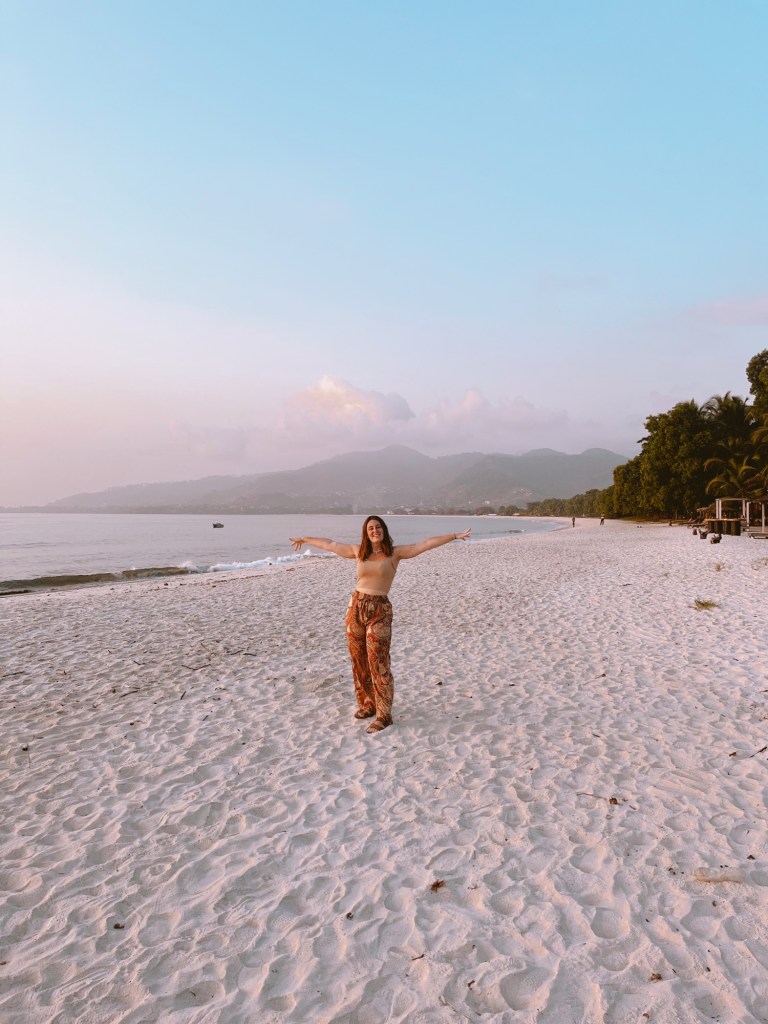
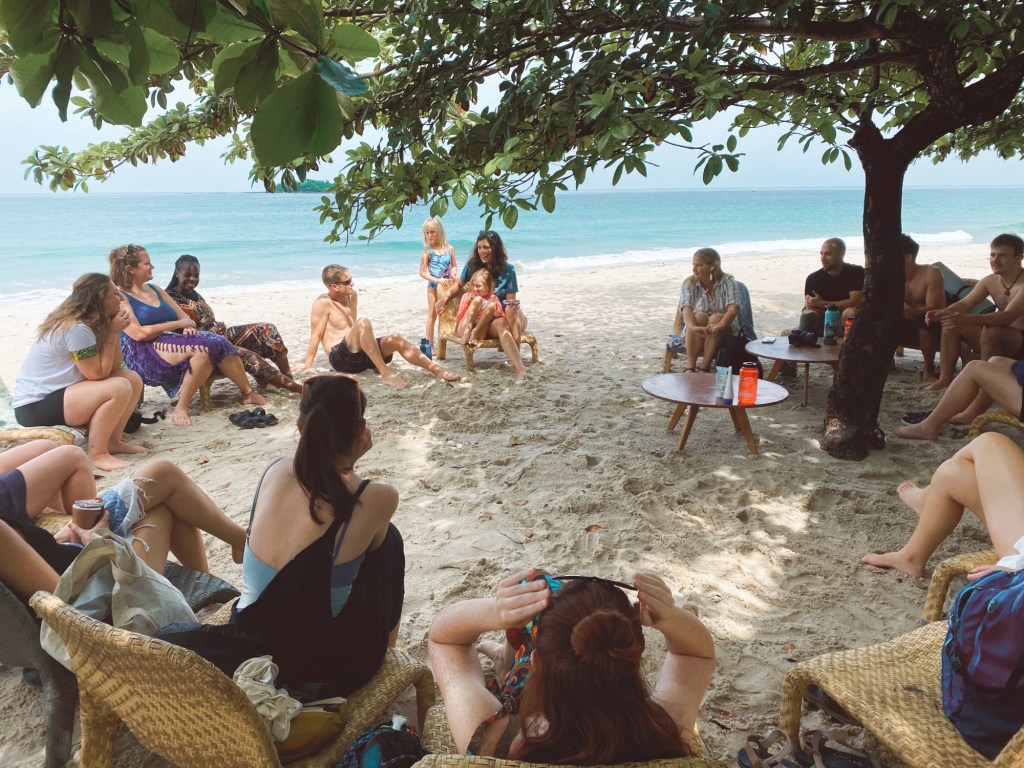
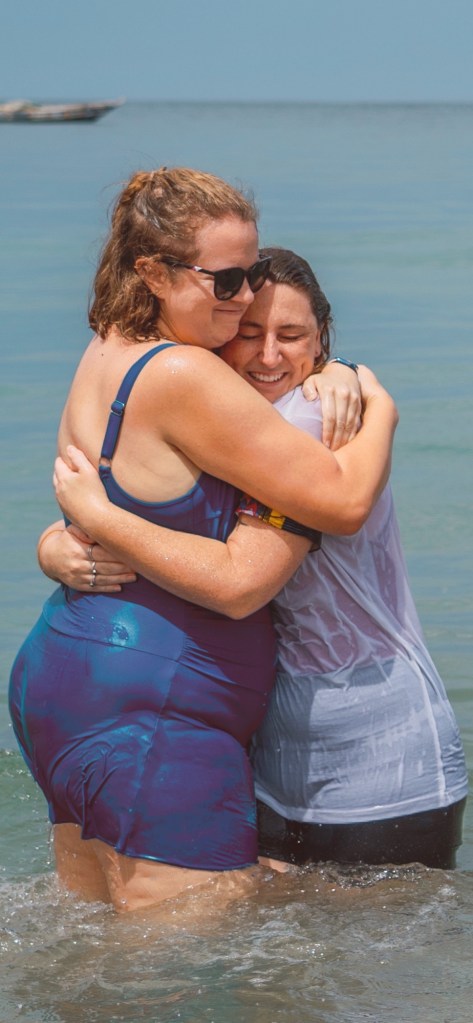
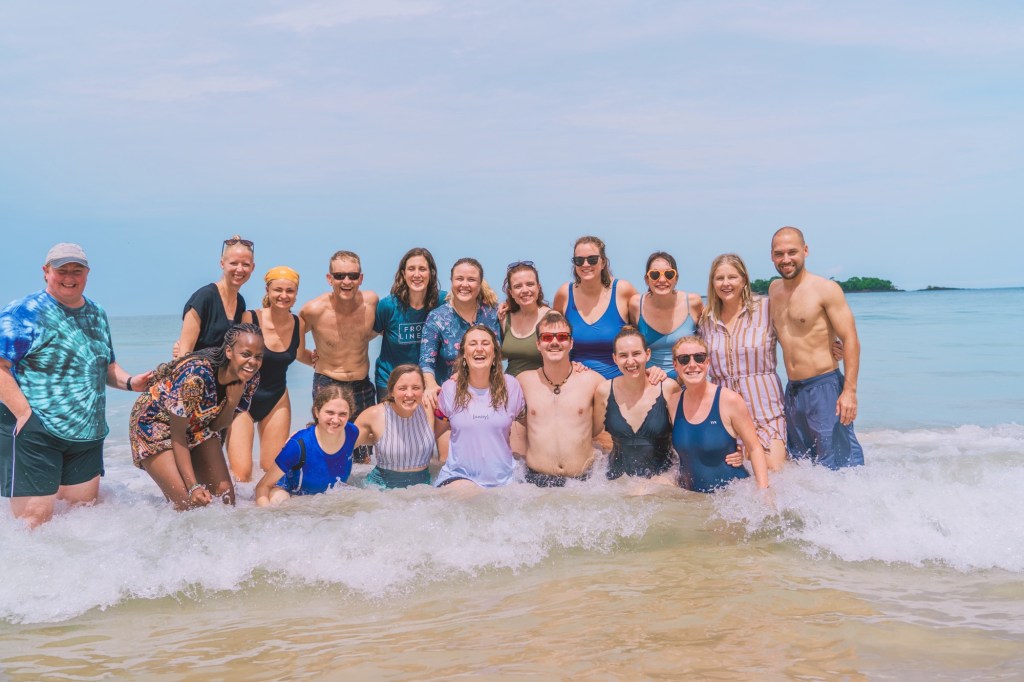
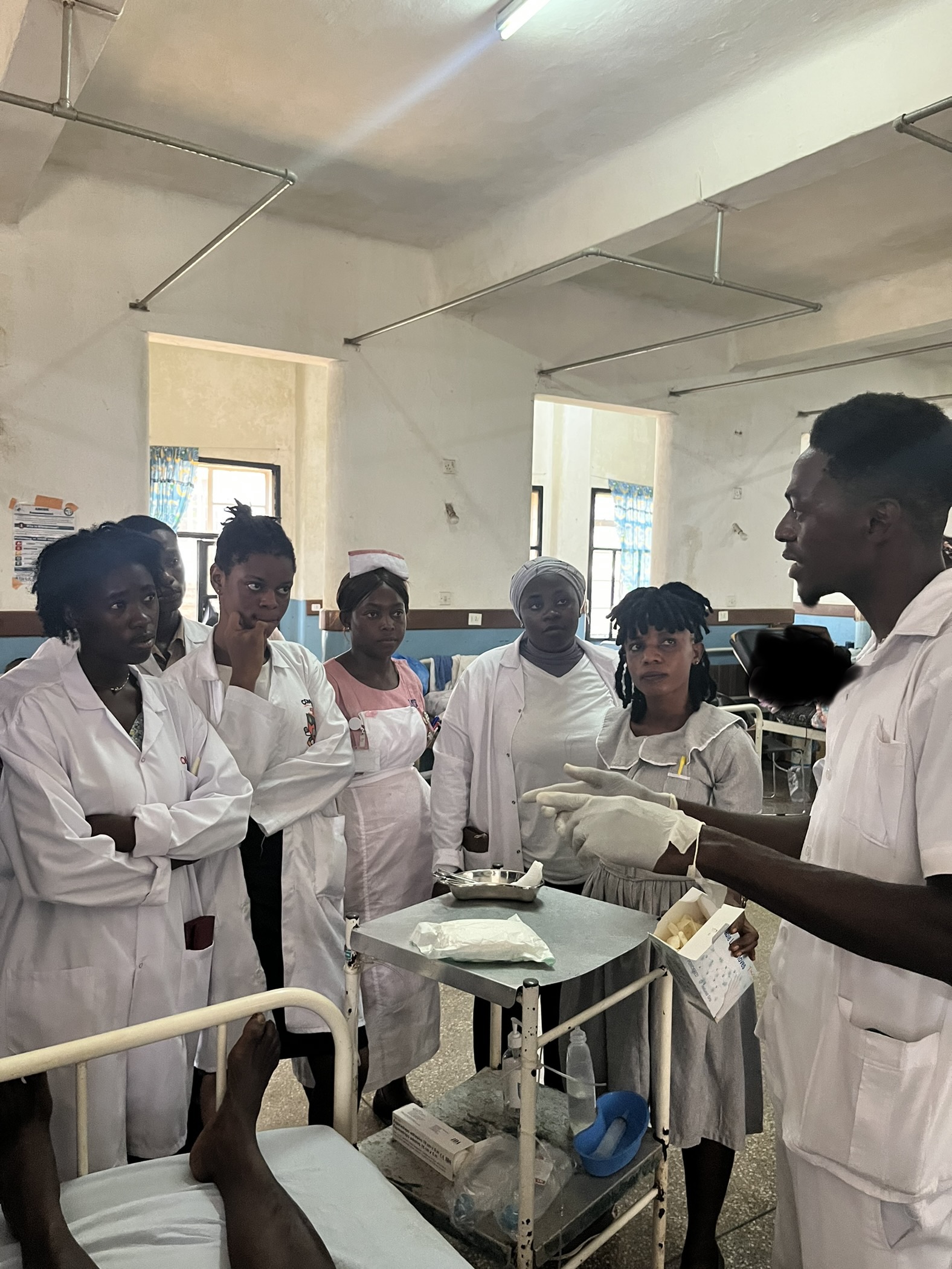
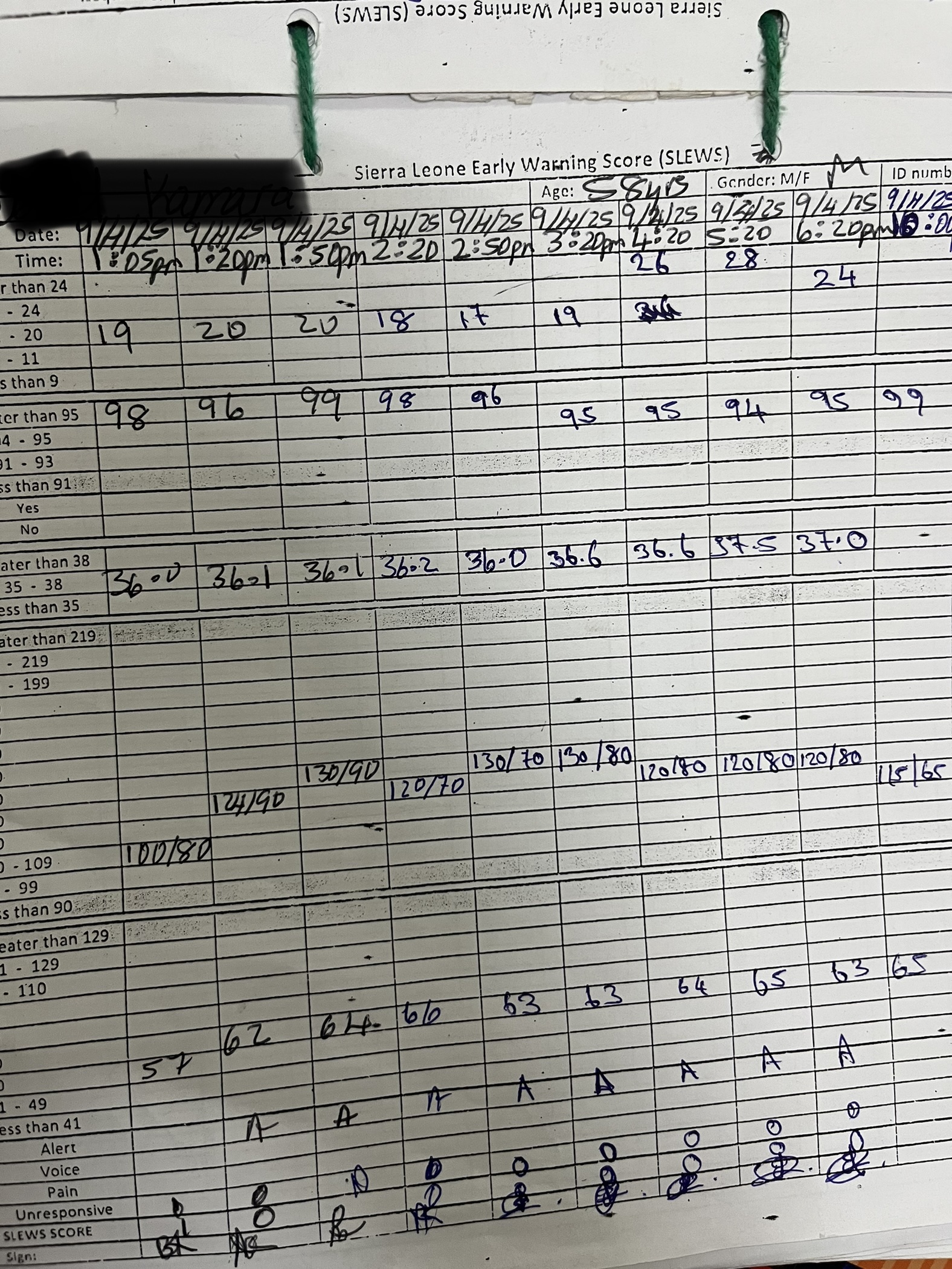

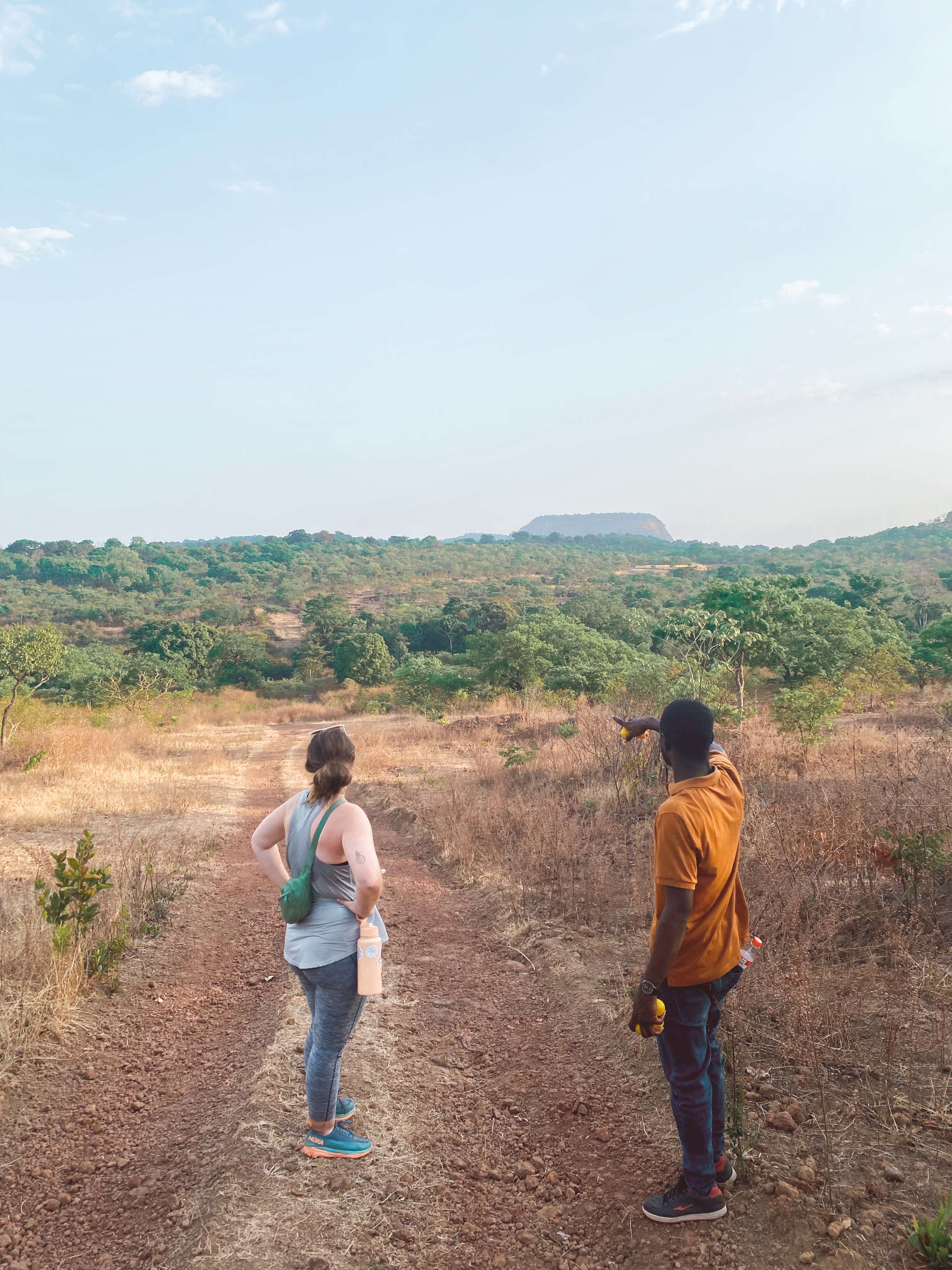
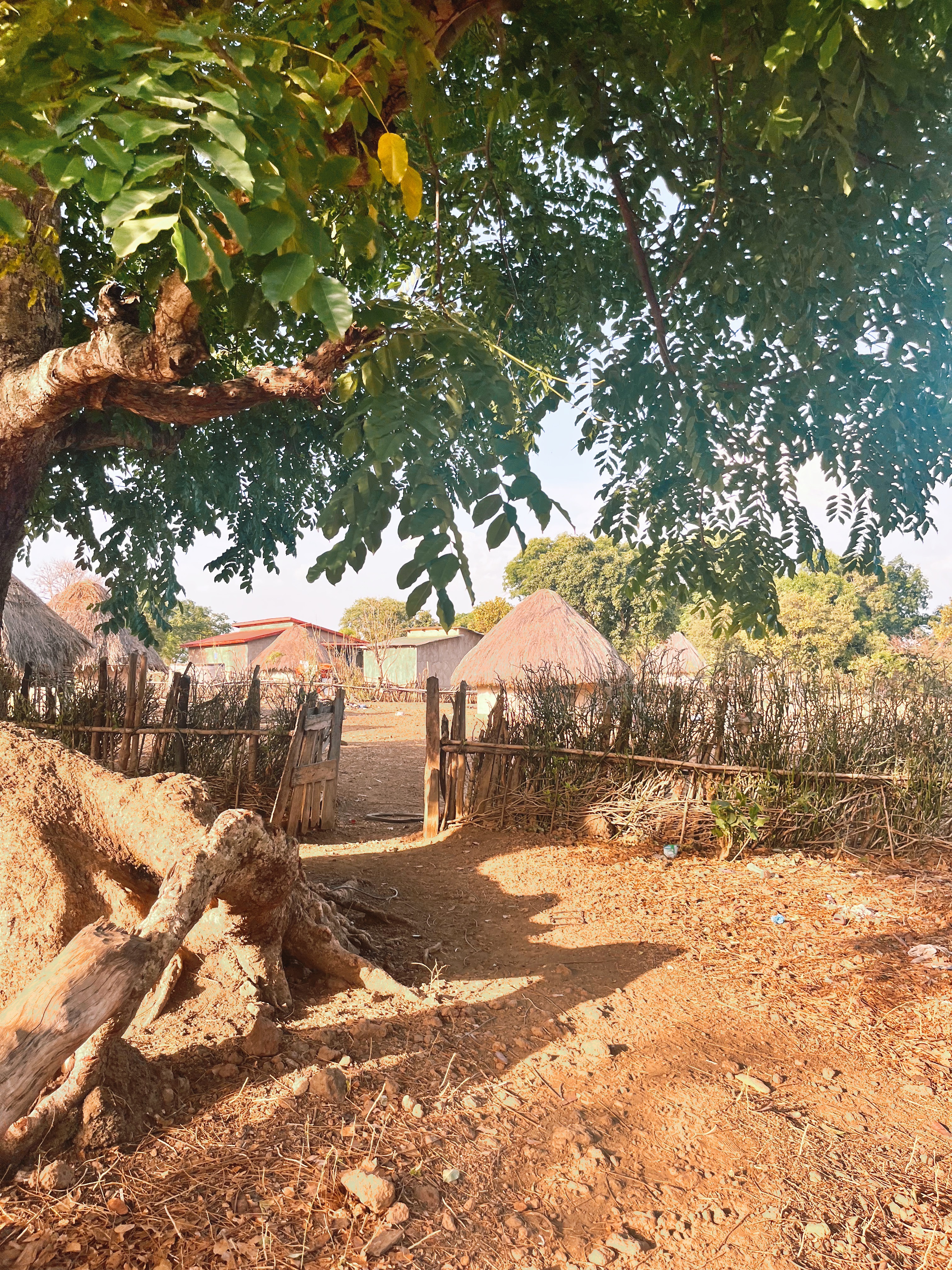
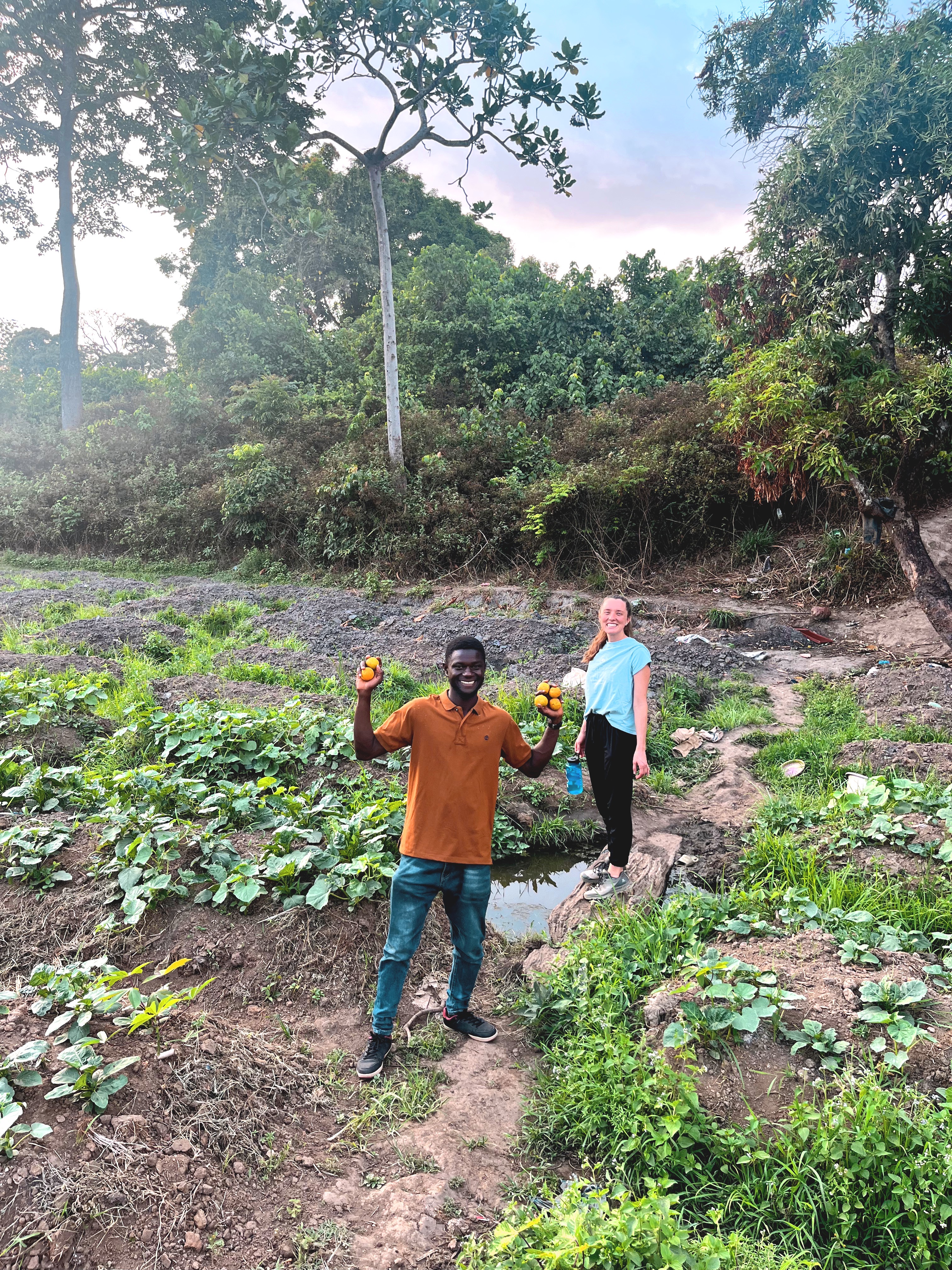
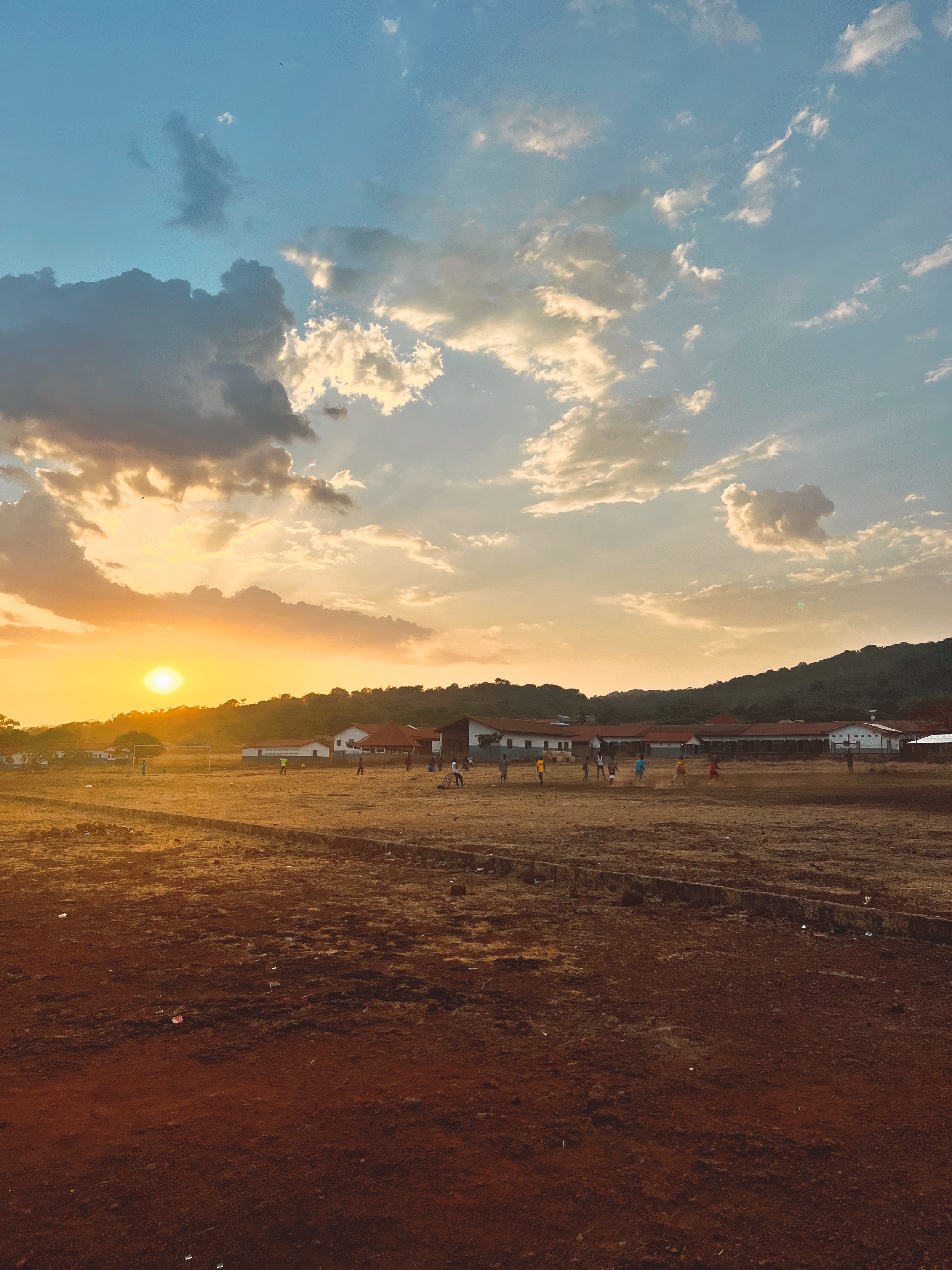
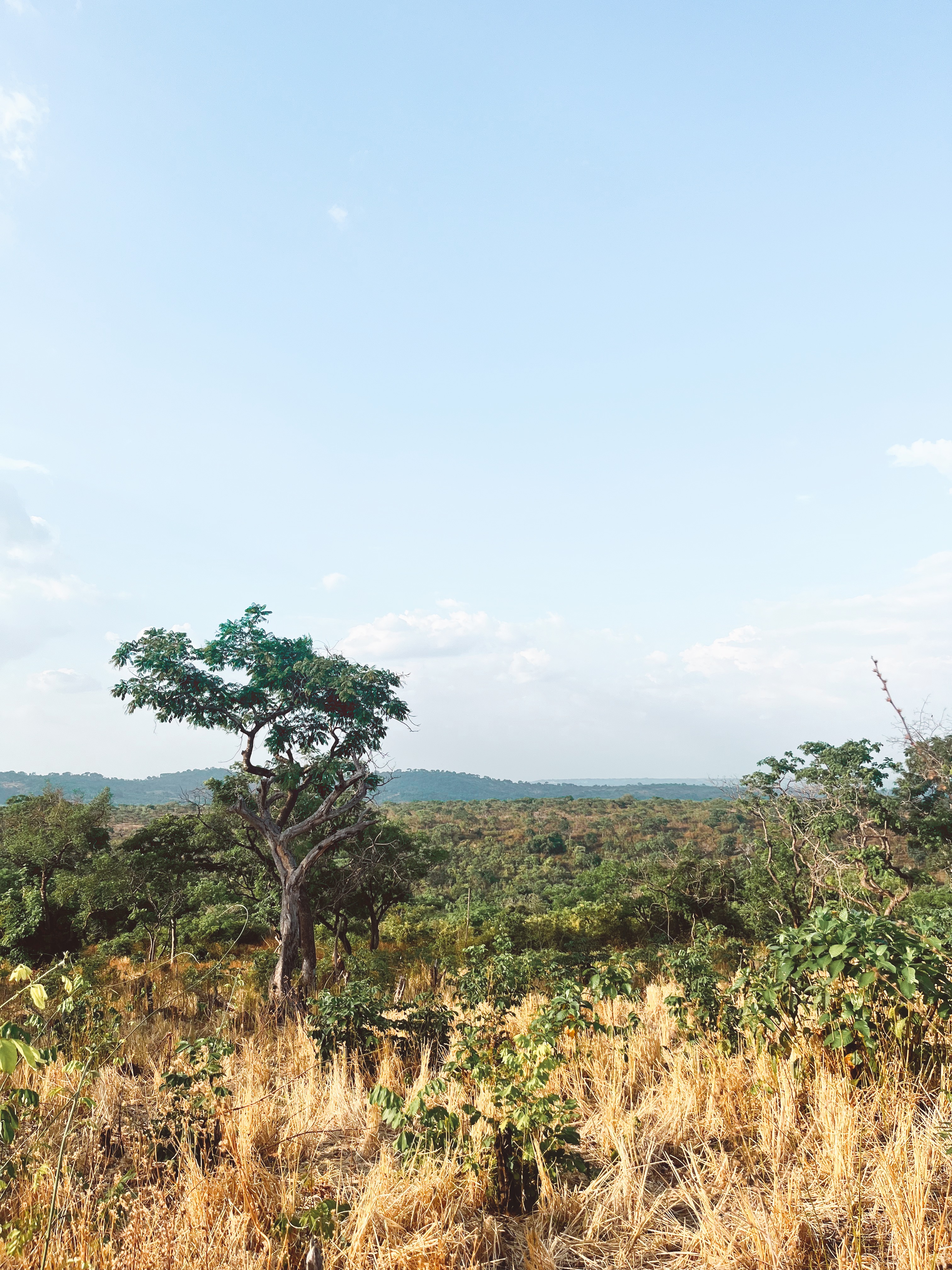


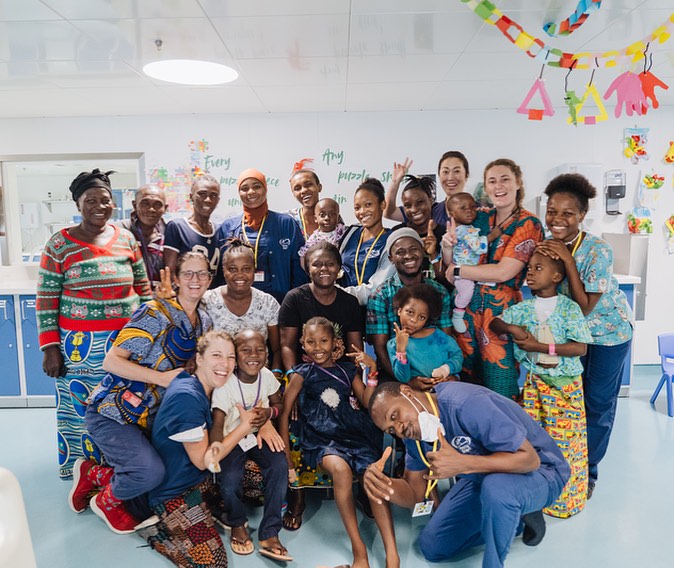
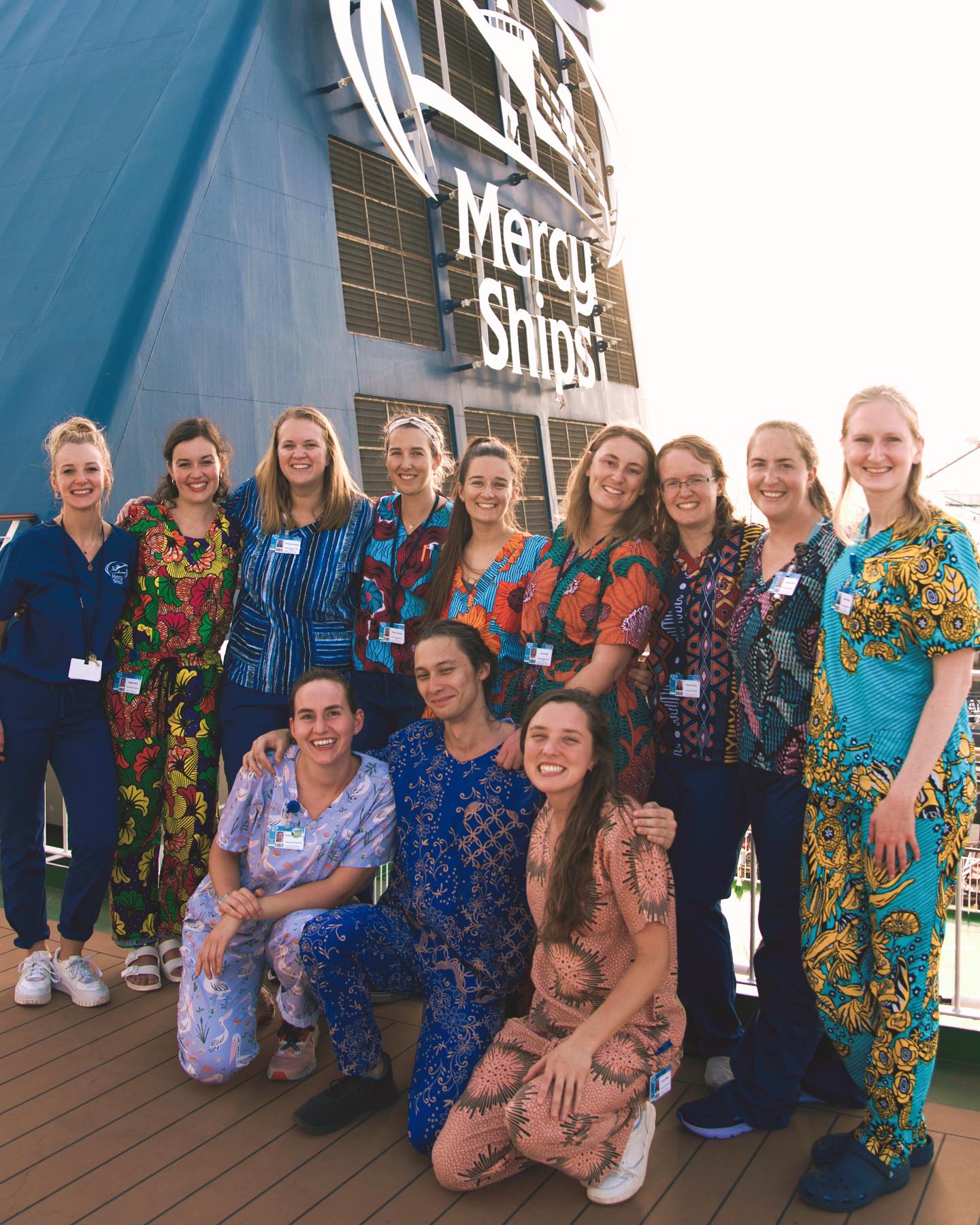


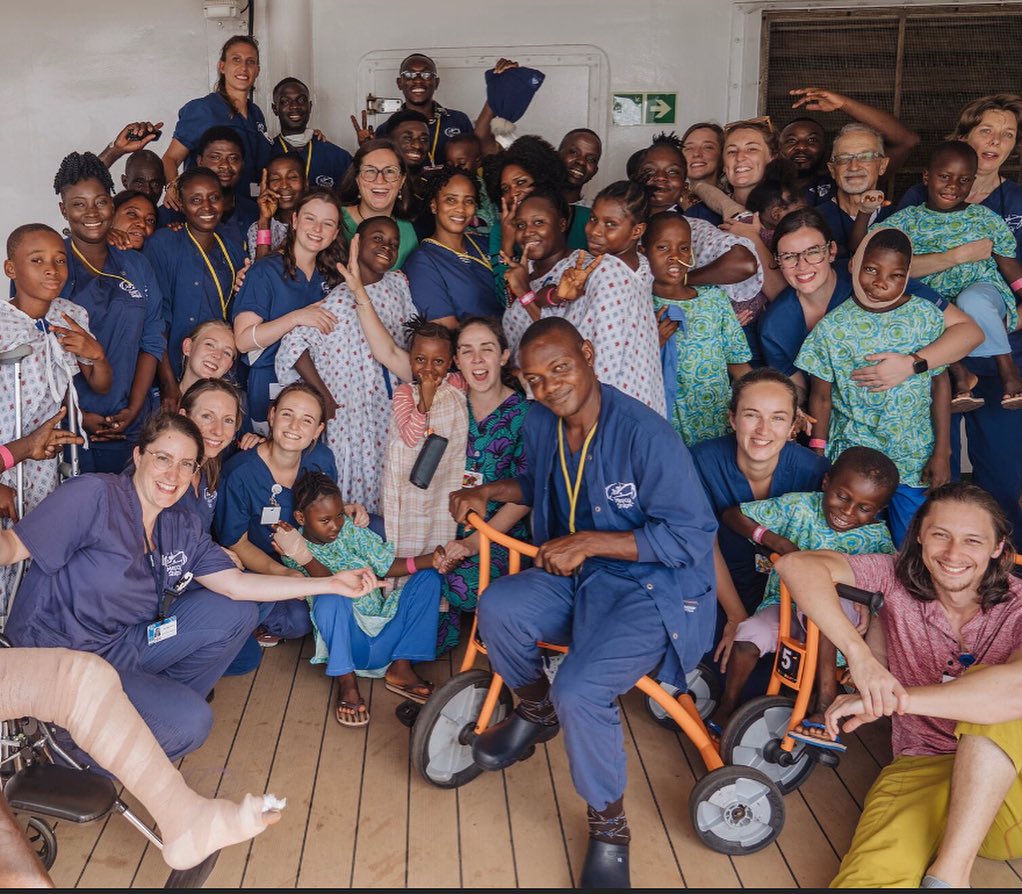
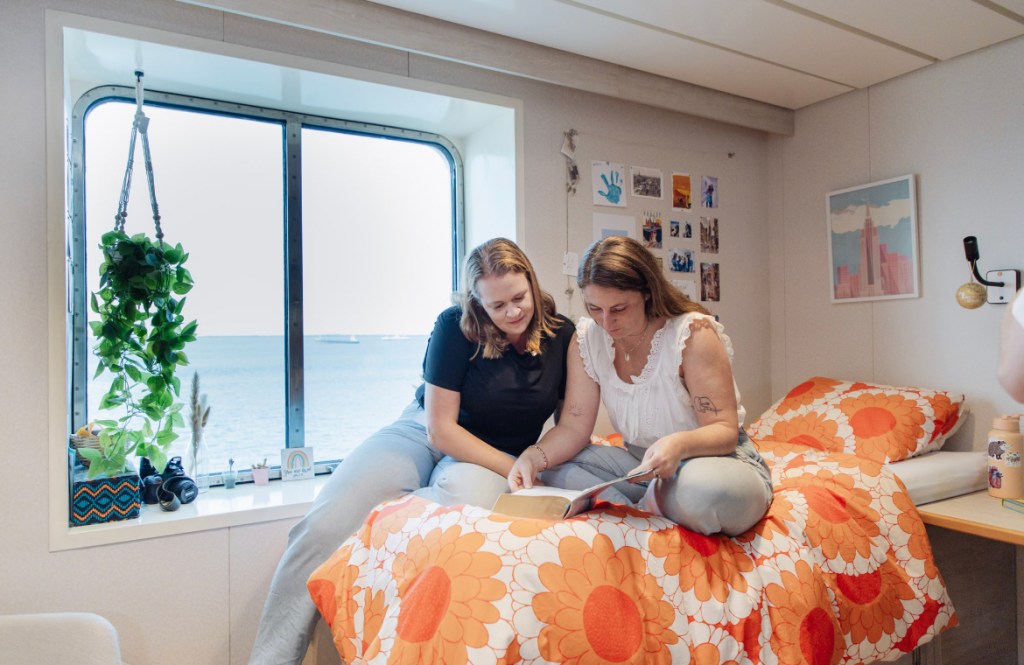
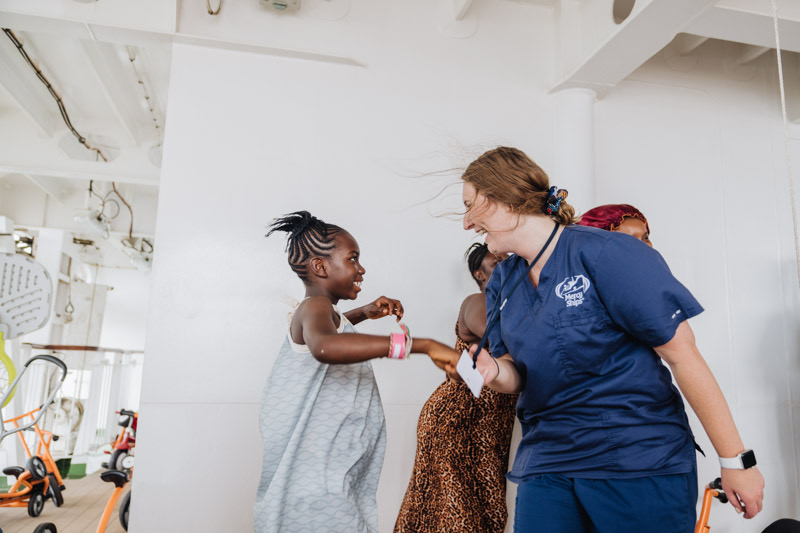
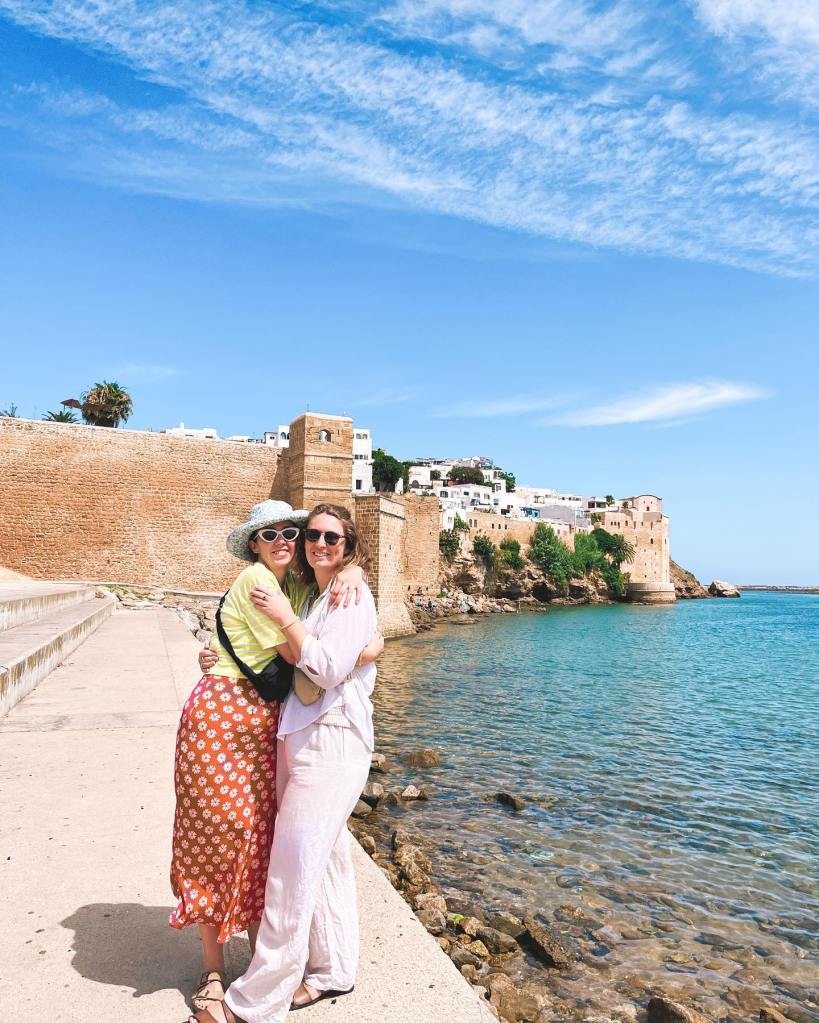
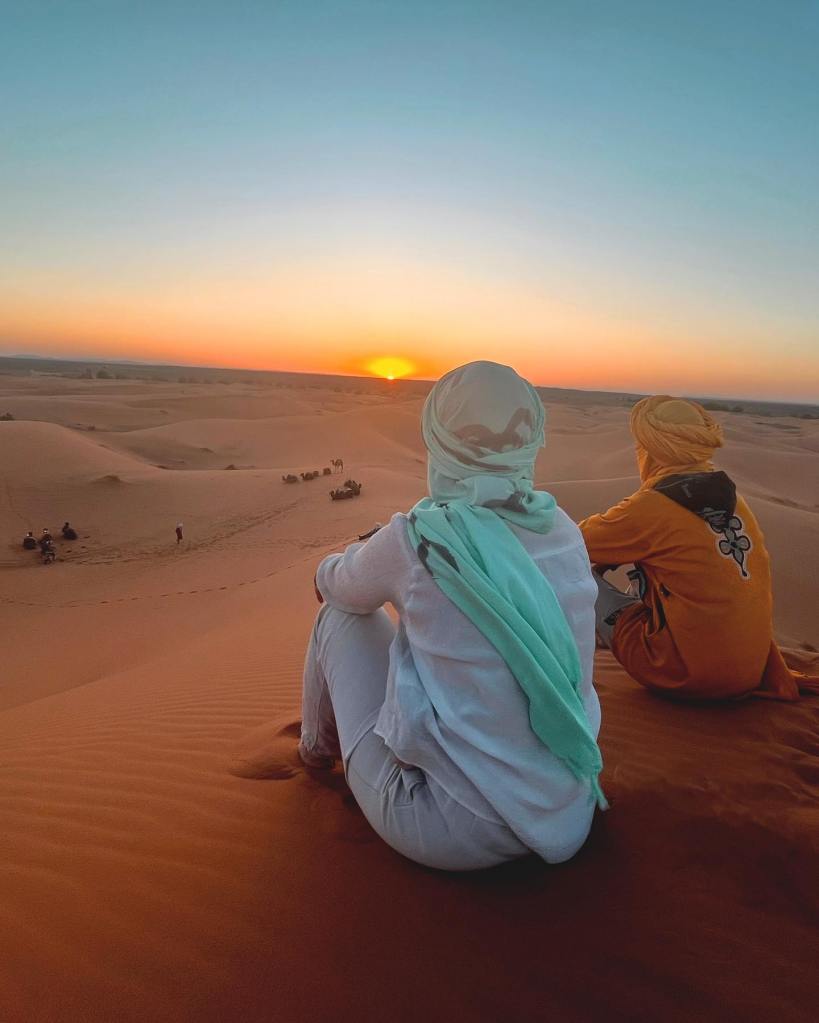
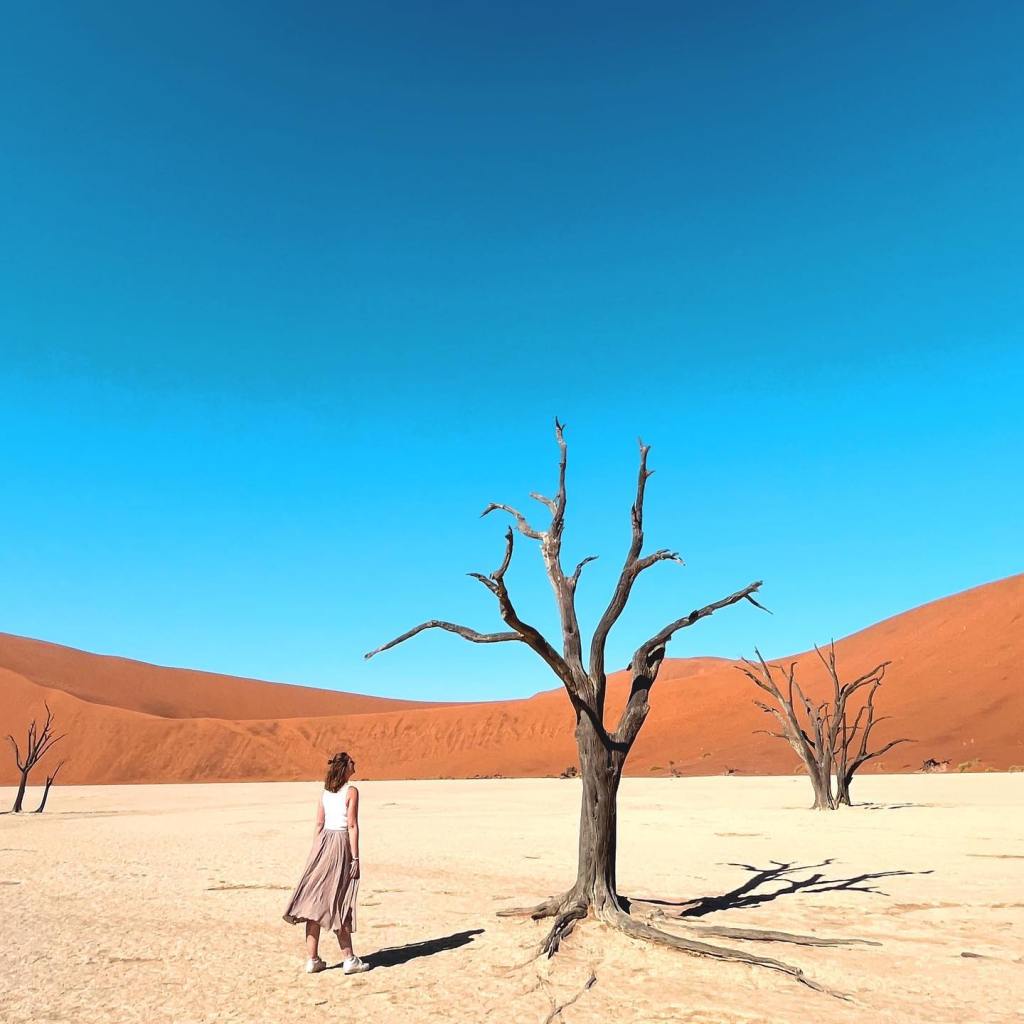
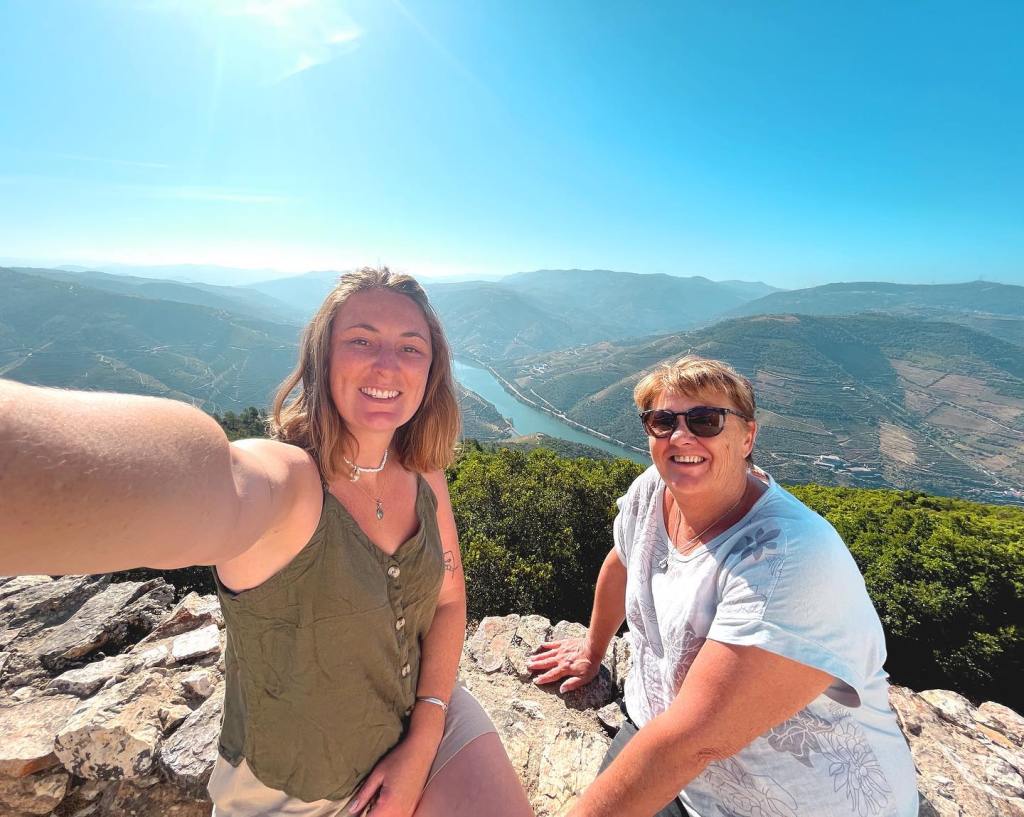


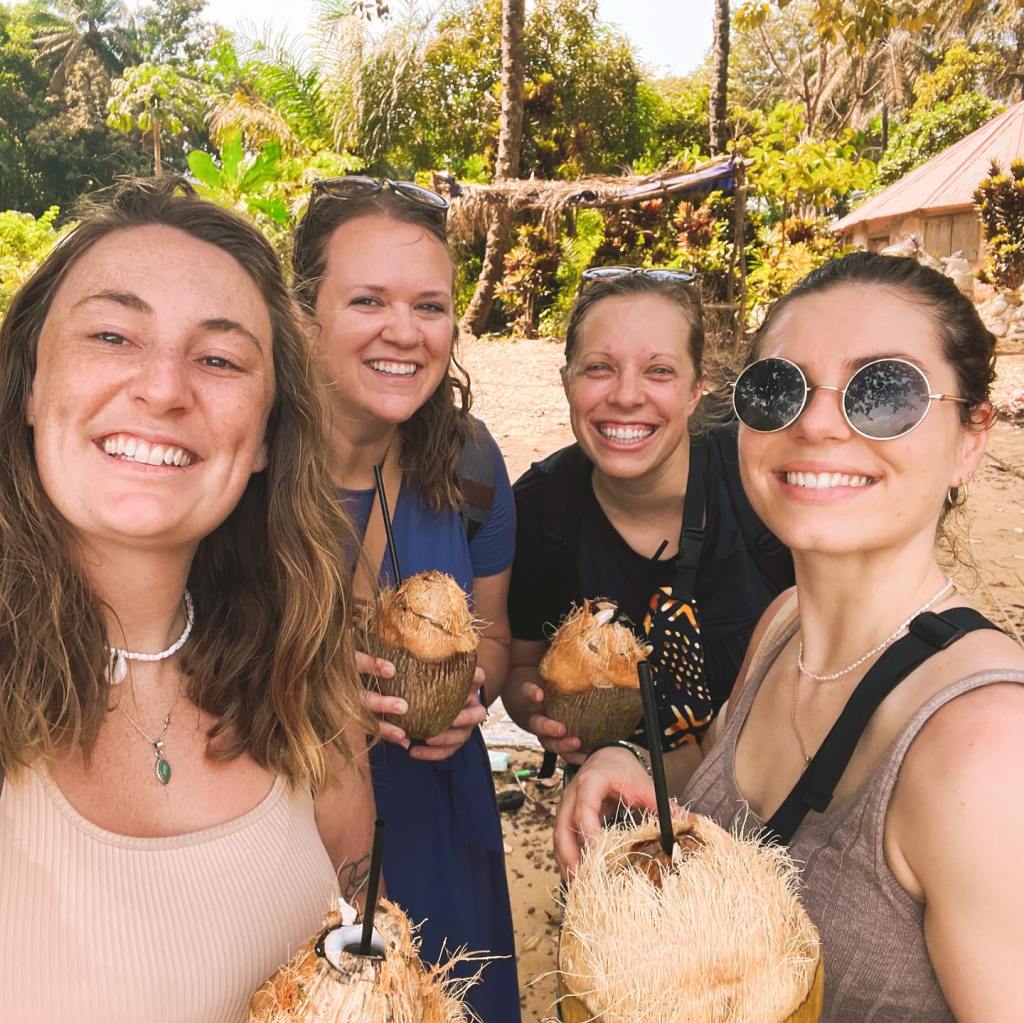
 AYLA IN AFRICA