Isaiah 43:2 “ When you pass through the waters, I will be with you; and when you pass through the rivers, they will not sweep over you.”
Lately God has been inviting me and challenging me to rethink what it really means to be strong. Not the kind of strength that comes from pushing through or holding everything together, but a deeper, quieter strength, one that’s rooted in grace and presence. It’s been a humbling journey, and today, I’d love to share a part of that with you.
There are seasons in life when we feel like we’re barely staying afloat. Maybe it’s the weight of loss, chronic exhaustion, a relationship that’s broken, or the emotional toll of carrying burdens no one else can see. These are the “deep water” moments of life, where strength is needed, but where the kind of strength we’ve always leaned on doesn’t seem to hold up anymore.
In these moments, many of us have internalized a particular version of strength: the kind that pushes through, stays stoic, and never shows weakness. It’s the strength that tells us to be tough, stay busy, and keep smiling. But what happens when that kind of strength runs out?
That question is at the heart of a book I recently read called Strong Like Water by Aundi Kolber, a Christian therapist and trauma-informed writer. She offers a radically different view of strength, one that isn’t about becoming harder or more resistant, but instead about becoming more connected, more compassionate, more attuned to ourselves, others, and to God.
She writes that true strength isn’t brittle. It doesn’t ignore pain or push it aside. Instead, it flows, like water. It adapts. It moves with grace. It yields when needed, but it never loses its power. This idea of being “strong like water” spoke deeply to me because it named something I had already been learning, sometimes painfully, on the front lines of service.
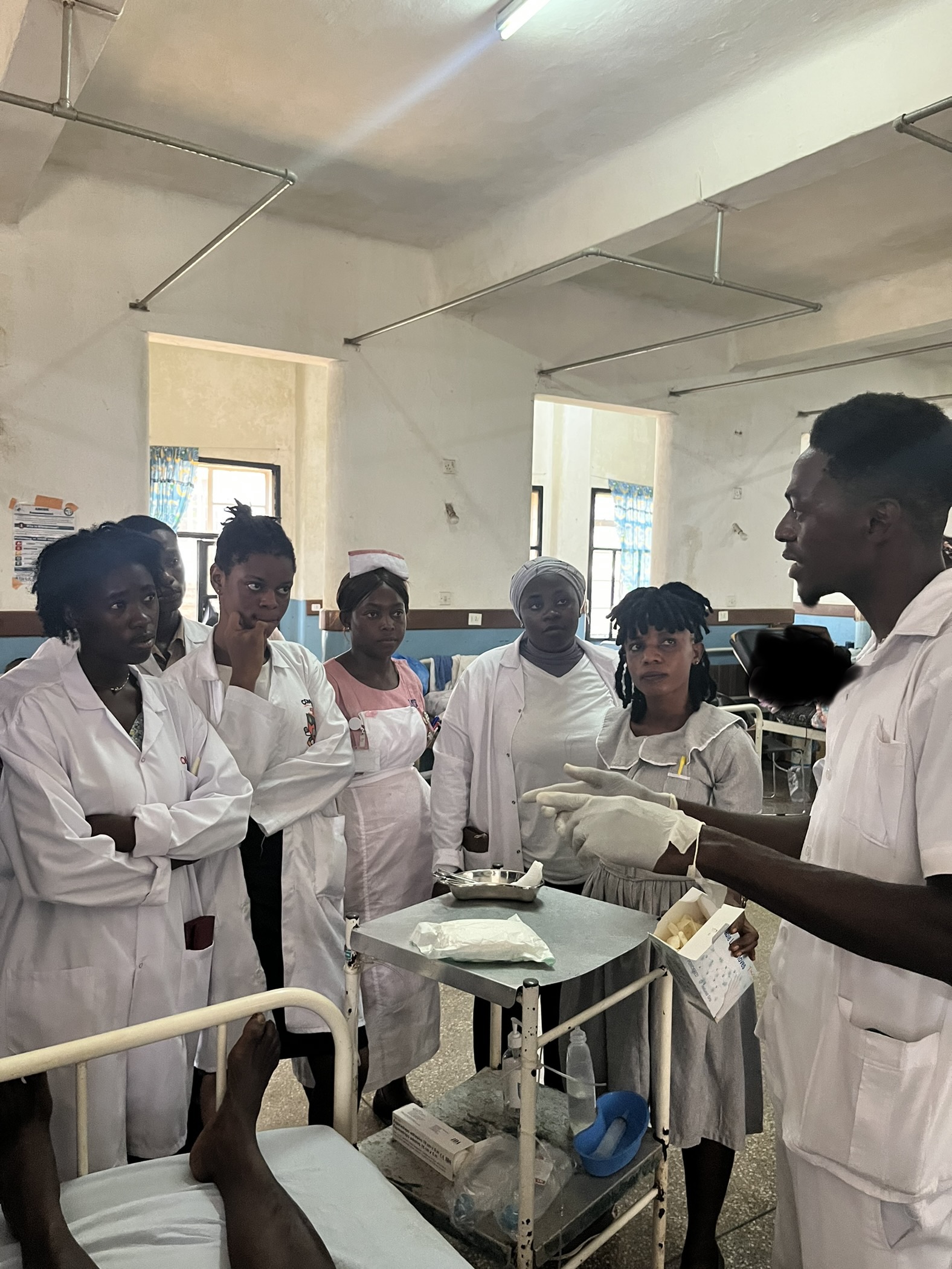
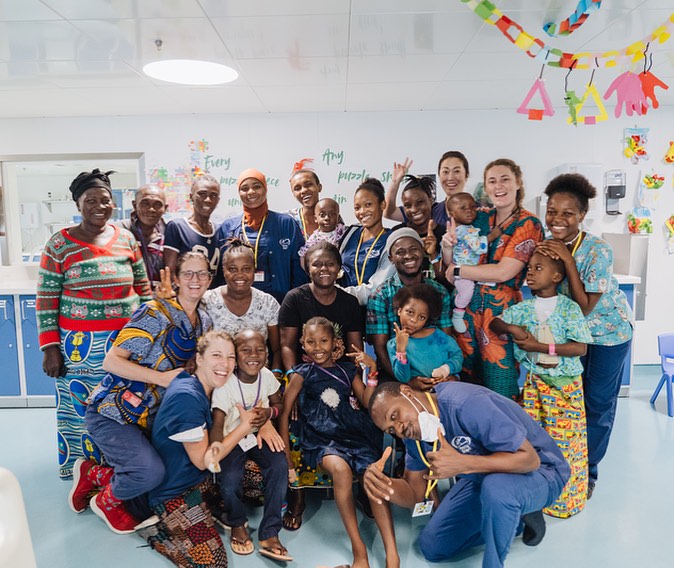
As most of you know I recently started working off ship at a hospital in Freetown, mentoring nurses and walking alongside them through all kinds of clinical and emotional challenges. Some days are full of joy and progress; others feel heavy and heart-wrenching. There are moments when I’ve watched patients die because basic resources aren’t available, or when I’ve seen dedicated nurses pushed beyond their limits. The pressure to perform, support others, and be a source of strength can feel unrelenting.
At first, I did what I’d always done: I pushed through. I told myself I had to be strong. I believed the lie that if I let myself slow down or feel too much, I would fail the people around me. So I worked long hours, put my own needs last, and kept showing up, even when I was emotionally empty.
Eventually, my body and heart began to protest. I could feel myself going numb. Disconnected. Worn thin. The waters were rising, and I knew I couldn’t keep swimming in the same way. That’s when God began to gently invite me into a different kind of strength.
Learning to be “strong like water” meant learning to stay present in hard places, not by fixing everything, but by being with people in their pain. It meant listening more and talking less. It meant grieving when I needed to grieve, resting when I needed to rest, and allowing God to meet me in my limits instead of trying to pretend I didn’t have any.
I began to see strength not as pushing harder, but as allowing grace to carry me. I saw it in the quiet resilience of a nurse who kept showing up even after a night of loss. I saw it in the tear-streaked face of a mother who stayed beside her child’s bed, praying without words. I saw it in myself, in moments when I chose to soften instead of shut down, to keep my heart open, even when it hurt.
Jesus, too, embodied this kind of strength. He wept with the grieving. He stopped to rest. He touched the unclean. He didn’t rush through suffering or avoid discomfort, He entered into it with fierce compassion and a steady peace. His power was never disconnected from love. He was strong like water.
And the promise of Isaiah 43:2 reminds us: we are not alone in the deep waters. God doesn’t say *“if” you pass through the rivers—*He says “when.” The hardship is expected. But so is His presence.
So if you’re walking through something hard right now, or if you’re holding space for others who are, I want to invite you to consider this:
• Could it be that strength isn’t what you thought it was?
• Could it be that God is more interested in your surrender than your performance?
• Could it be that He is offering you the courage to soften rather than harden?
You don’t have to force your way through. You don’t have to prove your worth. God is already with you in the water. And He is not asking you to be invincible, only present, only willing, only surrendered to His grace.
They say grief comes in waves, and I think that’s true of the hard days too.
Working at Connaught sometimes feels like riding a roller coaster blindfolded. There are moments of hope and breakthrough, but lately… it’s felt heavy. Really heavy. The last month has been filled with some long, difficult days that seem to blur into one another, each one layered with its own weight, its own heartbreak.
And it’s not that I haven’t experienced hard shifts before. I’ve worked back home in busy, high-pressure hospitals, juggling too many patients, managing codes, supporting grieving families, and walking out of the ward emotionally drained and physically wrecked. I’ve held the hand of a dying patient and comforted their loved ones, all while trying to keep pace with protocols, alarms, and expectations. Those shifts were intense, heartbreaking, and at times overwhelming.
But Connaught… it’s different.
Here, the challenges cut deeper, not because the patients are sicker, but because the safety nets I took for granted simply don’t exist. It’s not just short-staffed; it’s under-resourced in ways that force impossible decisions. It’s knowing what to do, how to help, but being unable to.
The hard days here don’t just leave me tired, they leave me changed.
A “difficult day” here doesn’t just mean being busy or overwhelmed. It means standing over a patient who is dying because we’ve run out of oxygen. It means trying to resuscitate someone with an ambu bag that has holes in it, knowing full well it’s not going to work the way it should. It means watching a patient die not because we lacked skill or care, but because he couldn’t afford the emergency supplies for the surgery that might have saved his life.
It means holding the body of a baby, his chest still, after hours of trying to bring him back, knowing that if he had received care just a little earlier, he might have lived. But the nurses were stretched too thin. The health system failing him before he even had a chance.
These moments stay with you. They don’t dissolve with the end of a shift. They sit in your chest, they wake you at night, they change the way you pray.
At home, we fight to give our best care within a structure that mostly supports us. Here, we fight for the basics, gloves, medications, running water, electricity, and we still lose patients we might have saved anywhere else. The grief feels heavier because it’s laced with injustice. The exhaustion hits harder because it’s tangled with helplessness. And the victories, when they come, feel monumental, because we know exactly what it took to get there.
I’m writing this not for sympathy, but for honesty. I love my job, deeply. I believe in this work with every part of who I am. But it’s not always easy. And I don’t always know what to do with the things I carry.
When I return to the ship after a day at Connaught and someone asks me, “How was your day?” sometimes all I can manage is “fine.” Not because that’s the truth, but because I don’t know how to translate what I’ve seen into words that won’t overwhelm or burden the person asking. Sometimes I want to scream or cry or just be held in silence, but instead, I smile. I shrug. I tuck it all away.
I’ve always prided myself on being strong. Independent. The joyful one. The helper. The one who listens. I’ve carried that identity like armor. But what I’m learning, slowly and painfully, is that strength doesn’t mean silence. It doesn’t mean carrying everything alone.
Over the past few months, I’ve built habits that help me cope, journaling, praying, reading Scripture, writing out what I can’t say out loud. Those tools have become lifelines. But I’ve also realized something deeply important: I need to talk. Writing helps me process, yes. But I’m a talker. I need to say it out loud. I need to be witnessed.
This week, I finally reached out to chaplaincy. I sat down and let the words spill out. Some came easily, others broke as they came. But by the end of that session, I felt something I hadn’t felt in a long time: relief. Not because the pain had gone. But because it had been shared. Because someone had looked me in the eyes and said, “That’s heavy. I see you. You’re not alone.”
And that’s what I’m learning: I can’t do this alone. The work I do is sacred. But it is also brutal at times. And trying to carry it without support is not noble, it’s dangerous. Without space to speak, to cry, the grief bottles up. It festers. It waits to explode. And I’ve lived long enough to know the damage that can do.
I’m learning that needing help isn’t weakness. That asking for space to process is not indulgent, it’s necessary. That vulnerability isn’t a crack in my foundation, it is the foundation.
So I’m giving myself permission now.
To ask for help.
To lean on others.
To say “I’m not okay today” and let that be enough.
Because strength, I’m realizing, doesn’t come from holding it all together.
It comes from letting someone else hold it with you.
Every day, I find myself trying to hold two truths in tension, joy and sorrow, love and loss, each one vast, vivid, and deeply real. At Connaught, my days are steeped in contrast. I see deep love and deep grief, joy and devastation, celebration and mourning, often all within the same hour. It’s a place where a patient willingly gives up their only medical supplies to help someone else in greater need. Where someone’s mother dies because the medicine she needs is unaffordable. It’s where laughter echoes down a hallway just hours after heartbreak filled the same space.
And somehow, I’ve come to see that these contrasts aren’t separate. They aren’t opposite ends of a scale that I need to balance. They are all part of the same whole. I’m beginning to understand that love and suffering are not two different things, but threads of the same fabric. That joy and sorrow walk hand in hand. That’s something I’m learning deeply through God.
But that doesn’t mean it’s easy. Some days, I come back to the ship with a full heart, bursting with gratitude, for the nurses who tried their hardest, for the patient who pulled through, for the quiet moment of grace in the chaos. And other days, I return hollowed out, angry at the world. Angry at God. I slam my journal shut after scrawling the words, Why God? Why? I ask Him to help me make sense of it all. To show me what good could possibly come from a child dying because they didn’t have a simple antibiotic. I wrestle with the injustice. With the brokenness. With the ache of helplessness.
And yet, even in that questioning, even in the anger and confusion and exhaustion, I’m beginning to know something. I’m learning that God doesn’t ask me to pretend the pain isn’t real. He doesn’t ask me to paste a smile over my grief. He asks me to come to Him with it all. To trust that He is big enough to hold both my joy and my sorrow. Because He feels it too. He feels our joy. And He feels our pain.
In my darkest, most disoriented moments, He is there. When I cry out to Him in anger, He doesn’t turn away, He leans in closer. And when I’m overwhelmed by joy, when I feel love so strong it threatens to split my heart open, I believe He is rejoicing with me.
There is a verse that always finds its way to me, Isaiah 43:2-3:
“When you pass through the waters, I will be with you; and through the rivers, they shall not overwhelm you; when you walk through fire you shall not be burned, and the flame shall not consume you. For I am the Lord your God, the Holy One of Israel, your Savior.”
This is the God I’m learning to trust with all the pieces of my heart, the God who doesn’t promise to shield us from the fire, but who promises to walk through it with us. The God who doesn’t erase pain, but who transforms it into something deeper. More human. More holy.
So I keep walking the line between these emotions; love, pain, joy, suffering, no longer trying to separate them, but allowing them to bleed into one another. Trusting that God is present in all, and that somehow, through Him, they can coexist in grace. Letting the suffering teach me how to love deeper. Letting the joy remind me why it matters. Letting God meet me in both.
Because I’m starting to believe that the most profound transformation doesn’t happen when we escape the hard things, but when we stand in the midst of them and still choose to see beauty, to give thanks, to love wildly.
And in that space, in that sacred, messy, middle ground, I know I am not alone.
The day I was baptised is etched into my soul with a kind of permanence that words can barely capture. It isn’t just my favourite day from last field service; but it’s the most sacred, soul-stirring, and transformational day of my entire life. There are rare, moments that reach deep into the core of who you are and realign everything. You feel your heart shift, your spirit awaken, your identity begin to take shape in a new and profound way.
June 8th, 2024, was one of those moments.
I went into my baptism with an open heart. I hadn’t grown up in the Church. I didn’t know the rituals, the “right” things to say, or what it was supposed to feel like. I had never even witnessed a baptism before. And yet, despite all that I didn’t know, there was one thing I felt more clearly than anything else, this was right. This was exactly where I was meant to be. I carried a quiet certainty in my bones that day, a peace that settled over me. I wasn’t being swept along by emotion or pressure or anyone else’s expectations. I was saying yes to something eternal. Yes to God. Yes to grace. Yes to a love that had been patiently pursuing me my whole life, even when I didn’t know it.
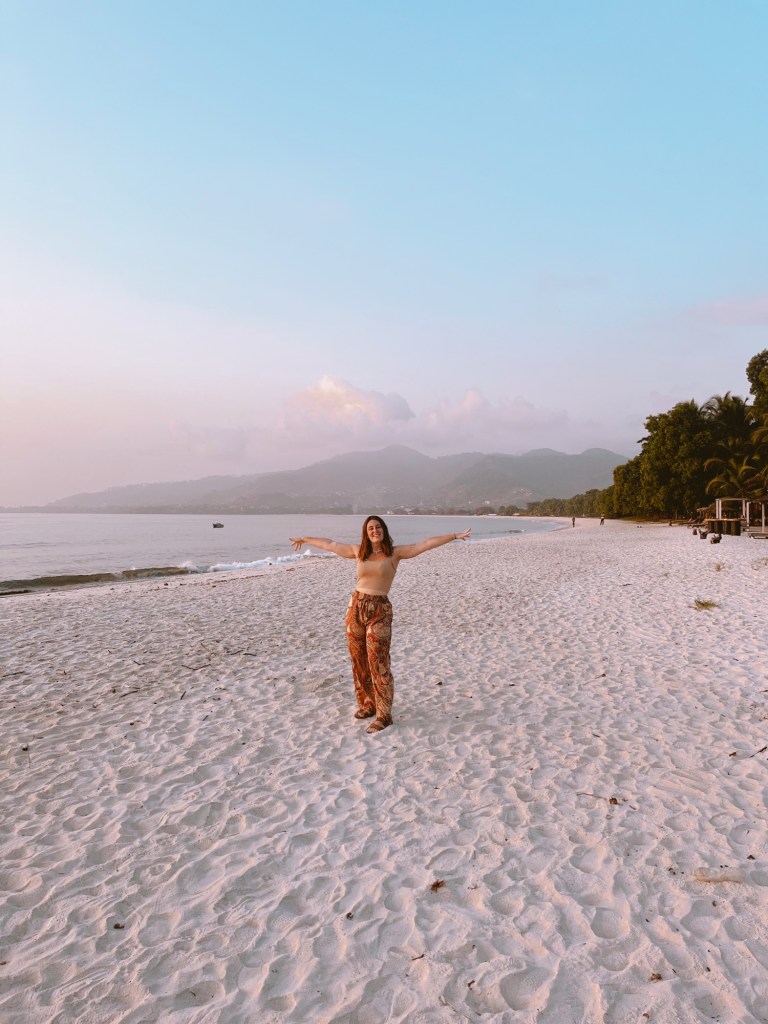
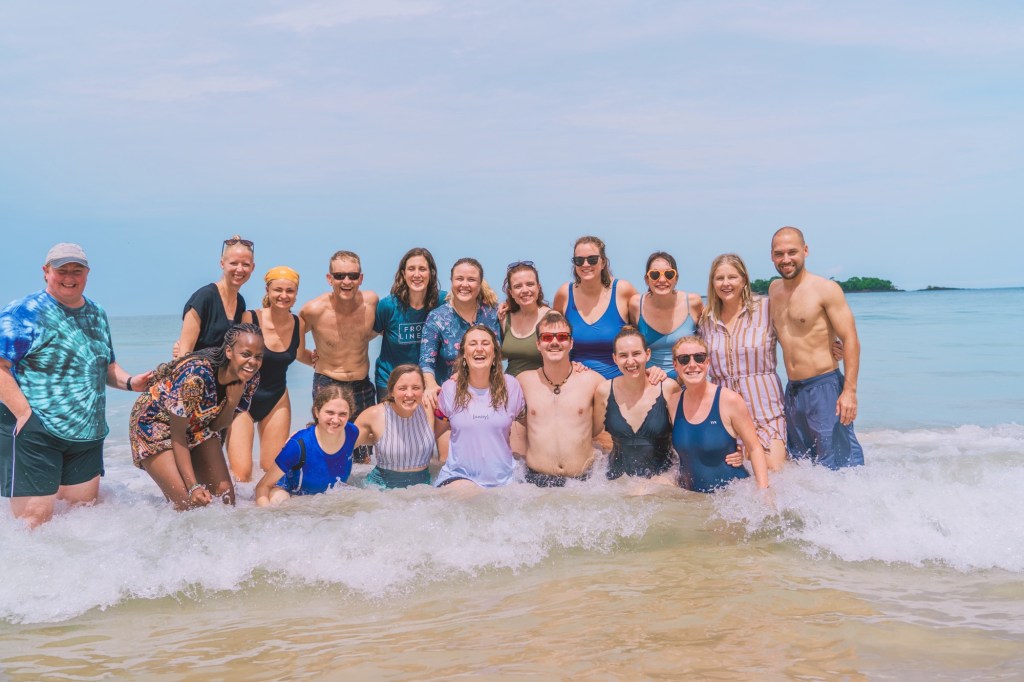
That morning, myself and about twenty-five of my closest friends from the ship piled into vans and made our way to Tokeh Beach. The drive itself was filled with a quiet, buzzing anticipation, laughter, music, a few people lost in thought, all of us carrying something tender in our hearts. Tokeh had always been a kind of refuge for me. A sanctuary. Just an hour outside the noisy heartbeat of Freetown, it felt like another world, untouched and peaceful. The soft, white sand hugged the shoreline like a gentle promise. Towering palms danced in the breeze, and lush green mountains watched over us like guardians. The ocean, vast and alive, seemed to breathe in rhythm with my soul. Over the past year, I’d spent so many weekends there, laughing until my stomach hurt, swimming in the warm waters, watching beautiful sunsets and sharing long conversations that nourished something deep in me. Tokeh had already cradled so many of my memories, but that day was different.
Because on that day, it became sacred ground. There was something almost otherworldly in the air, a stillness beneath the breeze, a hush beneath the joy. It was as if heaven had leaned in a little closer. The beach that had always been my place of rest was about to become the place of my rebirth. I wasn’t just returning to a familiar coastline, I was walking toward holy ground, surrounded by people who had loved me, shaped me, and pointed me to the One who had called me by name. And as I stood on that sand, heart pounding and soul wide open, I knew I would never see this place the same again.
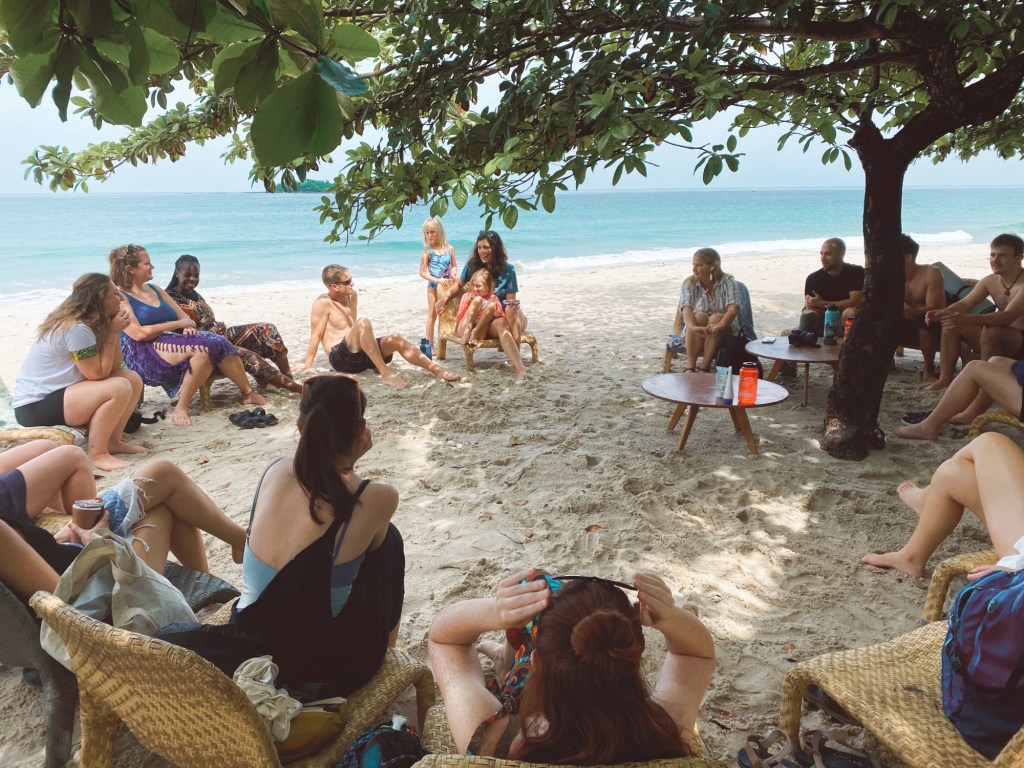
When we arrived, that familiar hum of joy filled the air, bright laughter, warm hugs, the comforting buzz of community that made this place feel like home. Everyone began settling in, spreading out towels and finding shade beneath the palms, the ocean’s rhythm steady in the background. But even amidst the celebration, I could feel the moment approaching, the moment I would share my testimony. I remember my heart thundered in my chest, each beat loud and heavy with anticipation. Public speaking has never come easily to me. Just the thought of standing up and having all eyes on me usually sent my hands trembling and my voice retreating. But this… this was different. This wasn’t a presentation. This wasn’t about performance. This was my truth. I wasn’t just speaking, I was opening up my soul. I was laying bare the long, winding road that had brought me to this exact moment.
I spoke through trembling lips about the years of silence and sorrow I had carried like a second skin. A trauma I had buried that left me feeling broken and hollow. The ache of a complicated relationship with my father, how his absence had shaped me, and how his presence, when it came, had often confused or wounded more than it healed. I spoke of the wandering, of years spent searching for love in all the wrong places, of feeling lost, unworthy, like a ghost moving through her own life. I had believed, for far too long, that I could never be truly loved. That if anyone saw the real me, they would turn away. I confessed the mistakes I had made. The pain I had caused. The choices born from desperation, from loneliness, from deep wounds I hadn’t known how to name. And as the words left my mouth, shaky and raw, I felt a trembling in my spirit, but not of fear. It was release.
There were moments when my voice cracked, when I had to stop and breathe through the tears pressing against the back of my eyes. But even in those silences, there was a Presence. A quiet, steady warmth wrapped around me, like a hand resting gently on my shoulder, grounding me. I knew, I knew, God was right there. Not distant, not judging. Just with me. Steadying me. Holding me. And as I kept speaking, the weight I had carried for so many years began to lift. Not all at once, but layer by layer, like peeling back the heavy curtains of shame that had covered my heart. With each word spoken in honesty, light began to pour in. By the end, I wasn’t just standing on a beach in Sierra Leone. I was standing in freedom. For the first time in my life, I felt truly seen. Truly known. And, perhaps most astonishing of all, truly loved.
I felt free. Not in a fleeting, surface-level way, but in the depths of my soul. The kind of freedom that only comes when you’ve met grace face-to-face, and let it hold you.
When I finished speaking, there was a silence. Not silence born of awkwardness, but the kind of reverent quiet that settles in when something sacred has just taken place. And then, slowly, gently, everyone began to gather around me. I sat on the warm sand, its heat grounding me, reminding me that I was fully here, fully present, fully alive. And then twenty-five sets of hands reached out, surrounding me in the most tender embrace. Some rested lightly on my shoulders, others on my back, my arms, my hands, each one like an anchor, a reminder that I wasn’t alone, that I was being held by community, by love, by the very body of Christ.
They began to pray. One by one, voices rose in harmony, soft, powerful, full of love and fierce compassion. They prayed over me words I didn’t even know my heart had been aching to hear. Words of restoration, of strength, of joy. Of new beginnings. They spoke life over my past, hope into my present, and blessing over my future. Each sentence wove its way into the fabric of my spirit like thread repairing a tattered garment. I could feel the tears falling freely down my cheeks, but this time, they weren’t heavy. They didn’t sting like they had in the past. These tears were different, they were pure. Cleansing. Holy.
It wasn’t sadness that overwhelmed me, but love. A love so vast and deep and undeniable that it broke something open inside me. I had never in my life felt so seen, so deeply known. Every broken part of me that I had tried to hide or fix or carry alone was now surrounded by grace, by hands, by prayers, by people who reflected the heart of a God who had never stopped loving me. In that circle, I felt something shift in my soul. I felt cherished. Not because I had finally “gotten it all together,” but because I had allowed myself to be fully real, fully vulnerable, and still, I was embraced. My heart felt like it might burst from the sheer beauty of it all. This was belonging. This was healing. This was the love of God made tangible, wrapped around me like a blanket of light. And I knew, in that sacred moment, that I would carry those prayers, the hands, the voices, the presence, with me forever.
And then it was time. The moment my heart had been beating toward for months. With the sun high above us and the ocean stretched out like an endless promise, we began walking toward the water. Shannon was on one side of me, Lindsay on the other, two women who had become more than just friends; they had become sisters, mentors, mirrors of God’s love in my life. With each step, the warm sand gave way to the cool kiss of the ocean. The waves curled gently around our ankles, playful and welcoming, as if creation itself was rejoicing with us. We waded in slowly, the water rising around our waists, the salty breeze wrapping around us like a whisper of grace.
I remember pausing for a moment and looking back toward the shore. There they were, my people. My ship family. The faces of those who had held me in my darkest moments, who had spoken truth when I couldn’t find it on my own, who had shown me again and again what the love of Christ looks like in the flesh. Some of them had cried with me. Some had prayed over me when I couldn’t find the words. Some had simply been there, faithfully, quietly, lovingly. Their smiles, their presence, their unwavering support, it was all a living, breathing testimony to God’s goodness. They didn’t just walk alongside me; they helped carry me. I don’t think they’ll ever truly know how deeply they impacted me. How their kindness, their grace, and their faith lit a path back to the Father I had wandered so long to find.
I turned back to face Lindsay, and in that moment, time seemed to slow. Her eyes met mine, shining, steady, full of love. She placed a hand gently on my back, and with a voice both tender and strong, she spoke the words that will forever be carved into the deepest part of me: “I baptize you in the name of the Father, and of the Son, and of the Holy Spirit.” And just like that, the world stood still. Heaven opened. And I surrendered to the waters that would carry me into new life. Submerged in the ocean that had witnessed so many fragments of my journey, the tears I had shed in solitude, the prayers whispered into waves, the laughter shared with friends, the silent conversations between my soul and God. That sea had seen it all. And now, it held me in a holy pause. For a heartbeat, everything else disappeared. Time stopped. Sound faded. All that existed was the stillness of water and the overwhelming nearness of God.
I could feel Him. Not in an abstract or distant way, but as real and close as breath. His presence rushed over me, not like a roaring wave, but like a deep, undeniable current moving through every part of me. It wasn’t loud. It didn’t need to be. It was sure. Constant. Loving. Pure. In that sacred second beneath the surface, I felt the weight of my old self fall away, the shame, the fear, the lies I had believed for too long. They were washed off me like dirt in the tide. When I rose from the water, it was like gasping into new life. My arms shot into the air without thinking, as if my body couldn’t contain the joy erupting inside me. I cried out, not with words, but with a sound of raw, pure celebration. Tears poured from my eyes and blended with the saltwater already on my cheeks. Around me, the sound of clapping, cheering, and laughter broke like sunlight on the waves. It was peace. It was joy. It was love, full, unfiltered, unconditional. Love like I had never known before. Not love I had to earn or perform for, but love that had found me, claimed me, and called me His.
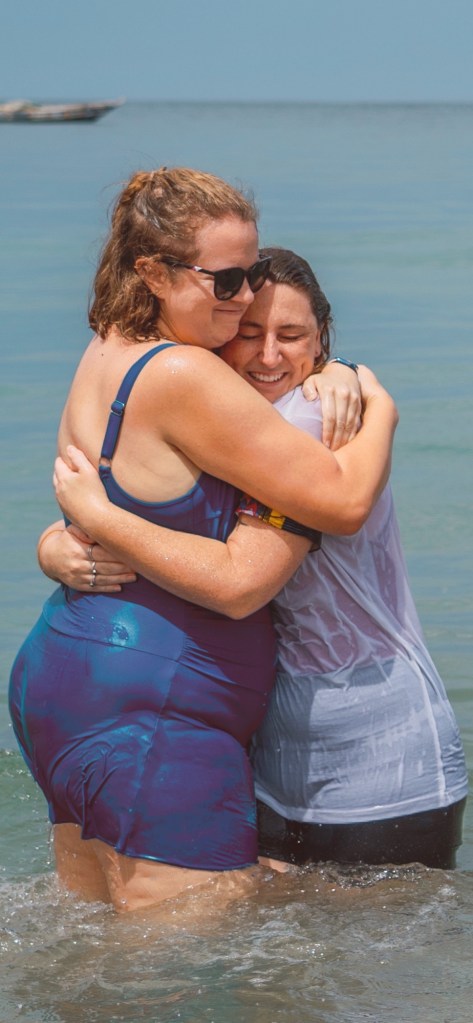
My friends rushed toward me, splashing through the surf, arms open, hearts wide. They wrapped me in wet, salty hugs, their laughter mixing with tears, their joy mirroring mine. We cried, we laughed, we clung to each other as if the holiness of the moment could somehow be held in our embrace. I was completely overwhelmed, but not by fear, not by uncertainty. I was overwhelmed by goodness. By grace. By the sheer wonder of being known, loved, and made new. It was the most holy kind of flood. A flood of freedom. A flood of belonging. A flood of home.
The rest of the day unfolded like a dream, one soaked in golden light, laughter, and the kind of joy that bubbles up when heaven feels especially close. It was a celebration in every sense of the word. We played beach frisbee, barefoot and free, our shouts echoing across the sand as the sun warmed our skin and the breeze tangled in our hair. We dove into the warm waters, splashing, floating, and letting the waves carry us like children unburdened by the weight of the world. We laughed until our stomachs hurt, and sometimes we paused, eyes brimming with the ache of knowing the end of this chapter was near.
That day we reminisced about the ten incredible months we had spent together, months marked by service, sacrifice, growth, and more grace than we could count. We had cried together, prayed together, worked side by side through impossible challenges. And somehow, through it all, we had become more than just a crew. We had become a community of faith, of love, of purpose.
That day was more than a celebration of my baptism, it was a celebration of the miraculous, undeserved, extravagant love of God. A love that had found us from every corner of the world and knit our lives together in this time, in this place. I felt it in the way the waves kissed the shore. I saw it in every smile around the circle. I heard it in the laughter and the silence alike. And I carried it with me, deep in my bones. That day was a gift I will carry for the rest of my life.
I walk between two worlds now. Not fully belonging to one or the other, just hovering somewhere in the middle, in this strange, sacred liminal space that I never quite expected to become my reality. One foot on the ship, one foot off. Half in the shiny, air-conditioned world of floating steel and structure where things feel comfortable and safe, and half in the hot, heavy, beautiful chaos of Connaught Hospital and the vibrant, unfiltered rhythm of Salone.
It’s not always easy. On the ship, there’s comfort. There’s order. We eat three full meals a day, sleep in cool rooms with clean sheets, we have electricity that always runs and we are surrounded by a rhythm of routine and community that feels sacred. There’s safety in it. Predictability. The ship has a heartbeat of its own, and when you live there, you move to its pulse without even thinking.
But just outside that bubble, life beats to a very different rhythm. At Connaught, the air hangs thick with humidity and exhaustion. Resources are scarce, emotions are raw, and the work is relentless. And yet… it is also alive with colour and culture and a kind of sacred grit. The beauty here isn’t polished, it’s wild and worn and impossibly resilient. It grabs you by the heart and doesn’t let go.
I find myself straddling both of these worlds, not quite rooted in either. Sometimes I step back onto the ship and feel like a foreigner in my own home. The conversations around me are the same as they’ve always been, the talk of the patients and nurses on the wards, but now I don’t always know how to speak into them. How do I talk about the weight of my day when I’ve just come from a ward where my patient died because they couldn’t afford their medicine? Where the nurses work with broken equipment and sheer determination?
Before I was part of the on-ship crew, a team, a family. And yet, now that I work off-ship, there are moments when I feel forgotten. Unseen. Like I’ve quietly slipped out of view. But off-ship, I’m not entirely at home either. I don’t live in the crowded, colourful neighbourhoods. And when the ship sails, I sail too, leaving behind my colleagues who have made Sierra Leone their long-term home. I’m here… but not here. I’m there… but not quite there either.
It’s a strange place, the in-between. Some days it feels like a bridge, strong and sure. Other days it feels like a tightrope. I’m learning to navigate it with grace, but it’s not without its ache. Still, I believe that maybe this space, this tension, is where some of the most meaningful transformation happens. Where empathy is born. Where humility grows. Where faith stretches.
I’m learning that I don’t have to fully belong to either world to live purposefully in both. God is in the middle ground, too. And for now, that’s where I’ll keep walking.
Life on the ship is full of big, beautiful moments. We celebrate the miraculous transformations. Children taking their first steps after life-changing surgery. A mother seeing her daughter smile again after a cleft lip repair. A man once cast out by his community because of a giant tumour, now walking back home with dignity and hope. There are dance parties in the hallways, people singing and clapping and worshipping together in spontaneous bursts of praise. Hope is restored daily in the most tangible ways. It’s impossible not to be moved when you’re witnessing life-altering change right before your eyes. These moments are extraordinary, and the celebrations that follow are filled with laughter, music, and tears of joy.
But that is not the reality of my work at Connaught Hospital. When I first transitioned off the ship, it was a jarring adjustment. Gone were the high-energy celebrations, the miracle recoveries that made headlines on the Mercy Ships’s instagram. Instead, I found myself face to face with a different kind of work, a quieter, slower, and often messier kind of transformation. Here, change doesn’t arrive in a single surgery or in a burst of applause. It comes in fragments. In conversations repeated over months. In small shifts in attitude. In a nurse choosing to show up even after an impossible shift. In a vital sign finally being recorded.
At first, it was hard to adjust. I felt disoriented, like I’d lost the rhythm that had carried me so effortlessly on the ship. There were days I questioned whether I was making any difference at all. Whether the quiet kind of change was still worth celebrating. I missed the immediacy of impact, the visible fruit, the emotional highs that came with witnessing physical healing and restored dignity in such a tangible way.
But slowly, graciously, God began teaching me that this work is no less sacred. That transformation doesn’t always announce itself with trumpets. Sometimes, it whispers. Sometimes, it crawls. Sometimes, it looks like nothing at all until one day you look back and realize everything has changed. And in that realization, I’ve come to understand: this slower, humbler work isn’t a step down. It’s a deeper invitation.
You have to understand I’m a glass-half-full kind of girl. I see the good in people instinctively. I walk into rooms full of strangers and find something to love in every single one. I’m often full of what some might call an excessive amount of joy, a bubbling, ever-present joy that probably annoys people now and then. But I can’t help it. I am an optimist to my core. I wear my rose-coloured glasses proudly. And though working at Connaught has tested that joy in ways I hadn’t anticipated, I’ve refused to take those glasses off. I’ve just learned to look through a different lens.
At Connaught, the victories look different. They’re quieter, less dramatic, often invisible to the untrained eye. There are no crowds cheering, no cameras capturing the transformation, no instant gratification. The miracles here are slower. More fragile. And yet, somehow, more profound.
God is teaching me to see differently. To lean in closer. To find beauty not in the spectacle, but in the sacredness of the ordinary. I’ve started learning to celebrate the small things, the kinds of things that might seem insignificant to someone else, but to me, they feel like bright flickers of light cutting through the shadows.
Like a nurse remembering to take post-op vitals without being prompted. Like a chart properly documented. Like a patient smiling at me with trust in their eyes. Like someone asking a question they were once too afraid to voice. These moments might not make it into newsletters or social media posts. But they are miracles nonetheless. Some days here are incredibly hard, emotionally, physically, spiritually. There are mornings when the weight of it all feels like too much, when the brokenness feels louder than the hope. There are moments where I feel like I’m pouring myself out with little to show for it, one step forward, ten steps back, again and again.
But then… there are days like today. Days that break through the weariness and whisper, Keep going. Days that remind me why I’m here. Days that make me fall to my knees in gratitude for a God who sees what the world overlooks. Because I’m learning, really learning, that the small things are not small at all. They are the foundation of lasting change. The quiet echoes of God’s faithfulness in motion.
And I wouldn’t trade that for anything.
So today I began my shift like I always do, with smiles and greetings. “How da bodi?” I’d ask, receiving the familiar response, “Da body fine.” “How da family?” “Da family fine.” “Tell God Tenki.” There are hugs and high fives, and of course, a chorus of “I gladi to see you” and “Me self gladi to see you.” Sierra Leonean culture is incredibly relational. You don’t just dive into work; you arrive first as a friend, a presence, a warm hello. Those greetings are more than just tradition, they’re threads that bind the community together.
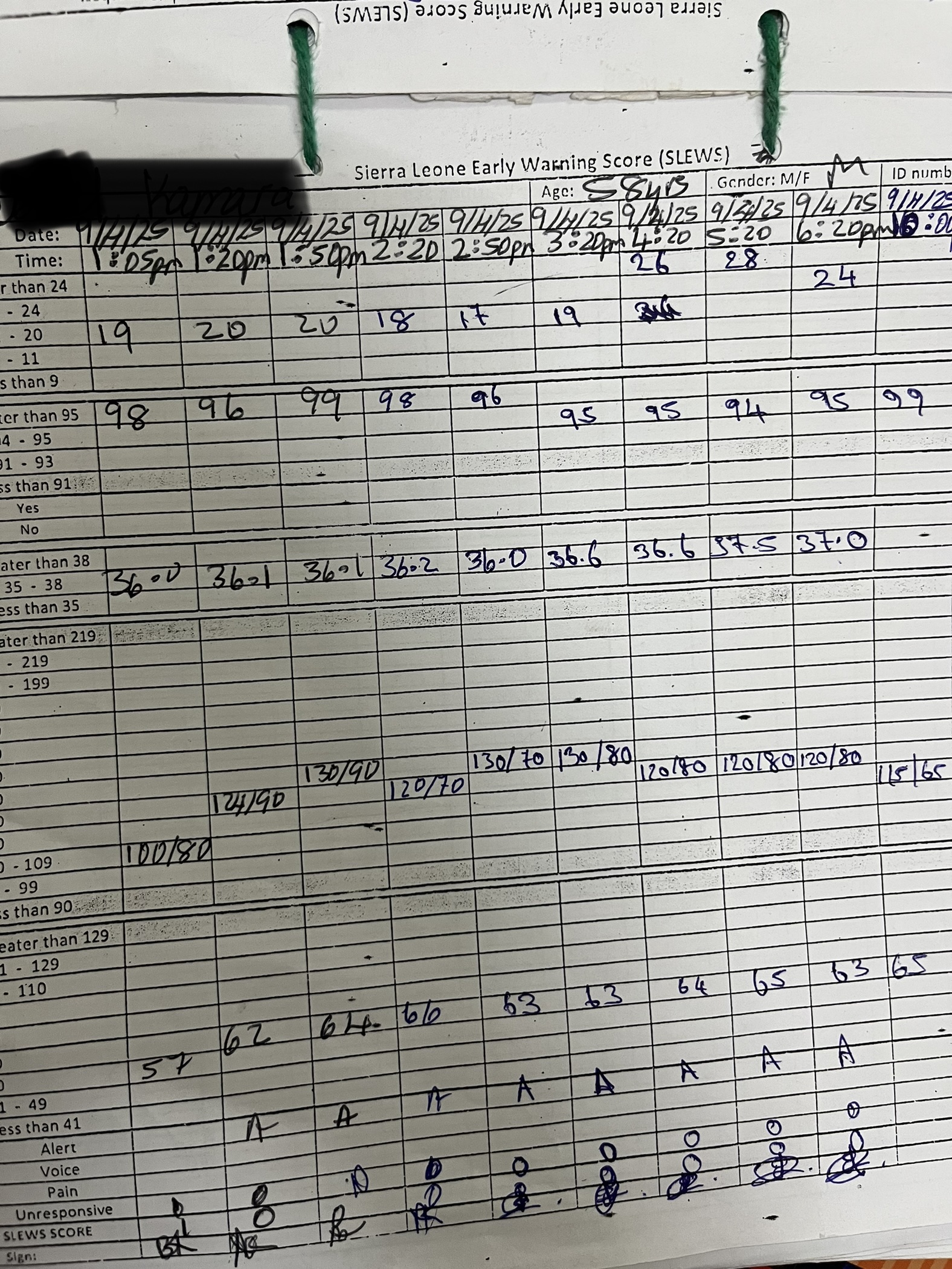
Once the greetings were shared, I began my usual morning routine, checking patient charts. I scan for vitals, medication records, doctors’ notes, the essential building blocks of care. What you have to understand is that nursing here is very very different to what most people are used to and there are many challenges. Sometimes it’s a lack of staff. Sometimes it’s broken vital signs equipment. Sometimes it’s knowledge gaps. And sometimes, it’s because patients simply can’t afford their medications that day.
But today, something different happened. As I reviewed the chart of a patient who had undergone surgery the day before, I saw something that made my heart swell, every single post-op vital sign had been done and documented. To many nurses, that might seem basic, even expected. But here, in a country still healing from the wounds of civil war and an Ebola epidemic, where the healthcare system is stretched beyond its limits, it was a big deal. We’ve been mentoring the local nurses on the importance of post-op care all year, walking alongside them, reinforcing, encouraging. And to see this practice happening, without me or Katie being there, without reminders or prompting, was a celebration. It meant something was taking root.
It was a sacred reminder: change is happening. It may be slow. It may not be flashy. It may not come with confetti and dancing and storybook endings. But it is real. And it is powerful. And it matters. These small changes, a nurse teaching a student, the accurate charting, or the nurse who chooses to go above and beyond, these are my miracles now. They are the quiet, steady proof that God is working here, in the hidden places, in the hard places. I don’t need the loud celebrations anymore, because my heart knows how to celebrate in the silence.
I thank God every day for the chance to be here, for the lessons He’s teaching me, and for the joy I’ve found in celebrating the small things.
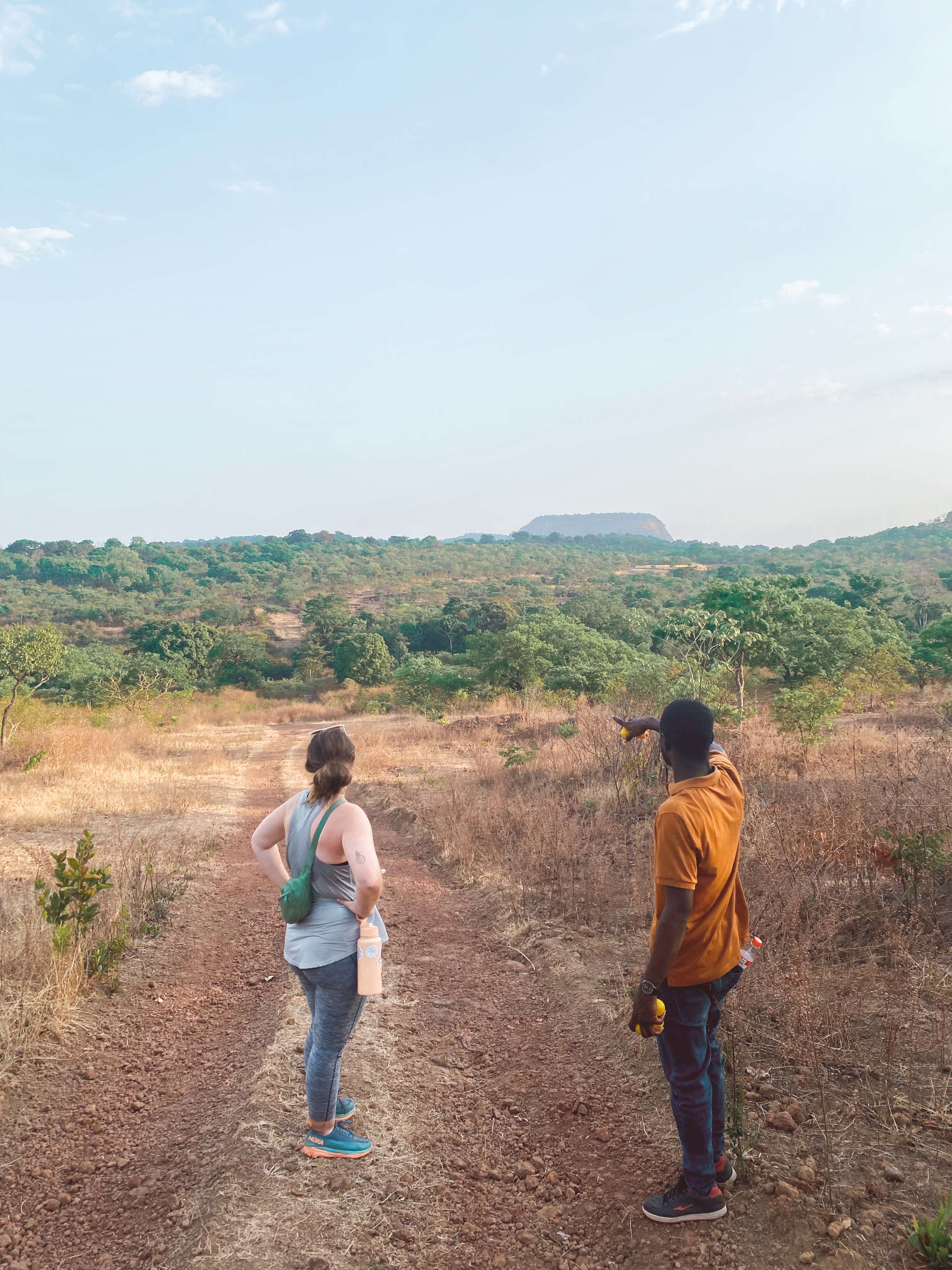
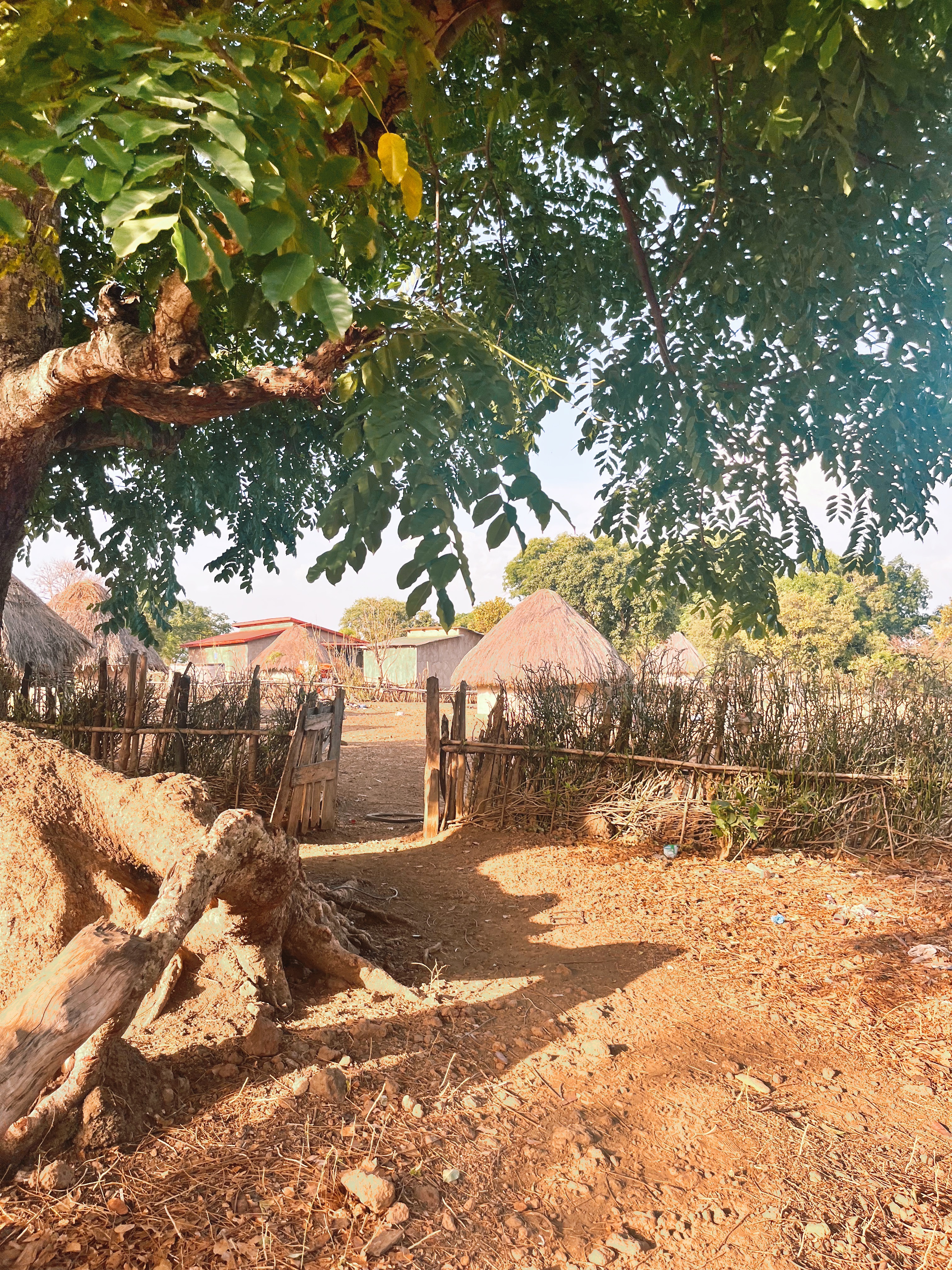
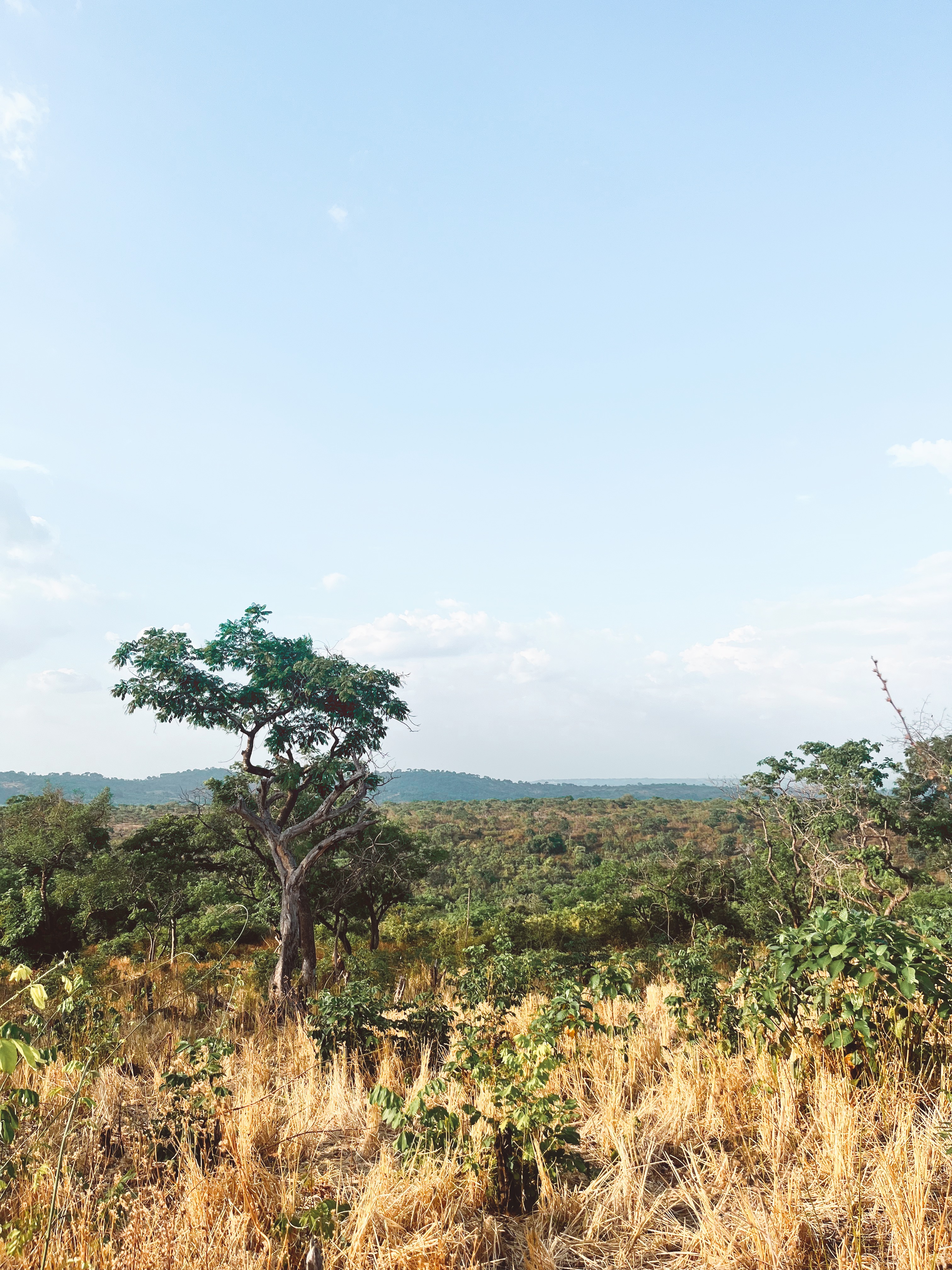
This past week, I had the gift of traveling to Guinea with my friend Audrey. We visited a hospital nestled in a small village near Mamou, about five hours from Conakry. The community there is called Bowalwann, which, fittingly, means rocky, a name that couldn’t have been more appropriate. The landscape was breathtaking, rugged and raw, dotted with towering cliffs and dramatic rock faces.
Guinea, in many ways, reminded me of Sierra Leone. There were the familiar rolling green hills, the same humid air, and the lush, mountainous terrain. But the differences were striking, too. The people in Guinea apart from the fact they spoke french carried a quiet presence, more reserved than those I’ve met in Salone, but still so warm and welcoming. That unmistakable thread of African hospitality was still woven through every interaction, the kind of hospitality that makes you feel at home, even among strangers.
Our connection to the hospital was through Audrey’s church, and although I was genuinely excited about the trip, I went into it thinking it would feel more like work than rest. After all, hospitals are my everyday reality. I expected long days, clinical observations, perhaps moments of reflection, but mostly a professional lens. I couldn’t have been more wrong.
This past week turned out to be exactly what I didn’t know I needed.
The hospital visit itself was insightful, it’s always valuable to see how other countries structure their healthcare systems, how teams operate under pressure, and what strategies they use to work with limited resources. I came with a curious heart, open to learning, and I found that they were facing so many of the same challenges we see in Freetown: resource scarcity, gaps in training, and deeply ingrained cultural dynamics around nursing and healthcare. There was something comforting in that shared struggle. It reminded me that we’re not alone in this work, others are fighting the same good fight, each in their own corner of the world.
But what really marked the week wasn’t the hospital, it was the quiet. The village was completely remote. Nothing around for miles. No honking horns, no street vendors, no chaos. Just stillness. The kind of stillness that at first feels strange, even uncomfortable, but then wraps itself around you like a blanket. That quiet was such a contrast to the buzz of Freetown, and it allowed space, for rest, for thought, and for God.
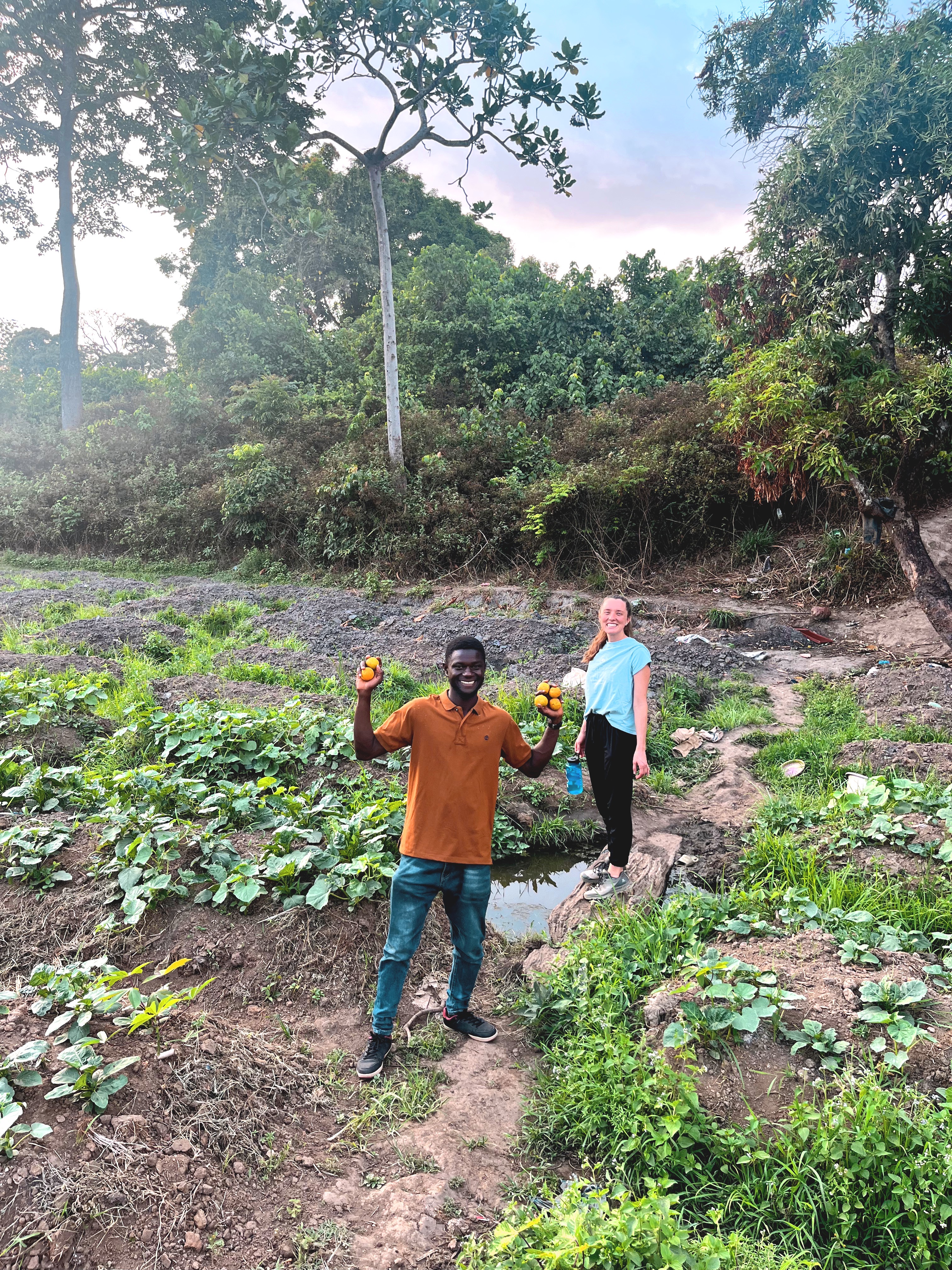
Our time unfolded into this beautiful rhythm of slowness. Morning devotionals, long walks through the hills, spotting small villages tucked into the trees like secrets waiting to be discovered. Strangers welcoming us into their lives with offers of smiles and oranges. We’d sit for hours reading our Bibles, journaling, and diving into books that stirred something deep in both of us. Conversations about faith flowed freely, raw, honest, and vulnerable. We opened up about our struggles, our doubts, our desires, and God met us there. Again and again.
It felt like every time we brought something before Him, whether it was a question or a cry, He answered. Through a passage of Scripture, a line in a book, or something in a devotional that seemed to speak directly to what we were wrestling with. We’d run to each other with excitement: “Look what I just read!” “This is exactly what I needed to hear.” It became a rhythm of receiving and sharing, like a heartbeat, us and God, in perfect sync.
At one point, we laughed and asked each other, “Why can’t it always be like this? Why don’t we hear from God this clearly every day?” But deep down, we knew the answer. We had stopped. We had unhurried. We had made space to actually listen. In the quiet, with no distractions, we had slowed down long enough to hear the still, small voice that had been speaking all along.
Lately, I’ve been part of a small group called Practicing the Way, based on John Mark Comer’s new book of the same name. The book explores what it truly means to follow Jesus, not just to believe in Him, but to become His apprentice. To reorient our lives around His presence and His practices. It’s about moving beyond performance-based faith and into an intentional way of life that prioritizes being with Jesus, becoming like Him, and doing what He did.
Before this trip, and even before starting the course, I think I had a more surface-level understanding of discipleship. I believed in Jesus deeply, but I hadn’t fully grasped what it meant to live with Him at the centre of everything. But this past week changed something in me. It felt like a door opened wider, my heart opened wider, and my relationship with Jesus deepened again.
And what I’m learning is this: it’s a slow burn.
Following Jesus isn’t about the instant fix. It’s not the emotional high of a single moment or the dramatic before-and-after transformation we sometimes expect. It’s the quiet, faithful decision to keep showing up, to keep seeking, listening, surrendering. It’s about the long journey of becoming more like Him, step by step, moment by moment. There’s beauty in that slow becoming, but it also requires patience. It requires trust.
We live in a world that rushes everything, progress has to be measurable, results have to be immediate, growth has to be visible. We’re taught to hustle, to optimize, to fix what’s broken as fast as possible. But Jesus doesn’t work like that. He’s not hurried, and He’s not interested in surface-level change. He’s after the heart. And hearts take time to heal. Time to grow. Time to soften.
So I’m learning to let go of the pressure, the pressure to have it all figured out, to be the “perfect Christian,” to know all the answers. I’m learning to lean into the mystery of it all. To sit with the questions instead of rushing past them. To trust that even when I can’t see what God is doing, He is still doing something. Still forming me. Still faithful.
There is a sacredness to the slow work of God, how He gently peels back layers, reveals wounds not to shame but to heal, invites us into deeper trust, deeper surrender.
In the quiet hills of Guinea, I remembered what it means to abide. Not to perform or strive or prove, but simply to remain. To stay close. To dwell with Him. And I don’t want to forget that. I don’t want to rush past the whispers of God in search of louder answers. I want to be the kind of person who lingers. Who listens. Who lets the slow burn of transformation warm me from the inside out.Because that’s where real change happens, in the slowness. In the staying. In the abiding.
A few days after an exhausting and emotionally charged couple of weeks at work, I found myself lost in reflection. The weight of everything I witness, the stories etched into the faces of my patients, the stark realities of healthcare in Sierra Leone, it all settles heavy on my heart.
One of the challenges in my new role has been learning how to process what I see each day. The suffering, the resilience, the moments of hope intertwined with heartbreak. There is no blueprint for how to navigate these emotions, no clear path for reconciling the disparity between what should be and what is. I wrestle with the limits of my own hands, the boundaries of what I can do, and the ever-present question of whether I am doing enough.
Amidst the weight of it all, writing has become my refuge, a space where I can pour out the thoughts and emotions that often feel too complex to speak aloud. It allows me to process, to make sense of the chaos, to find clarity in the midst of overwhelming need.
So, after a particularly hard couple of weeks, I turned to writing.
THE DIFFERENCE BETWEEN YOU AND ME…
The difference between you and me is where we were born. That single stroke of fate determined the course of our lives before we even took our first breaths. I was born into a world of privilege, of running water, of sterile hospital rooms stocked with medicine, of schools that welcomed me with open arms and the promise of a future I could shape. You were born into a world where survival is not a given, where every sip of water could be laced with sickness, where education is a privilege, not a right, where a small infection, easily treated where I come from, could steal away dreams, futures, lives.
I walk through the hospital where I work, past rows of beds filled with suffering that should not be inevitable. I see mothers holding feverish children, whispering prayers, their eyes pleading for relief that may never come. I hear the cries of pain from patients who need surgery but have no money, their agony echoing in the dimly lit wards. I watch as doctors and nurses work tirelessly, their hands skilled but often empty, battling diseases that should be treatable, preventable, eradicated. The difference between them and me is where we were born.
I sleep safely in my bed at night, wrapped in the certainty of tomorrow, in the security of knowing that should I fall ill, help is a call away. But you, your night is filled with uncertainty. The shadows hold dangers I will never know, the morning does not promise safety or healing. You face a world that is unfair by design, where the privilege of one means the suffering of another. And I ask God, again and again—why?
Why do I get these opportunities while you are denied them? Why does a simple twist of geography decide the course of a life? Why was I born into a world where education, healthcare, and safety were my baseline, while you were born into a world where these are privileges, fought for daily, often out of reach?
How is it that, in this age of progress, we still live in a world where this is reality? Where inequality is not some unfortunate accident but a design, a system, woven into the very fabric of our societies. A force so deeply ingrained that it determines who thrives and who barely survives.
It is in the hospital wards, where a mother holds her child, knowing that the medicine they need is just beyond her means.
It is in the eyes of a nurse who works for wages that do not sustain, yet continues, because what else can she do?
It is in the young girl whose dreams stretch beyond the horizon but whose reality tells her she will never reach them.
And the weight of it presses on me. I did nothing to deserve my privileges any more than you did to deserve your struggles. And yet, here we are. People standing in the same room, breathing the same air, sharing the same world, But living entirely different lives.
And I cannot unsee it. I cannot unknow it. And I will not be the same.
The difference between you and me is where we were born. And yet, that difference changes everything.
The week after that Easter, I flew home for some PTO, carrying with me something far greater than just my luggage, I carried my newfound faith, a transformation so profound that I knew I couldn’t keep it to myself. Before I was baptized, I wanted to share this part of me with my mum. Not because I expected her to understand or even accept it, but because my faith was now woven into the very fabric of who I was. Keeping it from her would have felt like hiding a part of myself. And I didn’t want to hide anymore.
Still, I was nervous. My mum had always been supportive, but faith had never been a part of our relationship. She used to joke that it would be funny if I ever came back from the ship believing in God. And now, here I was, coming home to tell her that I did. That I loved Jesus. That everything in my life had shifted because of it. Would she laugh? Would she brush it off as just another phase? Would she see how deeply this had changed me?
I knew that nothing she said could shake what I had found, my love for Jesus was unwavering, but there was something vulnerable about saying it out loud to someone who had known me my whole life. I wasn’t the same person who had left. I had been found, redeemed, made new. And this was my first step in sharing that truth with the people I loved most. As the plane touched down, my heart pounded with anticipation. No matter how the conversation went, I knew one thing for certain: I wasn’t just coming home, I was stepping into my faith, fully and fearlessly, for the first time.
It’s amazing how much I had changed in barely a year. At first, the change felt internal, subtle, like a quiet shift in the foundation of my soul. But I don’t think I fully grasped just how profound it was until I went home. There, in the familiarity of my childhood surroundings, among the people who had known me my whole life, I saw it reflected back at me.
After just a couple of days, my mum noticed something different. She watched me the way only a mother can, with an intuition that saw beyond my words. I hadn’t even told her about my faith yet, but she could see it. She told me I seemed different, lighter, like for the first time in my life, I was truly content. Not just happy in the fleeting way I had been before, but something deeper. She saw the joy in me, a kind of joy that didn’t waver, that didn’t come and go with circumstances. But most of all, she saw the healing. She saw that I was healing from my past traumas, from the restless searching that had defined so much of my life.
When she said those words, my heart clenched. I had prayed for this moment, to have the courage to tell her, to share what had changed me. And yet, hearing her acknowledge it before I even spoke made my eyes well up with tears. It was as if God was already softening the path ahead, showing me that my faith was not just a hidden, private thing, it was visible. Tangible. I finally shared my faith with her, despite the fears that had gripped me for weeks. I had worried she wouldn’t understand, that she would dismiss it or see it as something foreign to who I was. But as I spoke, I saw something unexpected in her eyes, not confusion, not scepticism, but warmth. And then, she cried.
Not because she was sad, but because she was happy for me. She saw that I had found my purpose. She asked questions. Real, thoughtful questions, not just to be polite, but because she was curious. She wanted to understand what had changed me so completely. Since then, we have had some incredible conversations, conversations I never thought we would have.
The rest of my time at home was filled with catching up with friends and family, and while it was fulfilling, it was also strange. Familiar places, familiar faces, yet something felt different. Or maybe it was me. I had stepped back into a world that once felt like home, but now, it felt slightly out of focus, as if I were looking at it through a pane of glass. Close enough to touch, yet separate somehow.
I realised that I didn’t quite belong in Australia anymore. Maybe I had never really belonged. Life had moved on in my absence, just as I had moved on in my own way. My friends were getting married, buying houses, having children. Their lives were mapped out in milestones that made sense, steps that society expected. I was doing the complete opposite, volunteering on a Hospital Ship in Africa, serving in ways I had never imagined, walking a path that, to many, seemed unconventional. But I had found something greater than any dream I had once held for myself. I had found purpose. A purpose that had changed everything.
I’d be lying if I said my friendships hadn’t changed. Distance does that, it shifts things in quiet, unspoken ways. My friends back home will always be my best friends, especially Britt, she is my sister, my family, my anchor in so many ways. But after being overseas for five years, the space between us was undeniable. Not because we had stopped loving each other, but because life had simply taken us down different roads.
There were moments of disconnect, moments where I felt like a visitor in a life I had once been so immersed in. It wasn’t anyone’s fault, it was just the reality of growing up, of choosing different paths, of stepping into callings that sometimes led us in opposite directions. There were times when the conversations felt different, moments of silence where I wondered if my family and friends saw me as I was now or only as the person I used to be.
And yet, love remained. Even in the awkward moments of not fully understanding one another’s lives, even in the quiet realization that we were no longer the same people we had once been, the love between us never faded. It simply took on a new form, one that stretched across oceans, across time zones, across the different rhythms of our lives. And that was enough. Because true friendship, true love, isn’t about always walking the same road. It’s about always finding your way back to each other, no matter how far you’ve travelled.
Being home gave me the chance to say goodbye, to my old life, my old self, to the person I barely recognized anymore. As I walked familiar streets and sat in familiar places, I saw echoes of who I used to be. The restless girl who was always searching, always longing for something more. The girl who had carried an ache she couldn’t name, who had tried to fill the void with unhealthy relationships and habits, with movement, with anything that might quiet the gnawing feeling inside her.
But now, that ache was beginning to fade. That restless feeling, the urge to run, to escape, to search, it had been replaced with something entirely new. Something steady. Something certain. It was in those quiet moments, in the in-between spaces of my trip home, that I realized Australia, for now, wasn’t my home anymore. It would always be a part of me, but I no longer belonged there in the same way I once had. My heart had been called elsewhere. I was meant to be where I was, on a hospital ship in Sierra Leone, serving, growing, surrendering daily to God’s plan for me.
For the first time in my life, I wasn’t searching. I wasn’t running. I wasn’t chasing after something just out of reach. Instead, I felt a deep, steady hum of knowing. A peace that surpassed all understanding. I would come to know that feeling as Shalom, not just peace, but wholeness. The kind of peace that settles into your soul and stays. The kind of peace that tells you: You are exactly where you are meant to be.
When I finally returned to the ship, I knew. Knew with every fibre of my being that it was time. The field service was coming to an end, and the old me was being laid to rest. Now, it was time to step fully into the life God had given me. To declare, in front of the world, the love that had transformed me.
I had found my home. Not in a country. Not in a place.
Throughout my first ten months in Sierra Leone, my faith became more than just something I was learning about, it became something I was living. I had stepped onto the ship as someone still unsure, still holding onto pieces of my old identity, still battling the lies that had shaped me for so long. But as the months passed, something inside me began to shift. For the first time in my life, I could feel the weight of my past beginning to lift.
It had been there for as long as I could remember, an invisible burden pressing down on my chest, woven into my thoughts, influencing my choices, convincing me that I was unworthy of love, of grace, of belonging. I had carried it for so long that I had stopped noticing its weight, until I felt it start to lighten. I wasn’t just hearing the truth of God’s love anymore, I was beginning to know it. Not just in my mind, but in my soul.
That I was loved. That I had always been loved. That even in my worst moments, my most broken decisions, my most painful regrets, His love had never wavered. And as that truth settled into the deepest parts of me, I found myself stepping into a new kind of honesty. For the first time, I began to open up about my past, not just to God, but to my friends. We would sit together, in the quiet hum of the ship and I would speak words I rarely spoke aloud. I would tell them about the choices I had made, the things I had done, the pain I had carried. I would let them see the parts of me I had spent so long trying to hide. And the most incredible thing? They listened. They didn’t flinch. They didn’t turn away. They didn’t look at me differently. Instead, they met my brokenness with grace, reminding me, over and over, that I was forgiven. But even more importantly, I was finally being honest with myself. That kind of honesty was terrifying.
It was painful. It felt like exposing wounds that had long been buried, wounds I had pretended didn’t exist. But as much as it hurt, it was also freeing. Because healing doesn’t happen in the dark. And the more I brought those wounds into the light, the more I allowed God to step into those broken places, the less power they had over me. And something else began to happen, something I never expected. The joy I had started to feel? The gratitude? They weren’t just things I was trying to force. They weren’t just a mask I was wearing to convince myself that I was okay. They were real. They were radiating from me in a way I couldn’t explain.
I wasn’t just acting joyful, I was joyful. I wasn’t just saying I was grateful, I felt it in my bones. I wasn’t just trying to believe in Jesus, I knew Him now.
Somewhere along the way, faith had stopped being something I was reaching for, and it had become a part of who I was. I was no longer just a woman searching for God. I was His daughter. And for the first time in my life, I truly believed it.
I will never forget Easter on the ship that year (2024), it was my first time celebrating Easter as someone who truly believed in Jesus, and the weight of that was overwhelming. Before, Easter had been just another holiday, marked by chocolate eggs, family gatherings, and a vague awareness of its religious significance. But this time, it was different. This time, I understood. The entire ship came together to worship Him, to reflect on what He had done for us, not just as a distant historical event, but as a deeply personal act of love and redemption. God had sacrificed His Son so that we may be forgiven, always, for all sin. I had heard those words before, but I had never truly felt them. That Easter, for the first time, I felt it.
The ship’s international lounge had been transformed into the Garden of Gethsemane for the weekend, and as I stepped inside, it was as if I had been transported to another world. The air was thick with reverence. Everywhere I looked, there were plants, vines, and soft, flickering lights casting golden hues across the space. Cozy pillows and beanbags created small sanctuaries for prayer and reflection. It was peaceful. It was holy. And at the front of the room stood a giant cross, silent, towering, unshakable. A reminder of His suffering, His love, His victory.
I remember my hands trembling as I touched the floor, my fingers pressing into the cool surface as if grounding myself in something real, something holy. I lay down, my body sinking into the space, surrendering. Above me, the dim light flickered softly, casting a glow that felt almost otherworldly. It was as if I were being held in the quiet presence of something far greater than myself. The weight of it all, His sacrifice, His mercy, His love, pressed into my chest, making it hard to breathe. My heart, which had spent years guarded, restless, searching, cracked open in a way I had never known before.
I cried that night. Not just soft tears, not just quiet weeping, but tears that shook my entire being. I cried because, for the first time, I truly understood the depth of His sacrifice, not as a story I had heard, not as words spoken in a sermon, but as a love so vast, so undeserved, and yet so freely given. I cried because I finally understood how much God loved me, not in spite of my flaws, my brokenness, my past, but because He had known me all along. Every thought I had ever had. Every mistake I had ever made. Every wound I had carried in silence. And still, He had loved me. Not from a distance, but intimately, deeply, unconditionally. The love I had spent my entire life searching for, the love I had tried to earn, the love I had longed for in people, in places, in fleeting moments, had been right there, waiting for me all along. It had never wavered, never withdrawn, never ceased to pursue me. And now, finally, I saw it. I felt it. I knew it.
Something inside me shifted in that moment, an unshakable knowing, a certainty I had never felt before. My life would never be the same. Because now, I would always know Him. I would always belong to Him. Forever and always. And as I lay there, tears streaming, heart laid bare, I knew with absolute certainty that He had always known me too. And that was enough. That was everything.
As my faith deepened, as I continued to walk this path of discovery and surrender, a new question began to rise in my heart, one I couldn’t ignore.
Baptism.
It wasn’t just a word anymore. It wasn’t just something I had heard about or something I had read about in Scripture. It became a pull, a stirring deep within me, a longing I couldn’t quite explain but felt with every part of my soul. I started asking my friends about it, hesitantly at first.
What does baptism really mean? How do you know when you’re ready? What would it look like for me?
I listened as they shared their stories, their experiences, their own moments of stepping into the water. Each story was different, some had been baptized as children, others as adults, some had felt an instant transformation, others had experienced a quiet, steady confirmation of their faith. But at the heart of it, they all said the same thing: Baptism is an outward declaration of an inward transformation.A symbol of dying to the old self and rising again in Christ. A surrender. A choice. A public step of faith.And the more I learned, the more I prayed, the more I sat with the idea, the more certain I became.I wanted this.
Not because I felt pressured. Not because it was the next “logical step” in my faith journey. Not because it would make me more of a Christian.I wanted it because I loved Jesus.I wanted the world to know that I loved Him.I wanted to give everything to follow Him, not just in words, not just in private prayers, but in action, in commitment, in a moment that would mark my life forever.And yet, as much as my heart longed for it, there was still a quiet whisper of hesitation inside me.
Am I really worthy of this? What if I’m not “good enough” yet? What if I don’t fully understand everything about faith?
The enemy tried to plant seeds of doubt, to convince me that I wasn’t ready, that I needed to be more, more knowledgeable, more holy, more put together. But deep down, I knew the truth.I would never be ready in the way I thought I needed to be. I would never have all the answers. I would never reach a place where I felt like I had “earned” this. And that was the point.
Baptism wasn’t about arriving at some place of perfection, it was about stepping forward as I was, in faith, in surrender, trusting that God would continue the work He had already begun in me. So I let go of my fear. I let go of the doubts. And I made the decision. I would be baptized. I would stand before my friends, before my community, before God Himself, and declare that my life belonged to Jesus. I didn’t know what that moment would feel like. I didn’t know what it would change in me. All I knew was this: I was His. And I wanted the world to know.





 AYLA IN AFRICA