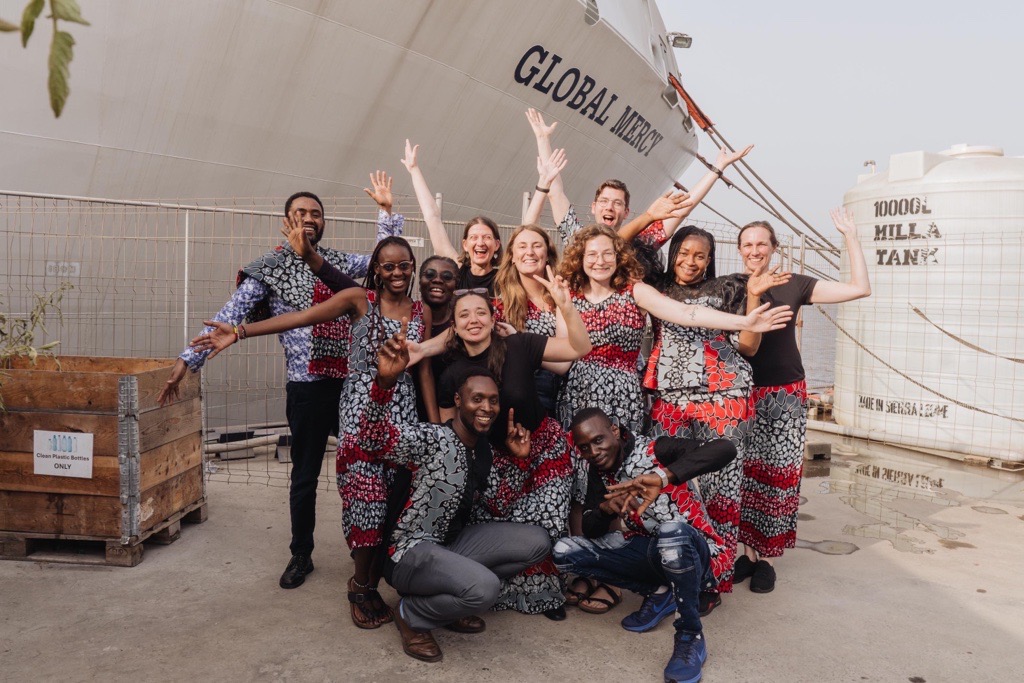
From the moment I stepped foot on The Global Mercy and heard about Education, Training & Advocacy (ETA),then known as Medical Capacity Building, I knew, without a doubt, that this was the end goal for me.
I had always loved bedside nursing. There was something deeply rewarding about the immediate impact of caring for a patient, about seeing the transformation happen right in front of me. But deep in my heart, I knew my passion lay in something bigger. In something lasting. My heart had always been drawn to development work, to long-term sustainability, to looking at the bigger picture.
I remember sitting in a university lecture, years ago, learning about downstream vs. upstream strategies, the concept of tackling health issues at their root rather than just treating the individual. It made so much sense to me. The idea that we could prevent suffering before it even started. That instead of just catching people as they were drowning, we could go upstream and stop them from falling in at all. It lit a fire in me, and that fire only grew as I learned more about global healthcare and the gaps that existed.
What we do on the ship is incredible, there is no doubt about that. The surgeries we provide, the lives that are transformed, the hope that is restored, it is all beautiful, sacred, and life-changing. But the truth is, it is not a long-term sustainable solution.
Because what happens after the ship leaves? That is where ETA comes in.
ETA is more than just a program, it is a promise. A promise that the work of Mercy Ships will not end when the ship pulls away from the shore. That the healing will continue, that the impact will stretch beyond the walls of a floating hospital, embedding itself into the very foundation of the healthcare system we leave behind.
We do not come as saviors, as outsiders with ready-made solutions. We do not come to impose Western medicine in places that already have rich traditions of healing and care. This is not about us.
This is about them, this is about Sierra Leone.
It is about partnership, not pity. Empowerment, not dependency.
What I love most about Education, Training, and Advocacy (ETA) is that it is not a quick fix. It is not about short-term relief, it is about long-term transformation. It’s about walking alongside local healthcare professionals, not above them, not in front of them, but with them. It’s about sharing knowledge, resources, and skills so that the impact extends far beyond what Mercy Ships alone could ever accomplish.
It is about ensuring that when we sail away, the work does not stop. That the nurses, doctors, and hospital staff we have worked with feel equipped, confident, and capable, not because we gave them all the answers, but because we invested in them, trained them, mentored them, believed in them.
And this work does not just happen within the walls of the Global Mercy.
It happens in local hospitals, where nurses and doctors are working tirelessly, often with limited resources, doing the best they can with what they have.
It happens in universities, where students dream of becoming surgeons, anaesthetists, and medical professionals, but need the training, the support, and the opportunities to make that dream a reality.
It happens in communities, where access to healthcare has been a struggle for generations, where people deserve better than to be told that surgery is a luxury they cannot afford.
ETA is about laying a foundation that will outlive us.
It is about breaking the cycle, about ensuring that the next generation of healthcare workers is stronger, better equipped, and more empowered than the last.
It is about planting seeds today so that one day, no one will need Mercy Ships at all, because their own healthcare system will be strong enough to stand on its own.
That is the dream. That is the goal. That is what makes this work worth it.
So, where do I fit into all of this?
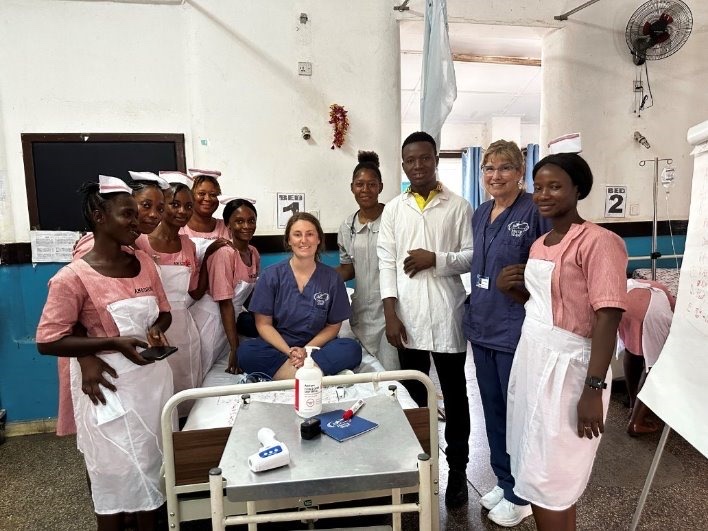
At the start of this year, I took on a new role with ETA, helping to run a Nurse Mentor Program at Connaught Hospital in Freetown.
This hospital, one of the largest in Sierra Leone, is a place that has challenged and stretched me in ways I never could have imagined. Five surgical wards, overflowing with patients. Limited resources. Staff shortages. And yet, in the midst of it all, nurses who show up, every day, ready to fight for their patients, even when the odds are against them.
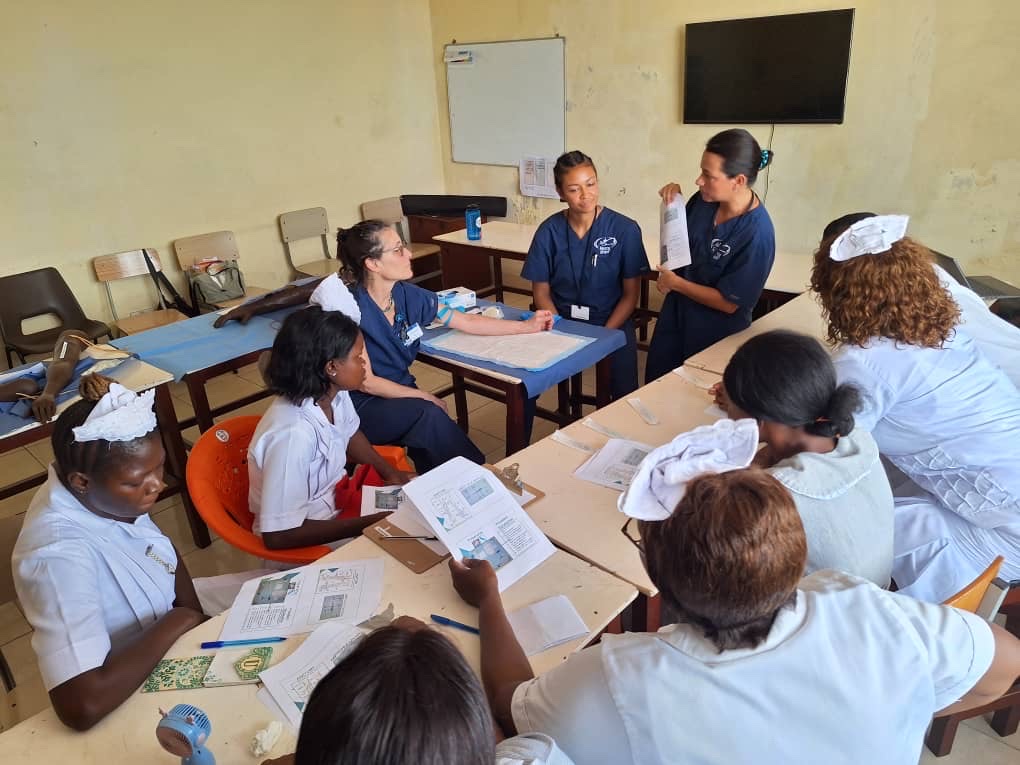
Alongside another Mercy Ships nurse, I work side by side with these nurses, training, educating, and mentoring them as part of a larger Safer Surgery Program. Our goal? To help improve surgical care in Sierra Leone, not just for today, but for the future.
And it has been an incredible, challenging, eye-opening, rewarding, frustrating, humbling and joyful few months.
I have learned so much in such a short time, not just about myself or nursing in Sierra Leone, but about the resilience of this country, the strength of its people, and the reality of what it means to do development work.
I have watched nurses work impossible shifts for offensively low pay, sometimes no pay at all. I have seen patients receive care in conditions that would be unimaginable in other parts of the world. I have walked through wards where access to the most basic medical supplies feels like a distant dream. And yet, these nurses, doctors, patients keep going.
Every day, despite the exhaustion. Despite the lack of resources. Despite the challenges that should make this work impossible.
I have learned that this is what development work truly looks like.
It is slow.
It is hard.
It is frustrating.
It is not glamorous.
But it matters.
I have learned to celebrate the smallest wins, because they are everything. A nurse teaching a student how to do neurovascular observations for the first time. A nurse sharing new knowledge with a colleague on A to E assessments. A team coming together to improve patient care in ways that seems small today but will change everything tomorrow.
These moments may seem insignificant in the grand scheme of things, but they are not. Because sometimes the truth about development work is that we may never see the change we are helping to create. We may never be here to witness the full transformation.
But it doesn’t matter. Because it’s happening.
It is happening every single day in the hands of these local nurses and health care professionals, in the lives of these patients, in the policies being shaped, in the skills being passed down.
That is why development is the future.
It is the way forward.
It is the work that will outlive us all.
 AYLA IN AFRICA
Leave a comment