Leaving the ship was harder than I ever imagined. It wasn’t just about saying goodbye to the work, although that alone felt significant, to walk away from patients whose courage had inspired me, from a team whose dedication and faith had shaped me. It wasn’t just about the people either, though those goodbyes were gut-wrenching, knowing I might never again share such sacred moments with some of the friends who had become like family. It was about leaving behind something intangible but deeply profound: a sense of belonging, a sense of purpose and connection that I had never experienced so fully before. On the ship, I had found more than a mission, I had found a home for my soul.
Yet, despite the ache in my chest as I stepped away, my sadness was tempered by a bubbling excitement and anticipation for the months of travel ahead of me. I had planned this time as a space to explore, to reflect, to rediscover who I was outside the comforting walls of The Global Mercy. I needed to see if the lessons I had learned, the growth I had felt, could hold steady out in the wider world. The ship had begun to chang me in ways I was only beginning to understand, and now it was time to see what that change might look like when I stepped beyond its boundaries.
For the first week of my travels, I wasn’t alone. A friend I had met on the ship, Louisa, joined me for the beginning of my journey. Louisa was everything I needed in that transition from the intense, structured world of service to the wide-open road. She was a beautiful, vibrant woman whose joy seemed to radiate from her very being. There was something infectious about the way she approached life, with an unapologetic zest that made even the smallest moments feel like a celebration.
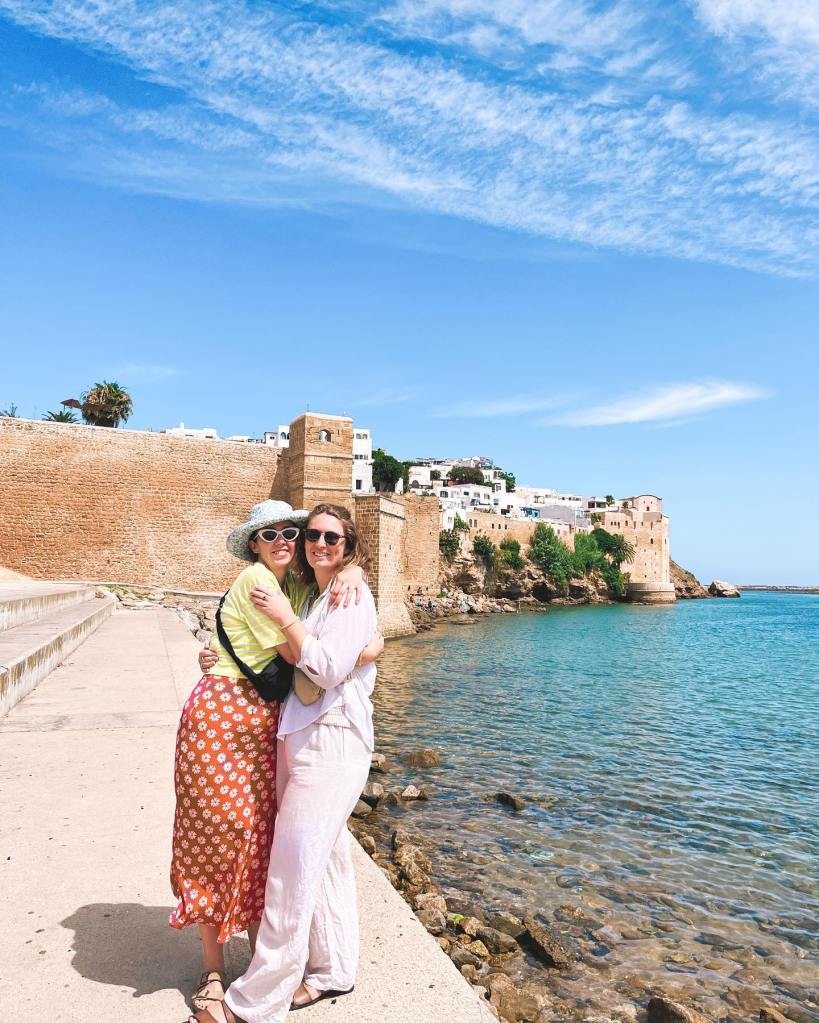
Together, we navigated the bittersweetness of leaving Senegal, sharing stories of the countless beautiful connections we had made on the ship. We spoke of the patients who had touched our hearts, the friends who had become family, and the quiet moments of grace that had made the challenges worthwhile. Louisa understood my sadness in a way few others could. She had felt it too, the weight of leaving behind a place that had transformed us both. But with her by my side, the sadness felt less overwhelming, balanced by the shared hope that we were carrying the lessons and love of that season with us into whatever came next.
As we ventured into our week of travel, I found myself leaning into the comfort of her presence. Lou reminded me that it was okay to feel the heaviness of goodbye, but also to embrace the excitement of what lay ahead. She helped me see that while my time on the ship had been deeply meaningful, it wasn’t the end of my story, it was the beginning of a new chapter, one that I would write with every step of my journey.
Morocco was my first stop, a land of vibrant colour, rich culture, and breathtaking contrasts. From the moment I stepped into the bustling spice markets of Marrakech, I was swept up in its rhythm, a symphony of life that seemed to pulse through every narrow alleyway and crowded square. The air was thick with the fragrant aroma of cinnamon, cumin, and saffron, mingling with the sweetness of freshly pressed orange juice from nearby carts. Vendors called out to passersby in a cacophony of French, Arabic, and Berber, haggling over prices with an energy that felt equal parts chaotic and mesmerizing. The stalls overflowed with treasures, vividly dyed textiles, intricately painted pottery, and rows of shimmering brass lanterns that seemed to hold the glow of a hundred sunsets.
I spent my days immersing myself in this vibrant world, tasting steaming tagines infused with spices that lingered on our tongues and sipping sweet Moroccan tea on rooftop terraces. The tea, with its perfect balance of mint and sugar, became a daily ritual, as did watching the golden sun sink below the horizon, casting Marrakech in a warm, magical glow. Each sunset seemed to whisper that we were exactly where we needed to be, as if the universe itself had conspired to bring us here in this moment.
The journey took me to the dreamlike blue streets of Chefchaouen, a place that felt plucked from the pages of a fairy tale. Every winding alleyway seemed to hold a secret waiting to be discovered, walls painted in varying shades of blue, their brilliance shifting with the light. Children played in the streets, their laughter echoing off the cobalt walls, while locals sat on doorsteps, sipping tea and weaving stories with their hands. There was a stillness there, a quiet beauty that wrapped itself around me and made the rest of the world feel far away.
The Atlas Mountains rose majestically in the distance, their jagged peaks dusted with snow, a striking contrast against the otherwise arid landscapes. Hiking through them felt like stepping into another world, where ancient villages clung to the mountainsides, their architecture as timeless as the peaks themselves. At Ait Ben Haddou, I stood in awe of the centuries-old kasbah, its sand-coloured walls blending seamlessly into the desert landscape. It was a place steeped in history, its stones bearing silent witness to the countless lives that had passed through its gates.
In Taghazout, I faced something I hadn’t dared to confront in many years. Surfing had once been my refuge, a way to connect but it had become a reminder of a painful memory from my past. Yet here, on Morocco’s tranquil coast, I found the courage to paddle out again. I was awful, of course. I fumbled through the whitewash, my balance shaky, my timing off. But none of that mattered. What mattered was that I was there, letting the ocean cradle me, trusting the waves to hold me as I let go of the fear that had kept me away for so long. With each paddle, each attempt to catch a wave, I felt something inside me soften. The ocean’s quiet rhythm, the way it ebbs and flows without force or hesitation, began to mirror something within me, pulling me back to myself.
Surfing, once a source of pain, became a source of healing. Today, in Sierra Leone, I surf weekly. The ocean has become my place of communion, a sacred space where I feel God’s presence in a way I never imagined. Each time I paddle out, I feel Him in the gentle sway of the water, in the way the waves seem to carry my burdens away, leaving only peace in their wake. Surfing quiets my mind, silences the noise of worry and doubt, and fills me with a sense of calm I now recognize as His gift to me. It’s not just about riding waves anymore, it’s about riding life’s currents, trusting that, no matter how rough the waters may seem, I am never truly alone.
But the true pinnacle of my time in Morocco was the Sahara Desert. As I ventured into the vast expanse of golden dunes, the world as I knew it seemed to fall away, replaced by an endless horizon of sand and sky. I rode a camel through the undulating dunes, the silence broken only by the rhythmic padding of hooves and the whisper of wind carrying grains of sand into the air. When night fell, the desert transformed into something otherworldly. Lying on the cool sand, wrapped in a blanket to guard against the chill, I gazed up at a sky so alive with stars it felt almost overwhelming. Billions of them stretched across the heavens, their light spilling into the vast emptiness around me.
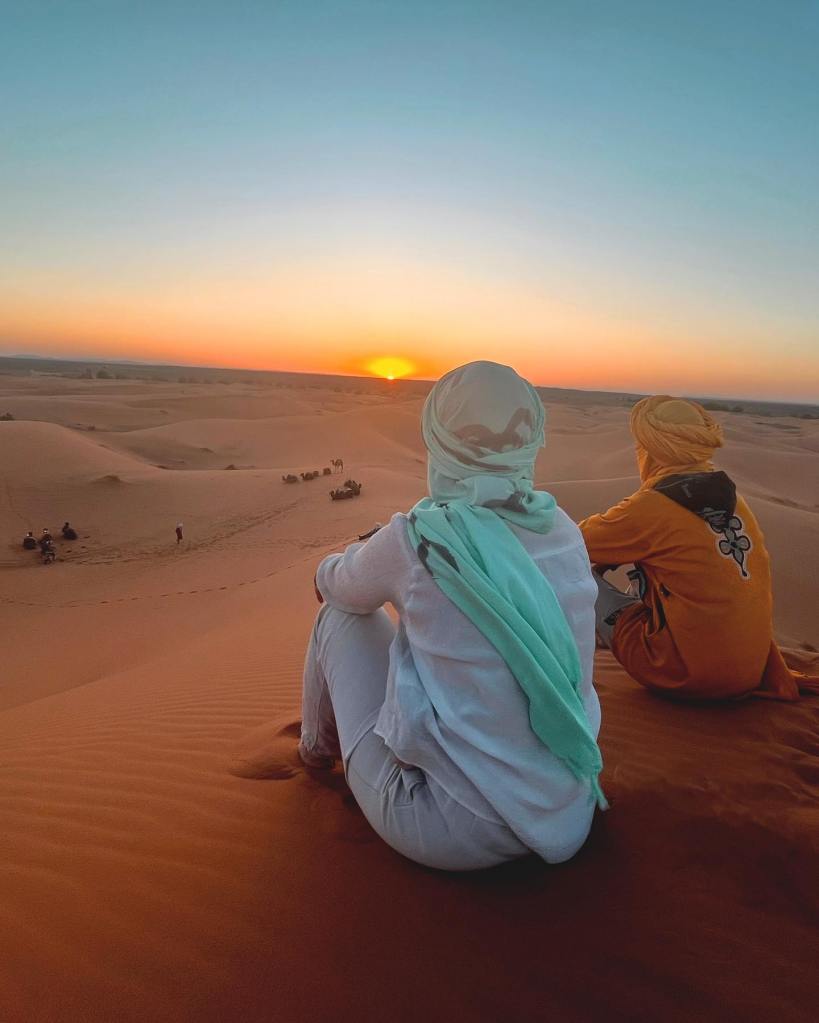
In that moment, I felt small in the most beautiful way—as though the universe was cradling me in its infinite embrace, reminding me that I was a tiny yet cherished part of something so much bigger. The vastness of the desert and the sky made my worries seem insignificant, my questions about the future less urgent. It was a moment of profound stillness, of connection to something I couldn’t fully articulate but could feel deep in my soul. Morocco had already captivated me with its beauty and contrasts, but in the Sahara, I felt humbled and grounded.
From Morocco, I journeyed to Egypt, a land of ancient wonders and timeless beauty that seemed to hum with the echoes of its rich history. The moment I stood before the pyramids of Giza, their towering forms rising from the golden sands, I felt a sense of awe that defied words. They were more than stone structures; they were monuments to human ambition, ingenuity, and mystery, their grandeur humbling me in ways I couldn’t fully articulate. I found myself marvelling at how something so ancient could still stand so proud, commanding the desert skyline as they had for thousands of years.
As I walked through temples far older than I could fathom, I ran my fingers over the intricate carvings etched into their walls, stories of gods and pharaohs, of victories and offerings, each mark a testament to a civilization that once ruled the world. The sheer scale of the columns and statues left me breathless, as if their creators had imbued them with a permanence that defied time. It was impossible not to feel small in their presence, like a fleeting moment in the vast continuum of history they had witnessed.
Cruising down the Nile, I felt the weight of that history surrounding me. The river, ancient and eternal, seemed to carry the memories of Egypt’s past in its currents. Each bend revealed something new, villages where life remained unchanged for centuries, palm trees swaying gently in the breeze, and ruins that whispered of long-forgotten dynasties. The Nile wasn’t just a river; it was a lifeline, a thread that connected the modern world to the ancient one, binding them together in a way that felt almost sacred.
The sun blazed fiercely as I explored, its heat relentless and unyielding. But the magic of Egypt overshadowed the discomfort, captivating me so completely that I barely noticed the sweat dripping down my back. The treasures of this land were like nothing I had ever experienced, an intoxicating blend of grandeur and mystery that left me in awe at every turn. Standing in the Valley of the Kings, gazing upon the tombs of rulers who had been laid to rest millennia ago, I couldn’t help but reflect on the impermanence of life and the lasting legacy of those who dared to leave their mark on the world.
Egypt wasn’t just a destination; it reminded me of how vast the world truly is, how small we are in comparison, and yet how deeply we are connected to those who came before us. The land felt alive with stories, waiting to be heard and remembered, and as I departed, I carried a piece of its timeless beauty with me, a quiet sense of wonder that stayed long after I left its shores.
Next came Jordan, a land where history and nature seemed to weave together in perfect harmony. The highlight of my journey was standing in awe before the ancient city of Petra. The approach alone felt like stepping into another world. Walking through the Siq, the narrow sandstone canyon that served as the gateway to Petra, I was surrounded by towering walls of rock that seemed to glow in shades of pink, orange, and gold as the sunlight shifted. The canyon, carved by time over billions of years, was both humbling and enchanting, a reminder of nature’s quiet, persistent artistry.
As I reached the end of the Siq, the breathtaking sight of the Treasury revealed itself, as if the earth had parted just to showcase its splendour. Its intricate facade, carved directly into the rose-hued rock, left me speechless. I stood there, transfixed, marvelling at the craftsmanship and vision it must have taken to create something so magnificent in such an unforgiving environment. It wasn’t just its beauty that struck me, but the sense of wonder it evoked, a feeling that reshaped something inside me, as though connecting me to the countless lives that had passed through this place centuries before.
Petra felt alive, its grandeur steeped in stories of the Nabataeans who built it, of traders and travellers who once walked these same paths. Wandering deeper into the city, I explored tombs, temples, and an ancient amphitheatre, each corner revealing more of the ingenuity and spirit of the people who had created this marvel in the heart of the desert.
A night under the stars in Wadi Rum was unlike anything I had ever experienced. The desert stretched endlessly in every direction, its vastness illuminated by the soft glow of moonlight and the brilliance of countless stars scattered across the sky. The stillness was profound, almost sacred, broken only by the occasional whisper of the wind brushing against the sand. Lying there, wrapped in a blanket, I felt small in the most humbling way, as though the universe was gently reminding me of its enormity, and my place within it.
The next morning, I rose at 4 a.m., the chill of the desert air sharp against my skin, my breath visible in the faint light of dawn. Climbing into a hot air balloon, I felt a mixture of excitement and wonder as we lifted off the ground, the desert below slowly unfurling like a canvas. As the sun began to rise, its golden rays painted the landscape in shades of amber, pink, and deep orange, casting long shadows across the jagged rock formations and endless dunes.
From above, Wadi Rum looked like another world, alien and untouched, its beauty almost surreal. The jagged mountains and smooth dunes seemed to stretch infinitely, a sea of sand and stone carved by time. In that moment, suspended in the stillness of the air, tears welled up in my eyes. It wasn’t sadness, and it wasn’t joy it was something deeper, something I couldn’t quite put into words. It was awe. Pure, unfiltered awe at the beauty of this world, at the intricacy of creation, at the way everything seemed to fit together in a way that felt both fragile and eternal.
I remember thinking, Maybe God really is real. It wasn’t just a fleeting thought it was a whisper in my heart, soft but insistent. How could something so magnificent, so perfectly orchestrated, exist without a Creator? The desert, the stars, the sunrise, they weren’t just beautiful; they felt intentional, as if they were designed to remind me of something greater than myself.
That morning in Wadi Rum was more than just an experience, it was a moment of connection, of clarity. The beauty of the world wasn’t just something to marvel at; it was something that pointed to a deeper truth, a quiet assurance that perhaps I wasn’t as alone as I had always believed.
But Jordan’s magic didn’t stop. I floated in the salty, buoyant waters of the Dead Sea, marvelling at the surreal sensation of weightlessness, the warm sun on my face as I let go of the world’s heaviness, if only for a moment. The landscape there was stark and otherworldly, a place that felt like it belonged to another planet.
And then there was the Red Sea, its vibrant coral reefs teeming with life and colour. Beneath the surface, it was a world of its own, schools of fish darting through coral gardens, each movement a dance of nature’s brilliance. Snorkelling there felt like being part of a living painting, one crafted by the careful hands of creation itself.
Jordan was a place that left its mark on my heart, not just because of its beauty, but because of the sense of connection it inspired. To walk through canyons carved by time, to stand before structures that had weathered centuries, to immerse myself in landscapes both stark and vibrant, it reminded me of how small we are in the grand scheme of things and yet how deeply we are woven into the fabric of history and nature. Jordan wasn’t just a destination; it was a reminder of the beauty that exists in both endurance and transformation.
Traveling this time felt different, like I was experiencing the world with new eyes. My time on Mercy Ships had shifted something deep within me, stirring emotions and perspectives I didn’t fully understand at the time. It wasn’t just about the awe-inspiring landmarks anymore, the grandeur of the pyramids in Egypt, the carved magnificence of Petra, or the vast stillness of the Sahara Desert. Of course, those wonders captivated me, leaving me breathless and humbled, but they weren’t the only things that stayed with me.
What struck me more than ever were the smaller, quieter moments. I found myself marvelling at children laughing and playing in the streets, their joy so pure and unburdened. The warmth of strangers’ smiles lingered with me, their kindness speaking louder than words in languages I didn’t understand. I noticed the beauty in the simplest acts, the way people greeted one another with genuine care, a hand on a shoulder or a nod of respect, as though every interaction was an opportunity to share love.
At the time, I couldn’t quite articulate what had changed in me. I only knew that I was seeing the world differently, more deeply, as if a veil had been lifted from my eyes. Now, looking back, I understand it was Jesus. Gently, lovingly, He was helping me see the world as He sees it, through eyes of love, grace, and wonder. He was showing me beauty not just in the extraordinary but in the everyday, inviting me to notice His presence in the small, overlooked corners of life.
Though I thought about Him often during my travels, I still wasn’t ready to fully let Him in. There was a part of me that clung to the familiar walls I had built around my heart, afraid of what surrendering would mean. To let Him in would require vulnerability, a willingness to face my brokenness and release the illusion of control I had held so tightly. I wasn’t ready for that, not yet.
And so, He lingered at the edges of my mind, always present but never forceful. It was as though He was patiently waiting, whispering softly in the background of my experiences, allowing me the space and time I needed to process what I was beginning to feel. Even as I marvelled at the world’s beauty, I kept Him at arm’s length, unsure of how to reconcile the longing in my heart with the fears that still held me back.
From Jordan, I flew back to Africa, my heart racing with anticipation as I landed in Cape Town, ready to embark on a camping trip that would carry me through South Africa, Namibia, Botswana, and Zimbabwe. Those months were nothing short of extraordinary, a kaleidoscope of breathtaking landscapes, vibrant cultures, and moments that etched themselves into my memory forever.
In South Africa, I tasted wine along the Garden Route, the rolling vineyards stretching endlessly under the golden light of late afternoon. Each glass was a symphony of flavours, the perfect complement to the dramatic coastal views that unfolded around every bend of the route. The sound of waves crashing against rugged cliffs felt like nature’s applause, reminding me of the beauty of the world I was lucky enough to explore.
Namibia offered a stark yet stunning contrast, a land where the earth seemed to meet the sky in its purest form. At Fish River Canyon, I stood at the edge of the world, or at least, that’s how it felt. The canyon stretched out before me, its vast, craggy depths painted in shades of ochre and rust, the silence so profound it felt almost sacred. It was a place that demanded stillness, a reminder of how small we are in the face of nature’s grandeur.
Wandering through Deadvlei, I found myself in a surreal, almost otherworldly landscape. The ancient, gnarled trees stood frozen in time, their blackened skeletons stark against the cracked white clay pan and the vibrant red dunes that towered around them. It was hauntingly beautiful, a reminder of the earth’s resilience and its ability to create beauty even in desolation.
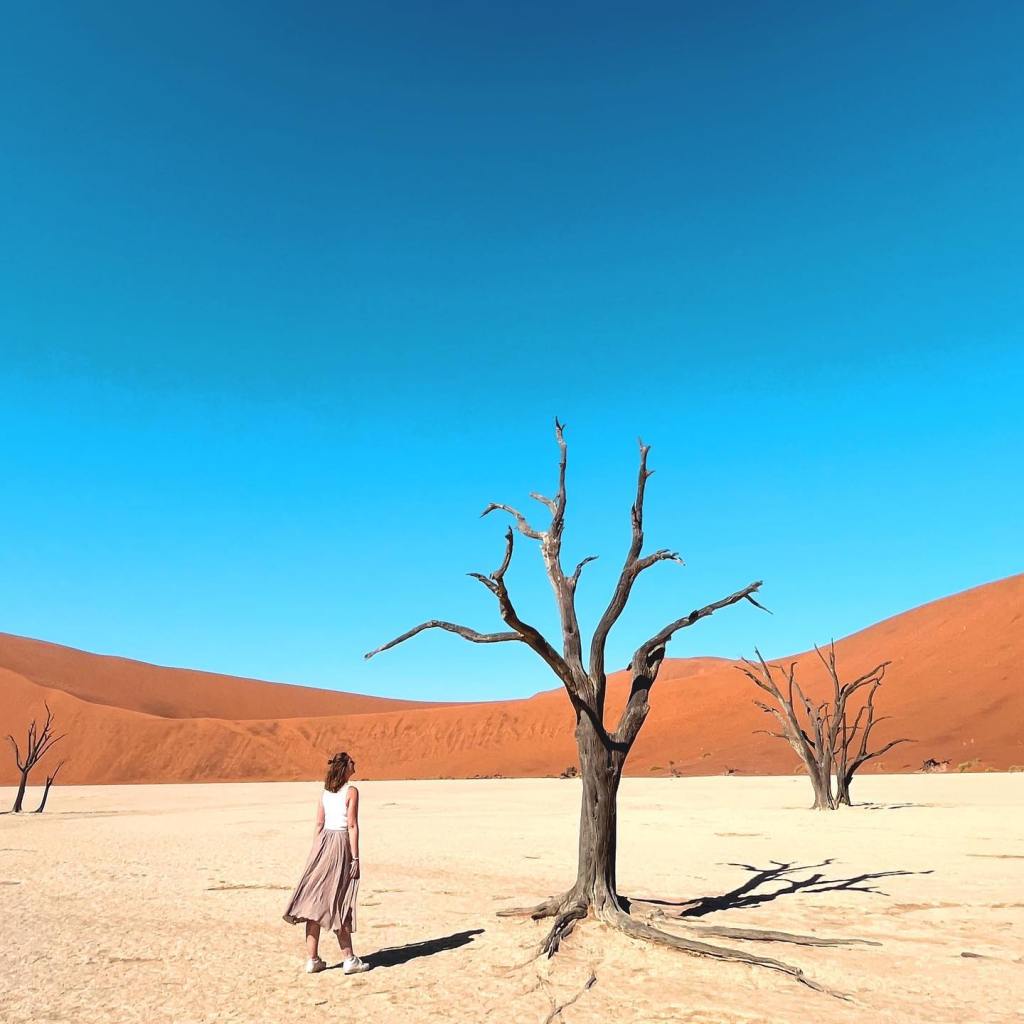
In Namibia, I also climbed the highest sand dunes, their fiery red peaks glowing in the soft light of early morning. The hike up was hard in the hot sun, the sand slipping beneath my feet with every step, but as I reached the summit, the effort melted away. Standing atop those towering dunes, the world felt infinite. The desert stretched endlessly, its contours shifting in golden hues as the sun began its ascent. The wind whispered across the sand, carrying a stillness that felt alive, as though the desert itself held secrets it would only share with those who listened.
In Botswana, I had the privilege of gliding through the serene waters of the Okavango Delta in a mokoro, a traditional wooden canoe. The delta was alive with the quiet hum of nature, the water lapping gently against the sides of the boat as reeds swayed softly in the breeze. Wild hippos surfaced nearby, their massive forms breaking the stillness, sending ripples across the mirrored water. Each time they emerged, I held my breath, captivated by their power and grace, knowing full well how dangerous they could be. Yet, the moment felt intimate, like a window into the untamed beauty of life in the delta.
At night, we camped under a sky so vast and filled with stars that it felt like the heavens had been stretched out just for us. The Milky Way spilled across the darkness in a glittering arc, more vivid than I had ever seen before, making me feel both insignificant and deeply connected to the world around me. In the distance, the silhouettes of giraffes moved gracefully along the edges of our campsite, their elongated necks blending into the night, a quiet reminder that we were visitors in their world. The sounds of the African wilderness surrounded us, the distant roar of a lion, the call of a hyena, the rustling of unseen creatures in the brush, each noise a testament to the raw, unfiltered life that thrived here.
In Chobe National Park, I witnessed scenes that felt like they had been pulled straight from a nature documentary. I watched as elephants, majestic and wise, waded into the water, their playful sprays creating rainbows in the sunlight. Nearby, lions stalked through the savannah with a quiet intensity, their sleek forms moving effortlessly through the golden grass. It was the kind of beauty that made you feel alive, a reminder of the delicate balance of life in the wild, a place where survival and grace intertwined in every moment.
Finally, in Zimbabwe, I stood once again before the mighty Victoria Falls, the thunderous roar of the water was deafening, its power shaking the very ground beneath my feet. Sheets of mist rose high into the air, drenching everything in their path and creating shimmering rainbows that seemed to dance in the sunlight. The sheer force of the falls was both humbling and awe-inspiring, as if nature itself were showing its full strength and majesty. Standing there, gazing at the endless cascade of water plunging into the gorge below, I felt an overwhelming sense of gratitude. It was a fitting end to this chapter of my African adventure, a reminder of the world’s raw beauty, its power, and its ability to leave us speechless.
After Africa, I flew to Portugal, eager to embrace a new chapter of exploration. This time, it was special, my mum joined me for seven unforgettable weeks, a chance for us to not only discover the beauty of Europe but to reconnect in a way we hadn’t in years. Together, we wandered the cobblestone streets of Porto, where the colourful facades of buildings lined the Douro River like a postcard brought to life. We indulged in rich, velvety glasses of port wine paired with traditional dishes like bacalhau à brás and custard-filled pastéis de nata that seemed to melt in our mouths. Lisbon was equally enchanting, its steep streets alive with the sound of trams rattling by and the aroma of grilled sardines wafting through the air.
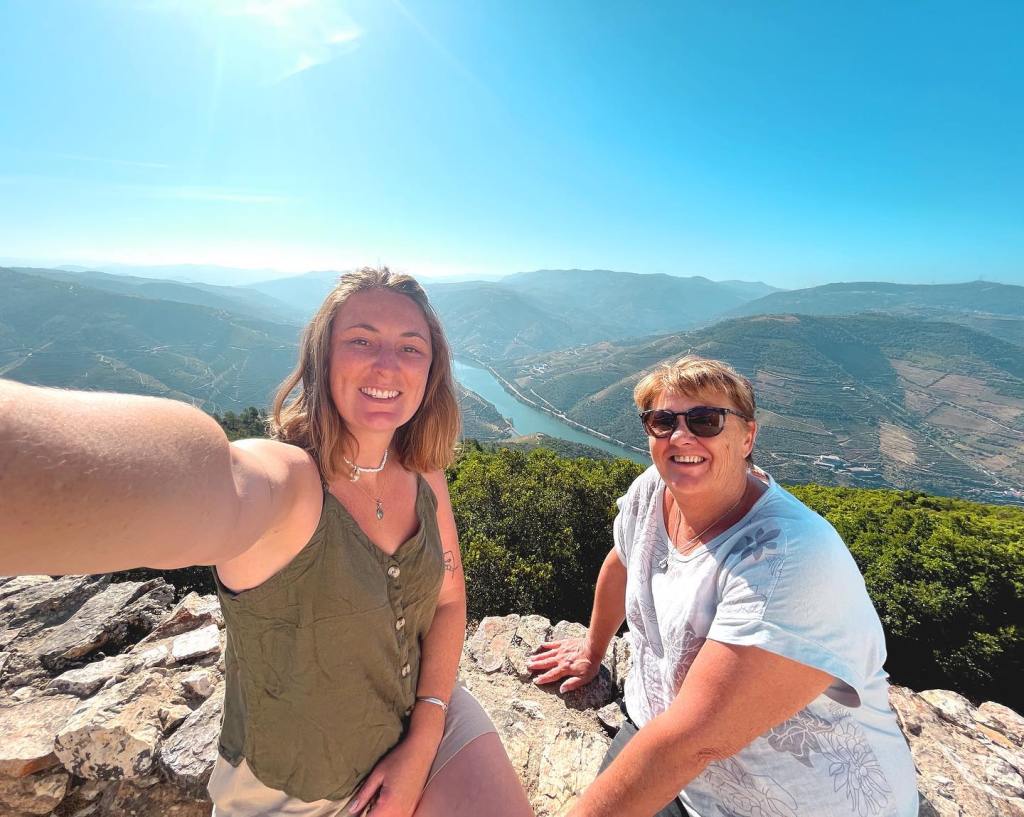
From the cities, we ventured into the countryside, driving through the winding roads of the Douro Valley. The rolling hills, terraced with lush vineyards, seemed to go on forever, each turn revealing another breathtaking view. The river snaked through the valley below, its surface shimmering in the sunlight. We stopped at family-run wineries, sipping wines that carried the stories of generations, and shared laughter over long, leisurely meals, the kind that made time feel irrelevant.
Further south, the Algarve greeted us with its dramatic cliffs and golden beaches. Hiking along its rugged coastline was like stepping into a dream, the turquoise ocean stretching endlessly before us, waves crashing against the rocks below. The natural arches and sea caves carved into the cliffs added an almost mystical quality to the landscape, and the salt air filled our lungs as we stood at the edge of the world, marvelling at the raw beauty of it all.
From Portugal, we continued our journey to the south of France, staying in a friend’s charming cottage nestled in a tiny village straight out of a storybook. Life slowed down in the best way there, giving us time for quiet reflection and simple joys. Mornings were spent reading by the window, the sunlight streaming in and the distant sound of church bells marking the hours. We cooked meals together in the cozy kitchen, experimenting with fresh, local ingredients from the village market.
One day, we kayaked down the Dordogne River, the gentle current carrying us past ancient castles perched on hillsides and villages that seemed untouched by time. The tranquillity of the water, combined with the beauty of the surrounding countryside, felt like a balm to the soul. We explored quaint, picturesque towns like Rocamadour, clinging dramatically to a cliffside, and Saint-Cirq-Lapopie, with its narrow streets and flower-filled balconies that felt like stepping back in time.
Our journey continued to the heart of Europe, weaving through cities that were as unique as they were breathtaking. In Budapest, we strolled along the banks of the Danube, marvelling at the grandeur of the Parliament building lit up at night, its reflection dancing on the water like a painting come to life. We soaked in the historic thermal baths, the steam rising around us as we relaxed in pools that had been enjoyed for centuries. The blend of old-world charm and vibrant energy made Budapest a place that felt alive with stories.
Vienna followed, a city steeped in elegance and classical beauty. We wandered through its grand boulevards and marvelled at the opulence of the Hofburg Palace and Schönbrunn Palace, imagining the lives of emperors and empresses who had once called them home. In the evenings, the city’s rich musical heritage came alive as we sat in a small, intimate venue, letting the melodies of Mozart and Strauss wash over us. Over steaming cups of coffee and decadent slices of Sachertortein one of Vienna’s historic cafés, we savored the city’s timeless sophistication.
Next was Prague, a fairytale city of spires and cobblestone streets. Crossing the iconic Charles Bridge, with the statues bathed in golden light and the mist rising from the Vltava River, felt like stepping into a dream. We explored Prague Castle, its towering Gothic architecture imposing yet breathtaking, and wandered through the Old Town Square, watching the Astronomical Clock strike the hour as a crowd gathered in awe. The charm of Prague lay not only in its stunning sights but in its quiet corners, a hidden café, a tucked-away garden, where the city’s magic seemed to linger.
Berlin brought a stark contrast, its history raw and unflinching yet laced with resilience and creativity. We walked along the remnants of the Berlin Wall, tracing the graffiti-covered panels that told stories of division, hope, and unity. The Brandenburg Gate stood tall, a symbol of a city that had been through so much yet remained steadfast. In the evenings, we explored Berlin’s eclectic neighbourhoods, dining in quirky restaurants and absorbing the city’s undeniable energy, a mix of history and modernity colliding in the best way.
Brussels was a delightful interlude, filled with the indulgence of Belgian chocolate, waffles, and some of the best mussels and fries we’d ever tasted. The Grand Place left us speechless with its gilded facades, glowing under the soft light of dusk. We strolled past charming shops selling lace and comic books, discovering a whimsical side to the city that felt playful and inviting.
Finally, our journey led us to Paris, a city that needs no introduction but still managed to exceed every expectation. Together, we wandered along the Seine, pausing to admire the artists selling their paintings and the timeless beauty of Notre Dame. The Eiffel Tower stood tall above the city, its lights twinkling like stars against the night sky as we watched from the Champ de Mars. We indulged in flaky croissants and rich coffee at quaint cafés, the hum of Parisian life filling the air. It was a city that seemed to romance every visitor, and for us, it was a perfect place to conclude our adventure.
And then, it was time to say our goodbyes. Standing in an airport hotel, the weight of parting after such an incredible journey together felt bittersweet. There was sadness in letting go of the time we had shared, but also a deep gratitude for the memories we had created, moments of laughter, awe, and quiet reflection that would stay with me forever.
As I hugged my mum one last time, I felt ready to return to the ship and the purpose I had found there. Traveling had been healing, transformative, and freeing, but now it was time to step back into the life that had called me to serve. And though I was saying goodbye to her and the incredible journey we’d shared, I carried the warmth of those weeks with me, a reminder of the love, connection, and wonder that had filled every step of our adventure.
Those four months of travel were nothing short of transformative. By the time my journey came to an end, I had achieved a goal I had held onto for years: visiting 30 countries before I turned 30. In fact, I had surpassed it, reaching 40 countries, a milestone that felt both surreal and deeply meaningful. My love for exploration, for the thrill of stepping into the unknown and discovering the world’s endless beauty, was now firmly embedded in my heart, woven into the very fabric of who I was.
The adventures were extraordinary, each one a reminder of how vast and beautiful the world truly is. From the golden dunes of the Sahara to the blue streets of Chefchaouen, from the bustling cities of Europe to the serene cliffs of the Algarve, I fell in love with the world over and over again. But as incredible as the experiences were, I couldn’t shake the thoughts that followed me wherever I went. I couldn’t stop thinking about Mercy Ships, or more specifically, about God.
He was always there, lingering at the edges of my thoughts, like a gentle whisper I couldn’t ignore. Every time I entered a beautiful old church in Europe, which became an almost daily ritual,I felt it: a quiet stirring, a subtle nudge that brought me back to the questions I had started asking on the ship. I would sit in the pews, gazing up at towering stained-glass windows that bathed the stone walls in hues of red, blue, and gold, and think about what I had witnessed during my time with Mercy Ships. I thought about the unwavering faith of the people I had worked alongside, the undeniable transformations I had seen, not just physical but spiritual and the love that seemed to flow so freely through them.
The grandeur of those churches often mirrored the awe I felt for something greater, something I couldn’t quite name. I wondered, Could it truly be real? Could it be that God exists, that Jesus died for us, that everything I was witnessing was true? The idea filled me with a mixture of longing and unease. On one hand, it felt like a missing piece, a truth waiting to be embraced. On the other, it felt terrifying, as though opening myself to belief would mean exposing every part of me I had worked so hard to hide.
Because I knew what accepting God would mean. It wouldn’t just be about believing in something bigger, it would be about confronting the deepest parts of myself, the wounds and traumas I had buried so deeply they had become part of my foundation. To accept God would mean acknowledging my brokenness, dredging up the moments of pain I had spent years running from. It would mean facing the things from my past that I had kept buried deep, the layers of shame and regret that had shaped so much of my life.
And so, I kept Him at a distance. Even as I felt Him quietly pursuing me, His presence growing stronger with every passing moment, I wasn’t ready to let Him in. It was easier to hold on to my doubts, to keep Him at the edges of my life rather than at its centre. But deep down, I knew He wasn’t going anywhere. He was waiting, patiently, lovingly, for the moment I would be ready to open my heart, to stop running, and to finally let myself be found.
 AYLA IN AFRICA
Leave a comment